Sugarcane farmers want FSC chief out, seek higher cane price
Prime Minister Sitiveni Rabuka says the committee will review cane pricing and examine concerns over FSC management.
Thursday 09 July 2026 | 10:00

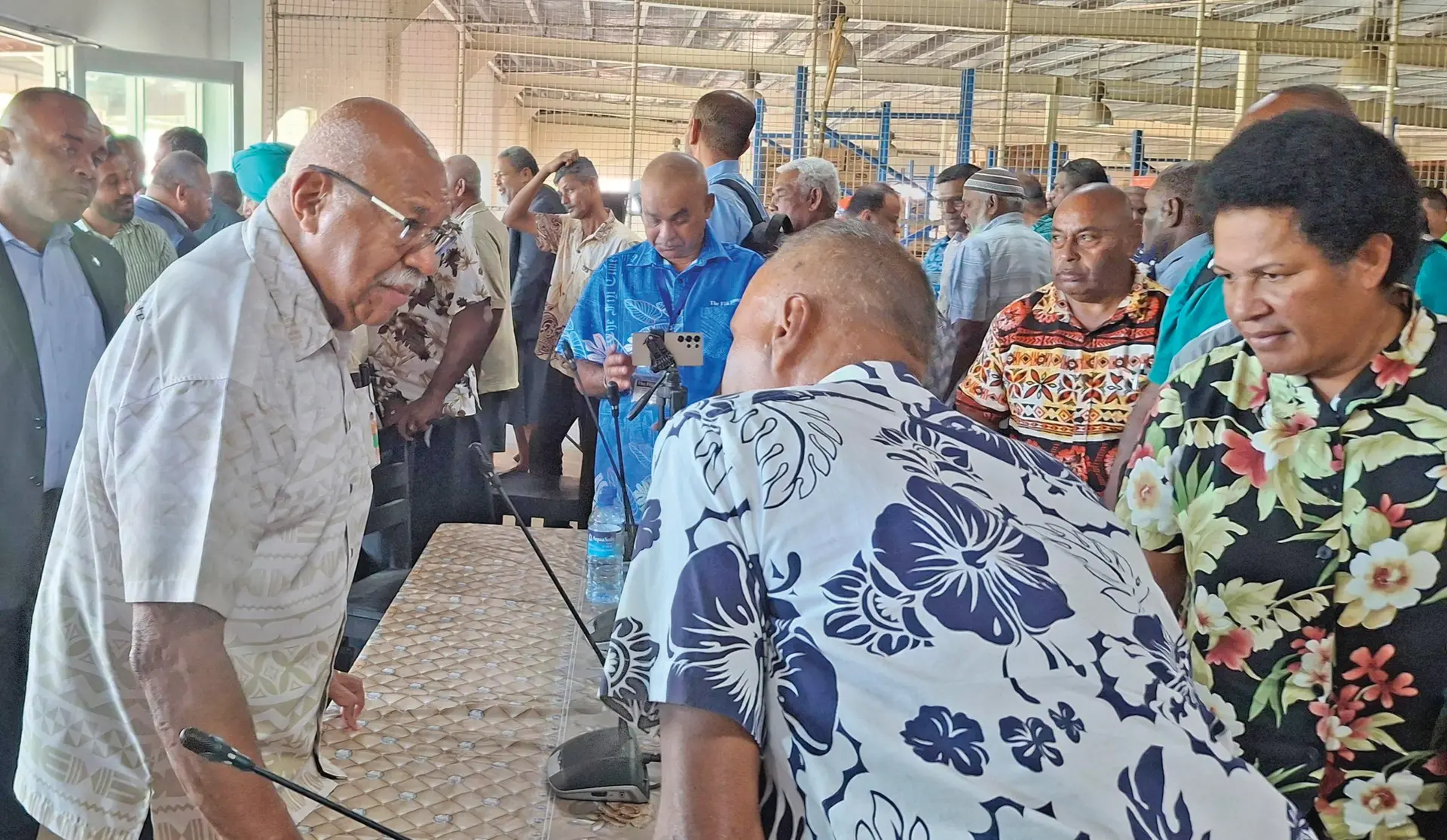
Prime Minister Sitiveni Rabuka (left), speaking to sugar industry stakeholders at the the Sugar Industry Tour of Cane Belt Areas consultation at the GCR Hall in Rakiraki on July 8, 2026.
Photo: Mereleki Nai
Frustrated sugarcane farmers in Rakiraki have called for the removal of Fiji Sugar Corporation (FSC) chairman Nitya Reddy, saying growers are struggling to make a profit while raising concerns about executive salaries.
The calls were made during the Sugar Industry Tour of Cane Belt Areas consultation in Rakiraki yesterday. The consultation was attended by the Special Parliamentary Committee on Sugar, chaired by Prime Minister Sitiveni Rabuka, following weeks of disputes involving farmers, the National Union of Workers and FSC.
Speaking on behalf of a group of Rakiraki farmers at the GCR Hall, businessman and large-scale farmer George Shiu Raj said the costs of harvesting, cartage, infield transport, fertiliser and land rent totalled about $75 per tonne. With the guaranteed cane price at $85 per tonne, growers were left with about $10 profit.
Related stories
Farmers asked the Government to increase the guaranteed cane price to $110 per tonne, arguing it was necessary to ensure fair returns and the long-term sustainability of the industry.
Mr Shiu Raj said about 11,000 cane farmers and their families continued to support the industry despite rising production costs and declining returns.
He said some decisions by FSC executives reflected a lack of respect for farmers.
Farmers also raised concerns over delays in processing burned cane and questioned whether the country's sugar mills had the capacity to process increased cane production if output improved.
Mr Shiu Raj said poor mill performance and management had contributed to financial losses, which he claimed exceeded $30 million.
He also questioned the salaries paid to current and former FSC chief executive officers.
Several other farmers echoed the concerns, saying many growers harvested only 150 to 200 tonnes of cane annually, leaving them with little income after production costs.
They urged the parliamentary committee to visit other cane-growing districts before making recommendations on the future of the industry.
Government response
Mr Rabuka said the committee would carefully consider the request to increase the guaranteed cane price to $110 per tonne.
"We will be back with better news," he said.
"The Government will review the guaranteed minimum price calculations using figures from stakeholders and millers.
"The Government will reconvene to provide an update on potential improvements to the minimum price."
Mr Rabuka said the committee would also examine concerns about FSC's management, including calls for the chairman's removal, and investigate issues relating to mill inefficiencies and delays in processing burned cane.
He said the Government had announced an $85 guaranteed minimum price before the harvesting season and clarified it was a floor price.
Chairman responds
Mr Reddy defended FSC's leadership while raising questions about Mr Shiu Raj's commercial interests in the sugar industry.
He said discussions with farmers had been productive and that many of the issues raised were legitimate and would be discussed further during stakeholder consultations.
Mr Reddy also questioned whether Mr Shiu Raj should have declared his commercial interests while making submissions on behalf of farmers.
"I am told that he earns between $1.5 million and $2 million through harvesting contracts and the lorries he owns," Mr Reddy claimed.
He said FSC remained committed to engaging constructively with growers and addressing concerns affecting the industry.
Mr Reddy acknowledged the disruption to harvesting was costing the corporation between $120,000 and $150,000 a day.
He warned that if the situation continued, up to 400 workers could be affected.
"The company has already issued notices to the unions, and we are considering all available options should the impasse continue," Mr Reddy said.
He said there was growing recognition among stakeholders of the need to resume harvesting as soon as possible to minimise further losses.
Mr Reddy said despite differing views during the consultations, the shared objective remained finding practical solutions to strengthen Fiji's sugar industry through continued dialogue between farmers, FSC and Government.