The Problem With Waste And Where It Ends Up
This sewage waste would also include toilet tissues that would scatter along the footpath.
Sunday 10 July 2022 | 15:47

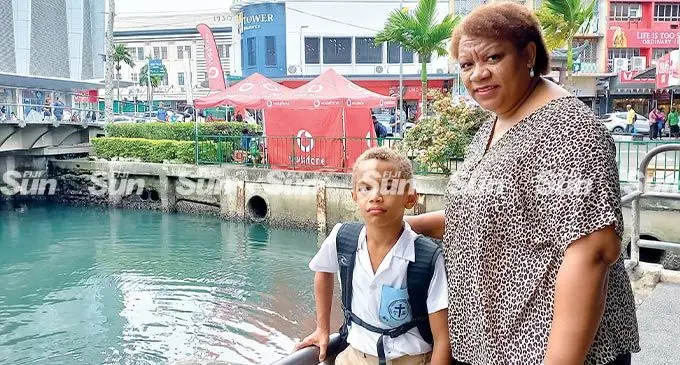
Flori Tokana with son, Akariva Tokana, at the same spot where she saw the waste discharge in Nubukalau creek. Photo: Ronald Kumar
This sewage waste would also include toilet tissues that would scatter along the footpath.
Cumming St is one of the busiest and frequented parts of Suva City.
Situated along the street are eateries, clubs, pharmacies, jewellery and other shops.
Related stories
Adjacent to Cumming St is the Nubukalou creek that also runs beside a busy shopping mall.
There have been concerns raised recently by members of the public that septic waste was discharged from one of the storm water drains of the retaining walls into the creek.
Numerous complaints have been raised with the Suva City Council (SCC) on this matter, but no one has been held accountable.
Questions sent to the Suva City Council’s director services, Aaron Phillips, remain unanswered.
Instead, he responded: “Having consulted internally, we at this stage would like to ask if we can get a response to you on this matter after consultation with external stakeholders.”
The Environment Management Act 2005 prohibits any “facility from discharging any waste or pollutant into the environment”.
Offenders are liable to pay a fine of $100,000, the Act further states.
Permanent Secretary for Health and Medical Services Dr James Fong said the improper disposal of such waste was a health concern.
But despite the health and environmental risks, Nubukalou creek is still a source of sustenance for some Fijians who use it to fish.
Some, even bathe there. The creek has long been reported as one of the most polluted freshwater sources that leads to the Suva harbour.
One such report is titled “Water quality studies on selected South Pacific lagoons” compiled and published by the United Nations Environment programme in 1991.
The report highlights that:
- The Nubukalou creek receives untreated human faecal waste; which presents the greatest hazard to human health;
- The mouth of Nubukalou creek in Suva Harbour receives a lot of sewage effluent from a faulty sewerage junction box, seepages from septic tanks and water from stormwater pipes; and
- The creek should be monitored further and if possible closed for bathing until appropriate corrective measures have been taken.
The storm water drains, which are direct channels to the creek, are managed by the Fiji Roads Authority.
The sewer lines are maintained by the Water Authority of Fiji (WAF). These two underground infrastructures run separately.
They were engineered and constructed from when Suva was declared the Capital City in 1882. Some even earlier.
The main sewer pumping station that covers the Suva area is located beside the Central Police Station at Murray St. It is understood that when there is a blockage in the pump, wastewater backflows.
As a result, it escapes out in the wastewater chambers along the footpaths of Cumming St.
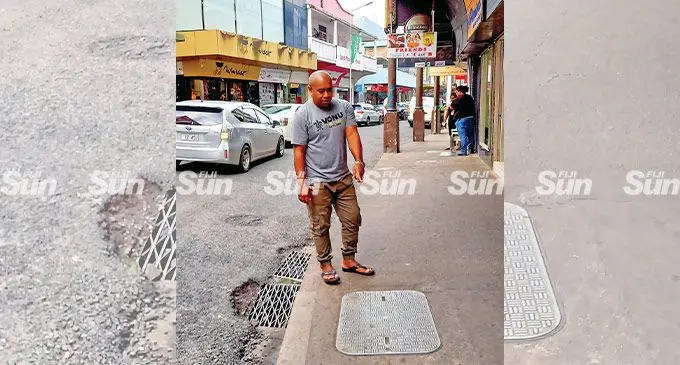
Vili Bukateci at one of the manholes along Cumming St. Photo: Ronald Kumarat
“Some of the debris, and wastes tend to fall into the creek. Plastic bottles are quite high, metal from the industrial areas,” Mr Lal said.
“A major contributor of the rubbish is a lot of people throwing rubbish while they walk pass.”
More than a ton of rubbish was collected in the first clean up. About 500 grams of waste materials was collected in the second clean up.
“We are not only collecting rubbish, but we also separate the rubbish into household items, plastic ware etcetera,” he said.
He emphasised the need for people to take pride in their country and ensure their environment is kept clean.
Feedback: ivamere.nataro@fijisun.com.fj