Think Resilience, Delegates Urged
The world will experience 1.5 medium to large-scale disasters every day through the end of the decade unless countries ramp up action on prevention and risk reduction.
Sunday 29 May 2022 | 18:03
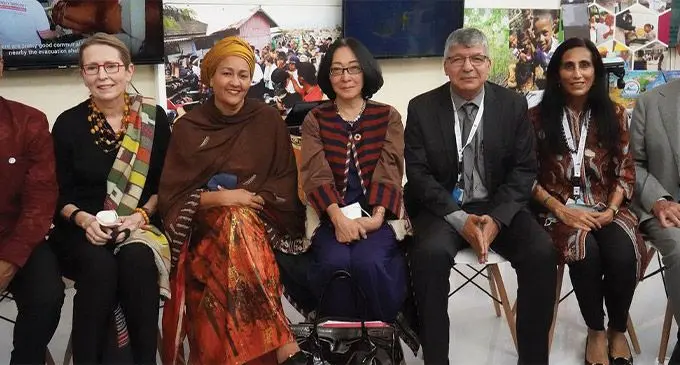
UN Deputy Secretary-General Amina Mohammed (third left) visits the UN in Indonesia booth at the first post-pandemic global disaster summit in Bali. Photo: United Nations Office for Disaster Risk Reduction
The world will experience 1.5 medium to large-scale disasters every day through the end of the decade unless countries ramp up action on prevention and risk reduction.
This is what Deputy Secretary-General of the United Nations, Amina J Mohammed said at the opening ceremony for the Seventh Global Platform for Disaster Risk Reduction on Wednesday.
This was the first UN international disaster forum since the dawn of the COVID-19 pandemic.
Related stories
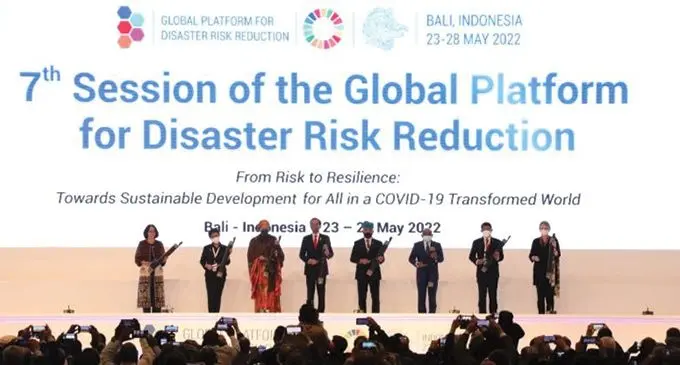
Opening ceremony for the Seventh Global Platform for Disaster Risk Reduction in Bali, Indonesia on May 25, 2022.
Countries and stakeholders from around the world gathered in Indonesia to scrutinize the current global development in reducing climate disaster threats as it takes its toll.
Governments, the UN system and key players shared expertise and trends in reducing disaster risk after the pandemic made changes to development from climate change to gender equality.
Ms Mohammed said our actions and decisions can inadvertently influence our risk and exposure.
According to the UN Global Assessment Report, humanity was on a spiral of self-destruction.
“Over the next three days, we have a unique opportunity to consider the best policy options to move from risk to resilience, and to take important steps to ensure the recovery from COVID-19 puts us back on track for a safe and sustainable future,” Ms Mohammed
“We also need to factor disaster risk reduction into our financial frameworks, to think about resilience in all financial investments.”
The three-day meeting involves delegates who would review the development and implementation progress of the 2015 Sendai Framework which aims to protect development gains from the risk of disaster.
Data investment
Ms Mohammed strongly urged the need and importance of investing in stronger data capabilities.
“Such investments will help us navigate complex risks earlier, faster, and in a more targeted and efficient manner,” she said.
“This includes jointly developing risk analysis, and investing in co-ordination and data infrastructure that enables knowledge-sharing and joint anticipatory action.”
She highlighted that new multilateral instruments could better anticipate, prevent, and respond to complex threats, before they turned into full-blown disasters.
This included the UN’s Complex Risk Analytics Fund, which supports data ecosystems.
Help vulnerable countries
Ms Mohammed gave greater highlight to the world’s Least Developed Countries and Small Island Developing States.
“We urgently need to step up international co-operation for prevention and disaster risk reduction in the most vulnerable countries and for the most vulnerable communities, including women and girls, people with disabilities, the poor, marginalised and isolated,” she said.
“Disasters in these countries can wipe out decades of development progress and economic growth with very serious long-term economic and social consequences.”
Early warning systems
UN Secretary-General, António Guterres asked the World Meteorological Organisation (WMO) to deliver an action plan at the next COP27 to ensure that everyone is covered by Early Warning Systems within five years.
Ms Mohammed said the provision of Early Warning Systems was one of the examples of an effective measure that provides a considerable return on investment.
She requested the need for public and financial sectors to be risk proofed.
“We need to think about resilience and account for the real cost of disasters and incentivise risk reduction, to stop the spiral of disaster losses,” she said.
“Governments also need to factor disaster risk reduction into financial frameworks, while alternative measurements beyond Gross Domestic Product, should take account of disaster risk and resilience.”