Villages replace kerosene drums with cooking pots
“Solevu has always involved the contribution of either drums of kerosene or the tabua. This has been our practice for generations, and it should be preserved.”
Friday 30 August 2024 | 11:56

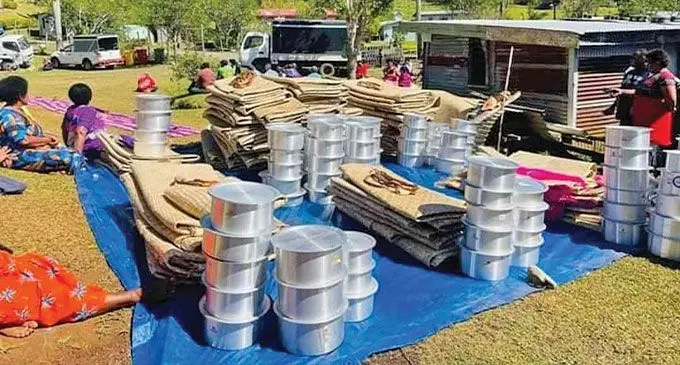
Cooking pots that replace kerosene drums at a recent solevu in the district of Savatu in Ba.
Villages in the district of Savatu in Ba are currently at a crossroads, where tradition meets modern practice.
Once filled with drums of kerosene, traditionally offered during solevu are now being replaced by cooking pots in some villages, sparking a debate on cultural preservation versus realism.
The tikina (district) of Savatu consist of Lewa, Naiyaca, Nagatagata, Buyabuya, Marou, Koro, and Nadala villages have seen a gradual shift from using kerosene to cooking pots, a change introduced by traditional leaders last year.
Related stories
The decision was driven by concerns over mixed kerosene, with some drums being only half-filled and topped off with water.
While some villages have embraced this change, others remain steadfast in their traditional practices, insisting that kerosene drums, alongside the revered tabua, are essential contributions during solevu.
Timoci Ketewai of Nadala Village stands firm in his belief that cooking pots should not replace kerosene in traditional events.
“It is not appropriate,” he emphasise.
“Solevu has always involved the contribution of either drums of kerosene or the tabua. This has been our practice for generations, and it should be preserved.”
On the other side, Nadarivatu villager Sanita Lewavudi also supports sticking to traditional practices. She condemns those who dilute kerosene with water, seeing it as an insult to iTaukei values.
“Our contributions should reflect our respect for tradition,” she says.
“Bringing cooking pots without kerosene drums feels like a departure from our cultural identity.”
Feedback: mereleki.nai@fijisun.com.fj