Women Lead Climate Change War
“The reclamation of land to construct a proper wall of defence has begun to protect the village,” Ms Tora said.
Friday 18 October 2024 | 15:30
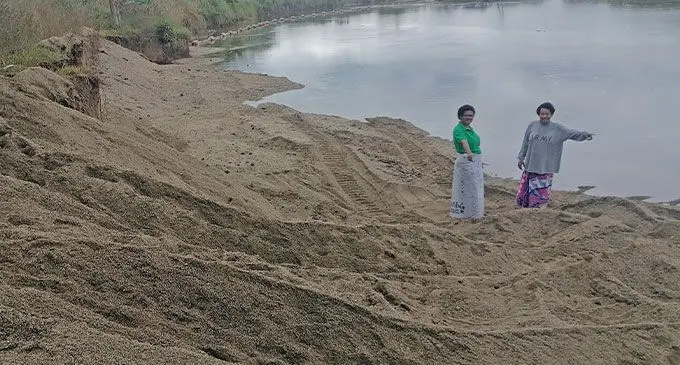
From left: Loraini Nailevu and Makereta Serola at the Yavusania Riverbank in Nadi.
The women of Yavusania Village in Nadi are leading the charge in the fight against climate change.
They are members of the Soqosoqo Vakamarama iTaukei ni Yasana ko Ba (SSViT Ba).
After years of battling riverbank erosion, the women are building a defensive structure against the problem.
Related stories
SSViT Ba coordinator Leilani Tora said work has started with the placing of boulders on the riverbank to prevent erosion.
“The reclamation of land to construct a proper wall of defence has begun to protect the village,” Ms Tora said.
“Last year Yavusania lost more than six metres of soil which eroded into the Nadi River. Two houses were swept away and the foundations of several more are at risk. The situation has worsened, and without intervention the village could face further displacement.
“The project implements sustainable riverbank stabilisation measures.”
Ms Tora said consultations had been taking place between SSViT Ba, local communities, and the ministries of waterways, infrastructure, forestry, and lands.
Technical assessments conducted earlier this year identified immediate protective measures, and physical work began in April 2024.
“This collaborative effort ensures that women, who are often disproportionately affected by climate change, are included in the decision-making and implementation process.”
Women at the forefront
SSViT Ba’s River Erosion Adaptability Project emphasises the leadership role of women in climate resilience.
Women in Yavusania are actively involved in setting up nurseries for reforestation, focusing on indigenous fruits and forest trees.
Training sessions have been conducted, equipping women with skills needed to sustain the nurseries and actively participate in the reforestation process.
Women will continue to lead the replanting efforts once the riverbanks are stabilised, ensuring long-term sustainability of the project.
Partnership and progress
Ms Tora added that a key element of the project was the collaboration with government ministries and traditional institutions.
“This integrated approach combines technical expertise with local knowledge, resulting in a more sustainable and culturally relevant solution to the erosion challenges in Yavusania,” she said
SSViT Ba has also coordinated with the Ministry of Forestry to assist women in establishing nurseries, with plans to sell plants back to the ministry at a rate of $3 per plant.
This initiative supports economic empowerment while promoting environmental sustainability.
Feedback: mereleki.nai@fijisun.com.fj








