Women of Nayau finalise preparations for Tui Nayau installation
"This is more than just a ceremony. It is about our heritage, our identity, and showing respect to our chiefly line," Ms Ralailai said.
Monday 07 July 2025 | 09:53
Updated 08 August 2025 | 15:31 FJT

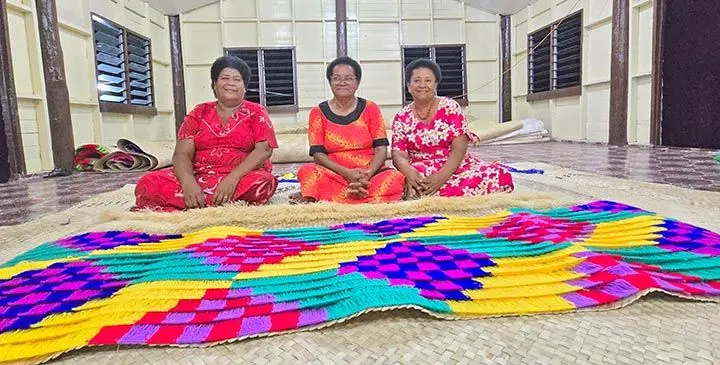
Women of Nayau prepare fine mats at Narocivo Village, Nayau as anticipation builds ahead of the installation of the Tui Nayau Ratu Tevita Mara tomorrow. Pictured (from left), Kasalaini Rasoqosoqo, Amelia Railala and Mere Cagi on July 5, 2025. Photo: Sosiveta Korobiau
Women from the island of Nayau are in the final stages of preparing for the highly anticipated installation of Tui Nayau, a chiefly title of great significance in Lauan and Fijian traditional leadership.
Yesterday afternoon women of Liku, Salia, and Narocivo villages gathered at the Narocivo Village Hall for a communal display of traditional mats a central element in Fijian ceremonial culture.
The intricately woven mats will be presented as part of the installation ceremony for Ratu Tevita Uluilakeba Mara, the heir to the Tui Nayau title.
Related stories
Amelia Ralailai, 74, a respected elder from the island, said the women have been preparing since last year for the historic event.
"This is more than just a ceremony. It is about our heritage, our identity, and showing respect to our chiefly line," Ms Ralailai said.
"We've been weaving and preparing our finest mats because this is a once-in- a-generation event."
The title Tui Nayau holds historical importance as it is the paramount chief of the Lau Group - a position once held by Ratu Sir Kamisese Mara, Fiji's founding Prime Minister and father of the incoming chief, Ratu Tevita.
The installation of a Tui Nayau not only represents the continuation of traditional leadership in the Lau Islands but also signifies unity, cultural pride, and the resilience of Fijian customs.
At the centre of these preparations are ibe finely woven mats sacred symbols of respect, identity, and cultural wealth in iTaukei society.
Passed from hand to hand, from mothers to daughters, each mat carries stories of lineage, loyalty, and labour essential offerings in the installation of a paramount chief.
For 74-year-old Amelia Ralailai, the event is more than ceremonial.
"We started weaving last year," she said, her voice filled with quiet pride.
"We knew this would be a moment our grandchildren will speak of - the return of a chiefly mantle, the continuation of a sacred lineage."
Feedback: sosiveta.korobiau@fijisun.com.fj