Women Taking The Helm In Navitilevu Bay's Mangrove Conservation Efforts
“Mangroves are more than just a local resource – they're like nature's own carbon storage units, pulling harmful carbon-dioxide gas out of our atmosphere. When we protect and restore these forests, we're helping to fight against global climate change,” said Sharma.
Monday 12 June 2023 | 11:04
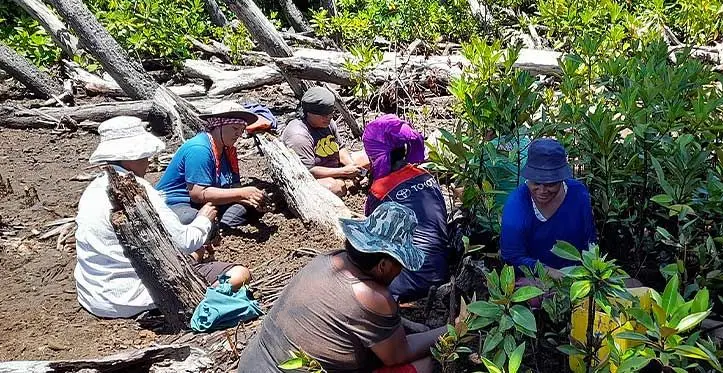
In an effort to safeguard Navitilevu Bay's intricate ecosystem, women are stepping up as pivotal figures in mangrove preservation. Women's skills stretch from managing sustainable practices at home to spearheading conservation initiatives in broader community settings, making them pivotal contributors to environmental preservation.
The Navitilevu Bay community, like many around the world, has witnessed significant depletion of its mangrove forests, primarily due to devastating impacts of tropical cyclones such as Cyclone Winston.
Recognizing the immediacy of this concern, women have emerged as change-makers, assuming pivotal roles in mangrove conservation through Conservation International (CI) Fiji’s Blue Carbon Project, working in concert with men, youths, and community leaders.
Related stories
Funded by the Australian Government, the project sees women actively participating in raising mangrove saplings in nurseries, and ensuring the continued survival of these valuable ecosystems, contributing to global efforts to combat climate change.
"Mangroves are often called the 'forests of the sea', and rightly so. They provide sanctuary to diverse marine species, shield our coasts from erosion, and serve as natural barriers against storm surges and sea-level rise, mitigating the impacts of climate change on coastal communities," said Nikheel Sharma, Manager for the Blue Carbon Project at CI Fiji.
“Mangroves are more than just a local resource – they're like nature's own carbon storage units, pulling harmful carbon-dioxide gas out of our atmosphere. When we protect and restore these forests, we're helping to fight against global climate change,” said Sharma.
“These benefits can only be sustained if we adopt holistic approaches that incorporate social justice considerations into our conservation strategies. By empowering women to take an active role in protecting mangroves we increase their capacity as key actors who can influence policies aimed at promoting sustainability,” explains Sharma.
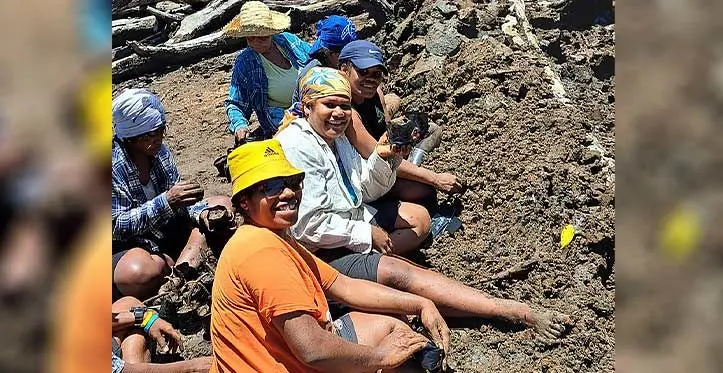
Women planting mangroves saplings for on-site nurseries at Navitilevu Bay.
Mere Vucago from the Barotu Women's Group shared her personal experience and the impact this initiative has had on her community: “Working on this project was an opportunity for our village's 'iyaubula committee, women's group members and youths to assist in work that will result in the restoration of degraded mangroves in our fishing grounds.”
“It was a great opportunity for our village to work together for a good cause and we thank CI and the Blue Carbon Project for carrying out this work and making us a part of it. We have also learnt a lot about the planting of the 'dogotu' species and the greater importance of the mangrove system to the environment.”
Echoing Mere's sentiments, Vaseva Marama of the Naiserelagi Women's Group reflects on the multifaceted benefits of their involvement.
“Being involved in soil potting and seedling collection for the Blue Carbon Project is an opportunity for our women to work together in the establishment of mangrove nurseries along our coast, it will help achieve so much, not only for the environment but also for our livelihood by its offering of better fishing and healthier surroundings. Planting these mangroves is like nurturing life; each sapling is like a child that needs care and love - we're not just planting mangroves; we're cultivating life and hope.”
Beyond environmental preservation, this inclusivity also fosters gender equality and empowerment within the Navitilevu Bay communities. By integrating women into decision-making processes and providing them with training and resources, these societies are promoting a more equitable culture where women have equal opportunities to participate and lead in environmental initiatives.
As the planet confronts the urgent issues of environmental degradation and climate change, Navitilevu Bay's commitment in mangrove preservation is a beacon of hope.
The tenacity, knowledge, and adaptability of its women are driving change, not only within their local communities but also in the broader global struggle to protect our invaluable natural environment.
To date, the project has successfully grown a remarkable number of 18,000 mangrove saplings on-site nurseries, a testament to the combined efforts of the Navitilevu Bay community.
This achievement is merely a stepping stone towards the Project’s overarching goal of robust mangrove rehabilitation and conservation, and a more sustainable ecosystem.
The next step in this initiative includes the planting of these nursery raised mangrove saplings into degraded areas and continuous monitoring thereafter of these newly planted mangroves.
In Navitilevu Bay, women are proving that when given the opportunity, they are powerful agents of change, capable of leading the way towards a more sustainable and resilient future.
Source: Conservational International Fiji








