$35m reasons to ask questions: Nadi, the JICA Betrayal and Rabuka’s climate alibi
Monday 30 March 2026 | 08:00

A decades‑old, fully funded Japanese master plan offered structural solutions to Nadi’s flooding, but was never implemented. The consequences continue.
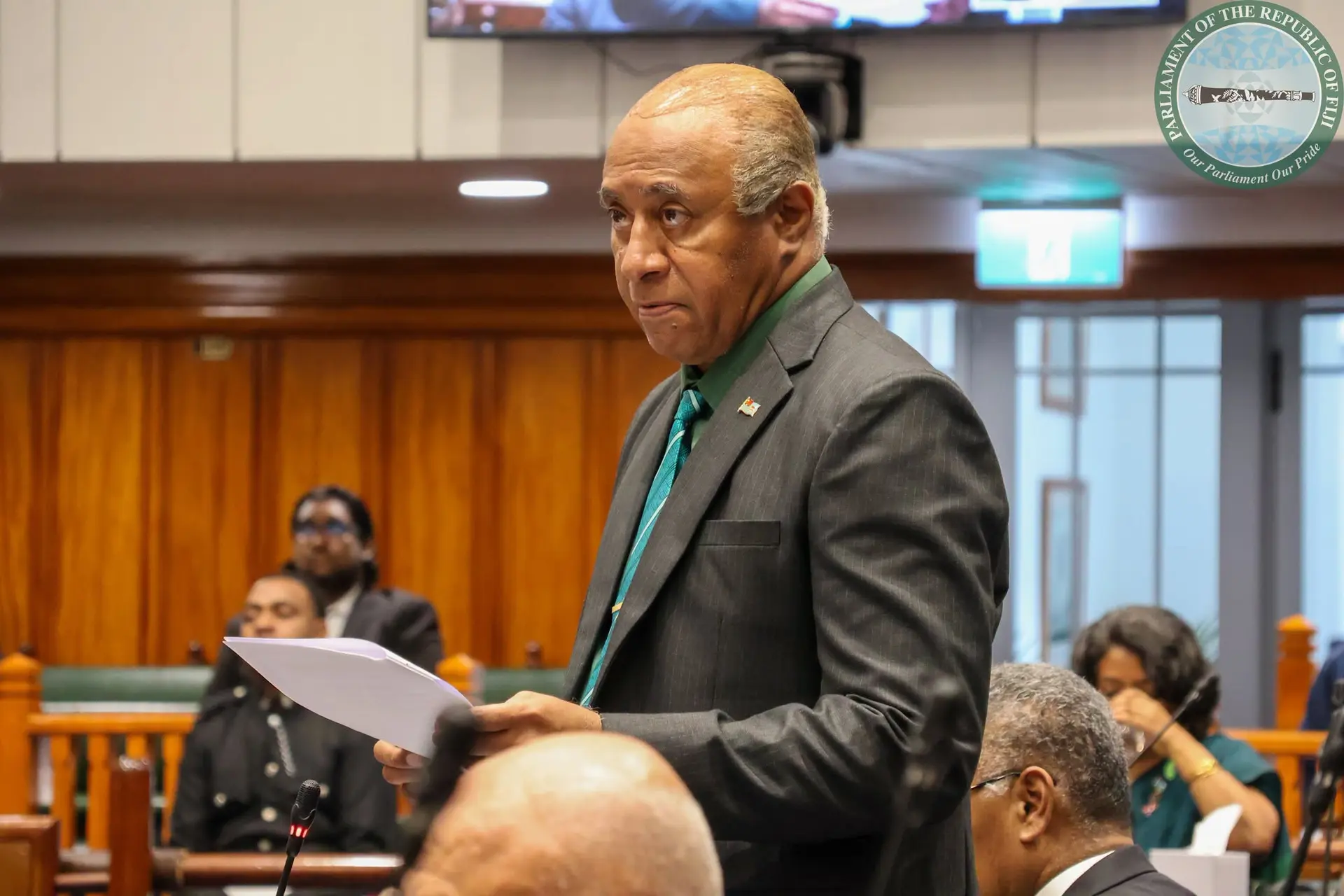
On March 21, 2026, Prime Minister Sitiveni Rabuka stood at the Fiji Culture Village in Nadi, a community on the river’s own edge, to launch the Fiji Climate Adaptation Programme (FCAP), underwritten by A$35 million from the Australian government across 2026 to 2029.
Nadi, the PM declared, was “one of the region’s most vulnerable to flooding,” its suffering driven by “more severe cyclones, rising sea levels, and increasingly intense rainfall patterns.”
The $35 million would fund nature-based solutions, upstream revegetation, early warning systems, community flood risk plans and institutional capacity-building.
Related stories
The intent is commendable in rhetoric. But intent divorced from institutional memory and scientific rigour is not policy — it is theatre.
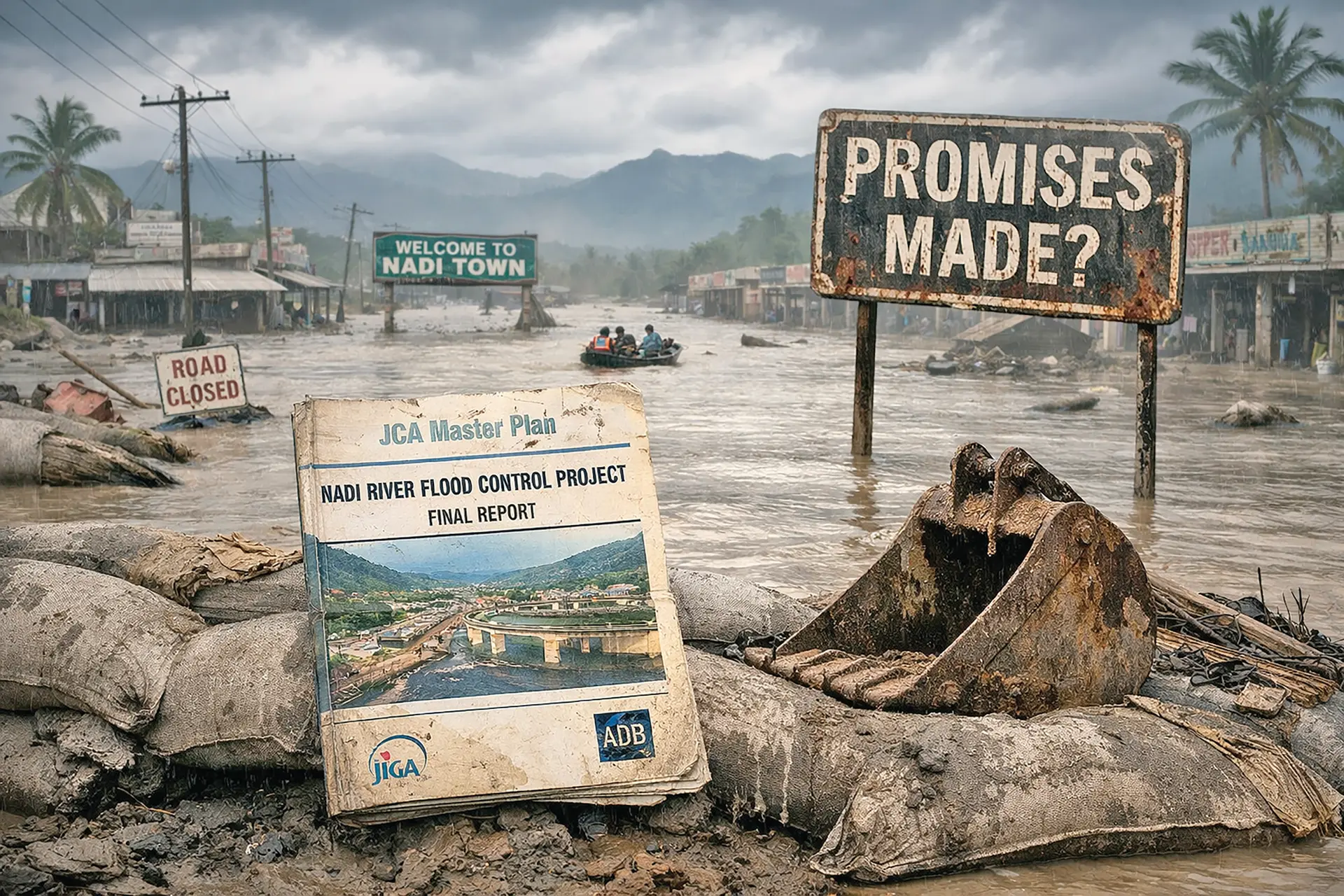
Two questions the PM did not raise deserve immediate answers: Why has a comprehensive, decade-long Japanese-funded Master Plan for the Nadi River catchment sat unimplemented since 2016?
And who in this Government has read the JICA feasibility study?
The JICA chronicle, thirty years of shelved solutions
The story begins not in 2026 but in 1996, when the Japan International Cooperation Agency (JICA) conducted a landmark study on watershed management and flood control across the Rewa, Sigatoka, Ba and Nadi river systems.
A master plan was produced and shelved without implementation, JICA’s own ex-post evaluation records this occurred because the Government of Fiji chose not to act.
In 2014, at government invitation, JICA returned and conducted a two-year feasibility study.
In August 2016, it published a 30-year Master Plan: river widening, channel training, a tributary shortcut channel, upstream retarding basins, and town drainage.
Japan committed approximately $300 million to fund implementation. An ADB OCR loan was structured for catchment-wide modifications.
Australia’s infrastructure financing facility, the AIFFP, engaged on reference design and costing.
The plan was comprehensive, peer-reviewed, fully costed and donor-ready. It required only one thing Fiji could not provide: a Government decision to build it.
Implementation deferred indefinitely
JICA’s 2020 ex-post evaluation is unambiguous.
“The proposed project plans for Nadi River flood alleviation have been shifted to lower priority,” it states, with coordination amongst multiple stakeholders described as “challenging.”
Between 2016 and 2024, successive Fijian governments held discussions with JICA, the ADB and the AIFFP, built nothing and dredged nothing.
By July 2024, the Nadi Town Council was confirming publicly that $90 million in Japanese grant funding remained availableand committed, but that government was “not able to make decisions.”
It is into this institutional void that PM Rabuka launched a $35 million program on March 21, 2026. The FCAP funds no structural works: no retarding basins, no river widening, no dredging.
It funds plans, workshops, revegetation and capacity-building — the secondary complementary measures the JICA Master Plan designated as supporting, not substituting, primary structural intervention.
Fiji is now financing, for the third time, the planning of what was already planned.
Geography as destiny — Nadi was built in the wrong place
I served as manager of the climate research and services division at Nadi Airport with the Fiji Meteorological Services. I have experienced the floods directly and reported on them professionally over many years.
I know this geography from observation, not from a consultant’s desk. Nadi is not simply a town beside a river. It sits on a low coastal floodplain at the confluence of the Nadi and Malakua/Nawaka rivers, with the Vuniyasi and Sabàto rivers on its margins: a town encircled by multiple drainage systems all drawing from the same western Viti Levu highlands.
When the catchment saturates under La Niña conditions, the water has nowhere to go except through Nadi’s streets. Ba and Rakiraki are identically situated. All three towns were established on colonial-era flood plains because the land was flat, fertile and accessible. Flood risk was not the governing consideration. At peak events, Nadi has recorded floodwater to a depth of 3.5 metres along its main street.
No revegetation program changes the hydraulic geometry of a town surrounded by rivers on a flat coastal plain.
Siltation, deforestation and the compounding crisis
The deepest technical problem in the Nadi River system cannot be addressed retroactively by nature-based solutions: it is siltation. The JICA feasibility study found that deforestation in the Nadi basin produces an estimated 2.151 million tonnes of sediment per annum, progressively raising river channel beds and reducing flood-carrying capacity.
Decades of vegetation burning across western Viti Levu from the 1960s accelerated erosion and filled the river channels — not climate change, but generations of unregulated land clearance, large area of native forests for pine planting, and subsequent intensive logging and upstream agriculture.
The releasing or water from major dams built in catchments during extensive rains is also another factor. Until the channels are dredged and rigorously maintained, even moderate rainfall will produce flooding in Nadi town. Nature-based upstream revegetation prevents future siltation but cannot remove the sediment accumulated over half a century. The Fiji Climate Adaptation Program does not fund dredging.
The FCAP funds no dredging whatsoever. That omission is not incidental to the programme’s design — it is the programme’s central failure.
ENSO variability, not climate change — the scientific record
PM Rabuka attributed Nadi’s flooding to “more severe cyclones, rising sea levels, and increasingly intense rainfall patterns.” Each element demands scientific scrutiny. Sea level rise is categorically irrelevant to riverine inundation in the town centre.
The flood record predates any credible anthropogenic climate signal by a century: the 1931 Ba River flood killed over 200 people. The January 2009 event — 11 dead, 12000 displaced, FJ$113 million in damage with FJ$81.2 million in Nadi alone — was driven by ENSO-phase rainfall, not a major cyclone. The 2012 inundation was triggered by Tropical Depression TD17F.
Fiji’s flood pattern is governed by the El Niño-Southern Oscillation cycle on a three-to-seven-year periodicity. More than 80 per cent of La Niña events produce prolonged wet spells across Viti Levu.
Labelling structural, ENSO-driven riverine flooding as a climate change phenomenon is scientifically imprecise, politically convenient and deflects accountability from infrastructure failures that are both measurable and addressable.
The opportunity cost and the question of accountability
The $35 million committed to the FCAP represents concrete choices against competing and urgent needs. The Nadi Hospital — serving the same community the PM addressed — faces recurrent medicine shortages and chronically under-resourced clinical services. A 2024 World Bank report found that non-communicable diseases account for 80 per cent of deaths in Fiji, with 64 per cent of NCD fatalities occurring in working-age adults.
The health system costs $591 million annually and operates under severe stress. Directed at primary healthcare or river dredging, $35 million would save countable lives.
The PM owes Fiji direct answers on the JICA matter: who abandoned the negotiations with Japan, the ADB and Australia’s infrastructure lenders? Who left $300 million of committed Japanese funding untouched while Nadi flooded repeatedly? Who shifted the Master Plan to lower priority?
These are not rhetorical questions. They are accountability questions the people of Nadi, Ba and Rakiraki deserve answered before one further dollar of donor funding is committed.
The way forward — dredge, protect catchments, or accept the geography
The practical path forward is not another planning exercise. Three actions are required. First, the JICA Master Plan and the Japanese $90 million commitment must be re-engaged immediately: the river widening, tributary shortcut and retarding basins are the only interventions that meaningfully alter Nadi’s flood hydraulics.
Second, the national government must assume statutory authority over all major river catchments, with enforceable restrictions on upstream deforestation, logging and agricultural clearance within defined buffer zones.
The land degradation feeding the siltation crisis is ongoing and entirely preventable by law.
Third, Fiji must begin the honest national conversation successive governments have evaded: the long-term viability of Ba, Rakiraki and Nadi towns as primary urban centres on flood plains.
Co-existence with the river is possible — if design standards are enforced, channels are dredged on a statutory maintenance schedule, and communities understand that every three to seven years, the river asserts the claim it has always had on the land it built.
Pretending otherwise, with $35 million of borrowed goodwill, is not governance. Ask yourself: Is this is not, a familiar stage and a familiar script, by politicians, just before elections.
Feedback: editorial@fijisun.com.fj