Fiji as ground zero: No longer a narcotic highway but a stockpile nation
Thursday 21 May 2026 | 15:30
Regional leaders warn organised crime and rising HIV cases are reshaping the Pacific security landscape.
When Australian Federal Police Commissioner Krissy Barrett stood before assembled Pacific police chiefs in Nadi this week and declared that 17 tonnes of illicit drugs had already been seized across the Pacific in the first five months of 2026 — compared to 4.6 tonnes for the entire year of 2025 — she was not announcing a crisis. She was confirming one that began years earlier, accelerated through COVID, and has now metastasised from a transit problem into something far more dangerous: Fiji as a stockpile nation, with the world's fastest-growing HIV epidemic as its most visible consequence.
The summit that confirmed the crisis
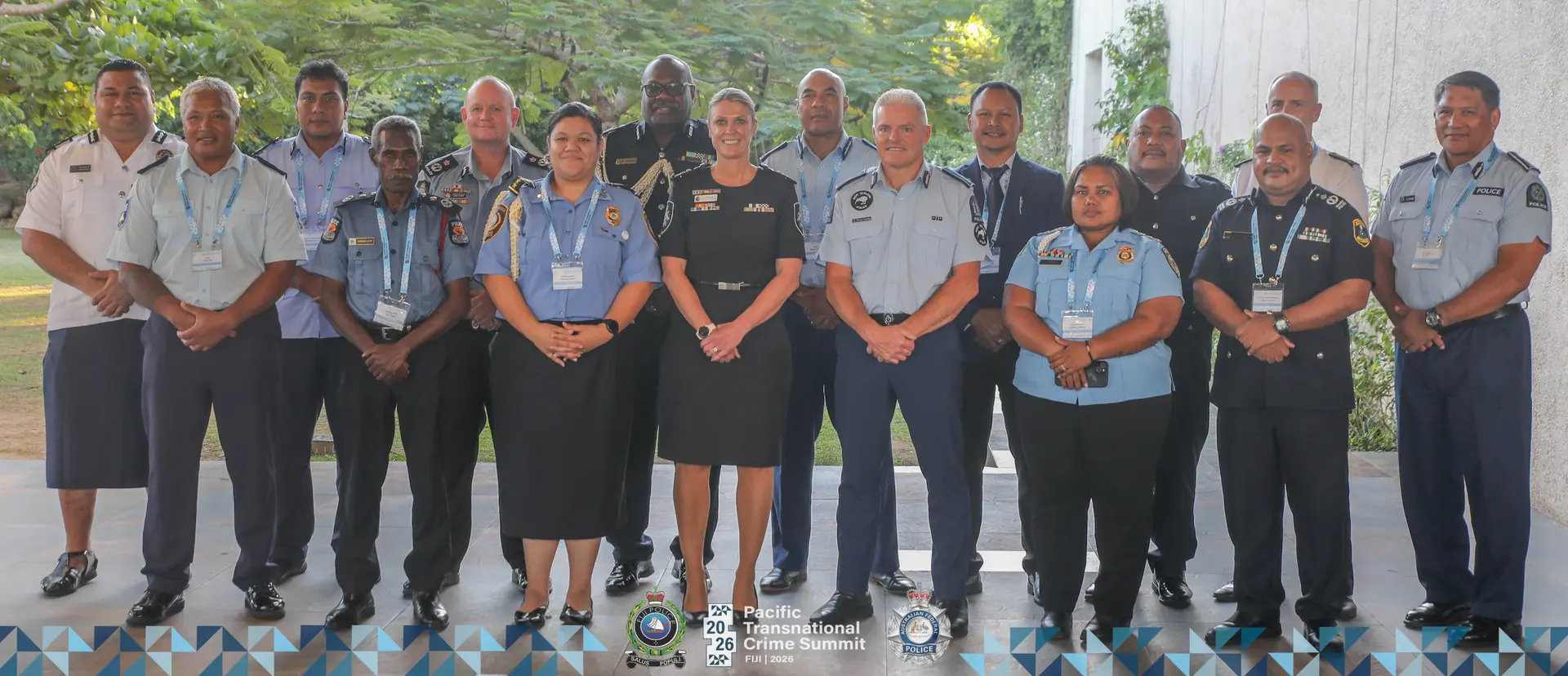
From 18 to 22 May 2026, the Fiji Police Force and the Australian Federal Police (AFP) co-hosted the inaugural Pacific Transnational Crime Summit in Nadi — the first of its kind in the region. AFP Commissioner Krissy Barrett warned that the magnitude of maritime drug trafficking to and through the Pacific had become a serious national security threat.
Related stories
Fiji Police Commissioner Rusiate Tudravu called for a collective approach, saying Pacific nations could not afford to work in silos as the status quo would be detrimental to the entire region.
The summit brought together representatives from INTERPOL, US Homeland Security Investigations, European maritime narcotics agencies, and law enforcement from Colombia, Mexico, Thailand and several Pacific Island nations. The message from every agency in the room was identical: the Pacific is no longer merely a corridor. It is a destination.
From highway to stockpile
For decades Fiji occupied a specific and dangerous position in the global narcotics architecture — a transit point on the Pacific drug highway between South American and Southeast Asian producers and the high-price consumer markets of Australia and New Zealand. But since 2020, domestic consumption surged as the pandemic disrupted illicit trade routes.
As UNAIDS Asia-Pacific regional director Eamonn Murphy stated: "Drug supply used to transit through Fiji, it wasn't really a domestic market. But during Covid, the drug trade got stuck there."
Over time, drugs in transit fell into the hands of Pacific Islanders, partially due to corruption among police and customs officials, and the region is now emerging as a market in and of itself.
Virginia Comolli, an organised crime expert advising leaders at the summit, confirmed: "Fiji is the most striking case — but this is also happening elsewhere in Tonga, Solomon Islands, PNG."
The Vatia moment
On the night of 15 January 2026, officers from the Criminal Investigations Department, the Serious Organised Crime and Intelligence Department and the Western Division Taskforce executed a raid in Vatia, intercepting a vehicle allegedly transporting bags of illicit substances.
Forensic analysis confirmed 2,630 seized parcels weighing 2.64 tonnes, with an estimated street value of USD 527 million — approximately FJD 1.2 billion. Six men — four Ecuadorian nationals and two Fijians — were arrested. A Tongan national was later added, bringing total charges to eleven. The drugs had been transported via a semi-submersible vessel, a narco-sub, which has not yet been located.
The operation began in July 2025 in close liaison with the United States Drug Enforcement Administration. The apprehension of four Ecuadorians linked to international supply chains indicated that Fiji was no longer merely intercepting drugs at its borders — it was beginning to penetrate the networks themselves.
The Numbers That Indict a System
Between 2022 and 2025, a total of FJD 3.6 billion worth of methamphetamine and FJD 91.9 million worth of cocaine were seized by police, along with FJD 197.5 million in marijuana — a combined total of FJD 3.9 billion in drugs seized in four years. That figure excludes the FJD 1.2 billion Vatia cocaine haul. There were 7,710 drug-related cases from 2021 to 2025.
iTaukei Fijians top the list at 6,123 cases — 79 per cent of the total. The 17 tonnes seized across the Pacific region since January 2026 already far exceeds the 4.6 tonnes seized during the whole of 2025 — the equivalent of three tonnes every month. These are not statistics from a country managing a transit problem. They are the indicators of a country whose communities are being consumed from within.
The Corruption Cancer
On 1 December 2025, a social media activist posted more than 100 screenshots of Viber messages between Fiji police officers and a member of an Auckland-based organised crime group. Police personnel depicted ranged from beat cops to Criminal Intelligence Division officers to the head of the Narcotics Bureau, Fisi Nasario.
The messages purportedly showed officers demanding a hit be put on an individual, providing tip-offs about police locations and movements, demanding payments, concealing weapons and military-grade explosives, and arranging drop zones and pickup locations. A multinational investigation involving AFP and NZ Police was completed after six months.
The file was forwarded to the Director of Public Prosecutions in May 2026. When the institution mandated to stop the narcotics trade is itself implicated in facilitating it, no summit resolution, however well-intentioned, can substitute for the structural reform that investigation now demands.
The HIV catastrophe
The most devastating consequence of Fiji's transformation from transit corridor to stockpile nation is not measured in seized kilograms. It is measured in infection rates.
The World Health Organisation's representative for the South Pacific, Dr Mark Jacobs, stated plainly: "Fiji has the fastest growing HIV epidemic in the world."
UNAIDS estimated that the number of new HIV infections in Fiji increased by 3,091 per cent since 2010. In 2024, 1,583 new HIV cases were reported nationally, while 1,226 cases were notified in the first six months of 2025 alone. UNAIDS modelled estimates suggest total people living with HIV reached approximately 6,100 in 2024 — up from around 2,000 in 2020.
Among people starting HIV treatment in 2024, 48 per cent were people who inject drugs. A WHO and UNDP rapid assessment by the Kirby Institute found that all participants reported reusing needles after others due to the absence of any needle or syringe programme in Fiji. The epidemic is not incidental to the narcotics crisis. It is its most direct biological consequence.
The Pacific contagion
Fiji's crisis is the most acute expression of a regional phenomenon. French Polynesia intercepted a third cocaine shipment within a single month, with hauls valued at FJD 2.4 billion in thirty days. Three empty narco-sub vessels were found floating near the Solomon Islands. New Zealand police announced strengthened cooperation with Samoa and Tonga. The Marshall Islands President stated publicly that drug users were "not being prosecuted as much as I'd like."
AFP Commissioner Barrett warned that Pacific Island countries were now increasingly exposed to the devastating social impacts of illicit drugs, with the threat exponentially increasing and corroding health systems, family structures and future generations.
The HIV epidemic that metastasised in Fiji after COVID locked drugs into its communities is not a uniquely Fijian vulnerability. It is a warning to every small Pacific island nation watching drugs transition from transit cargo to local commodity.
The Colombia solution
At the Suva summit, Australia and New Zealand announced they would fund an International Joint Investigations Team based in Colombia, working with the Colombian Attorney General's Office, the National Police of Colombia, the Colombian Navy, Mexican authorities, US law enforcement, INTERPOL and Pacific chiefs — with the explicit goal of targeting drug shipments before they enter the Pacific region. New Zealand will base one liaison officer permanently in Bogota.
AFP members in Bogota have already deployed to remote Colombian jungle to destroy cocaine production laboratories. This month, AFP in Bogota supported Colombian law enforcement in arresting multiple people operating drug trafficking networks in narco-terrorist controlled territories. Colombia produces approximately 70 per cent of the world's cocaine.
The logic of interdiction at source is sound. Whether it is sufficient, without parallel institutional reform inside Fiji itself, is the question the summit did not fully answer.
What comes next
The Republic of Fiji Military Forces and the Fiji Police Force have launched a Joint Counter Narcotics Task Force, with Brigadier-General Manoa Gadai declaring there would be "no haven for criminals involved in the illicit drug trade." The summit also marks a key milestone under the Fiji-Australia Vuvale Union, with security and intelligence sharing identified as a core pillar.
Fiji PM Rabuka acknowledged the country must rely on superior technology and intelligence capabilities of regional partners. What the summit, the Bogota team and the Vuvale Union cannot achieve alone is the internal institutional reckoning that eleven corrupted police officers, one implicated Narcotics Bureau chief and a metastasising HIV epidemic make unavoidable.
Fiji is no longer ground zero by accident. It became ground zero through COVID disruption, through systemic corruption, through the absence of harm reduction services, and through decades of treating narcotics as a transit problem rather than a sovereign crisis. The Colombia team will intercept the supply. Only Fiji can address what the supply has already left behind.
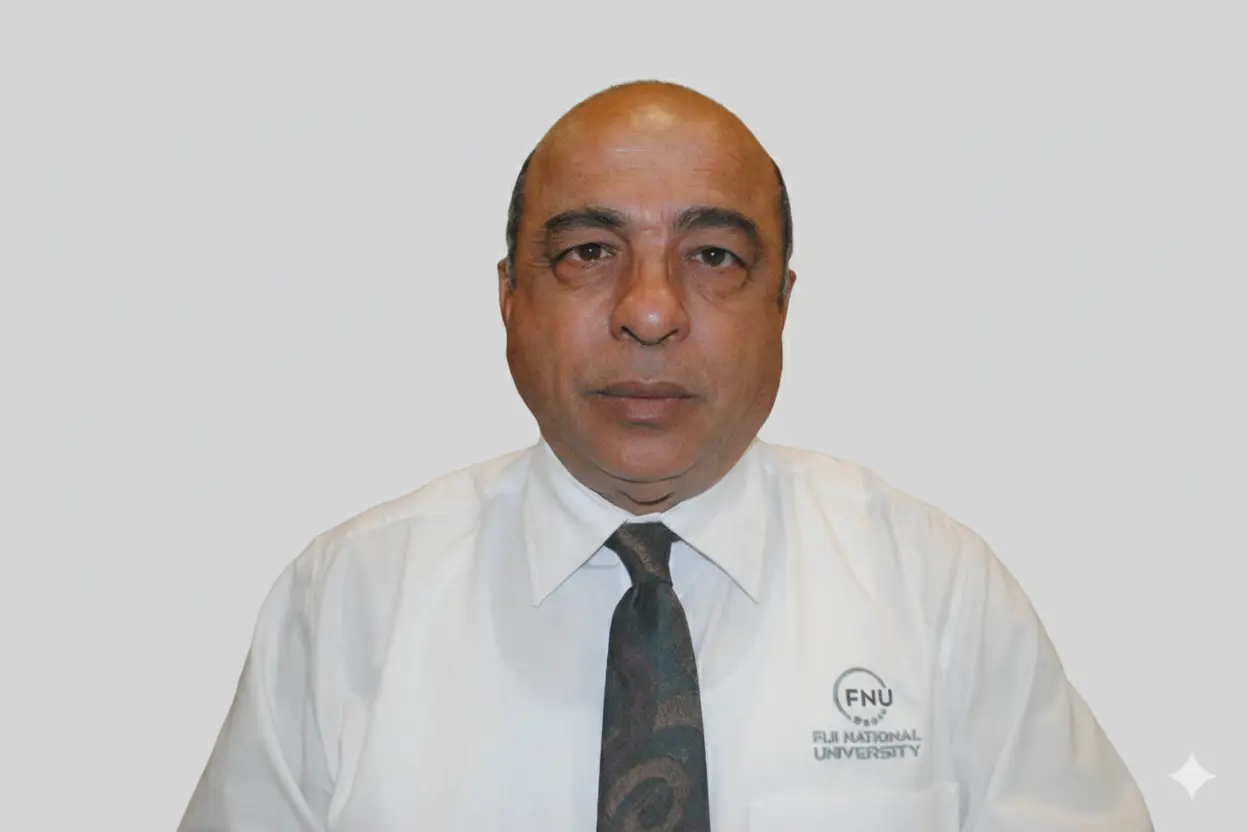
(Dr Sushil K Sharma BA MA MEng (RMIT) PhD (Melbourne) — World Meteorological Organisation (WMO) Accredited Class 1 Professional Meteorologist. Former British Aerospace, The Royal Saudi Air Force and Bahrain Air Navigation Directorate Aviation Meteorologist. Former Associate Professor of Meteorology, Fiji National University. The views expressed are those of the author alone and do not represent the views of this newspaper.)