The spear turns: Why the RFMF's call for accountability is Fiji's most courageous act of statesmanship
Rather than clinging to legal loopholes or treating the immunity clause as a convenient shield, our government has a historic opportunity to demonstrate that it governs not for the comfort of the powerful, but for the conscience of our nation.
Saturday 04 July 2026 | 07:30
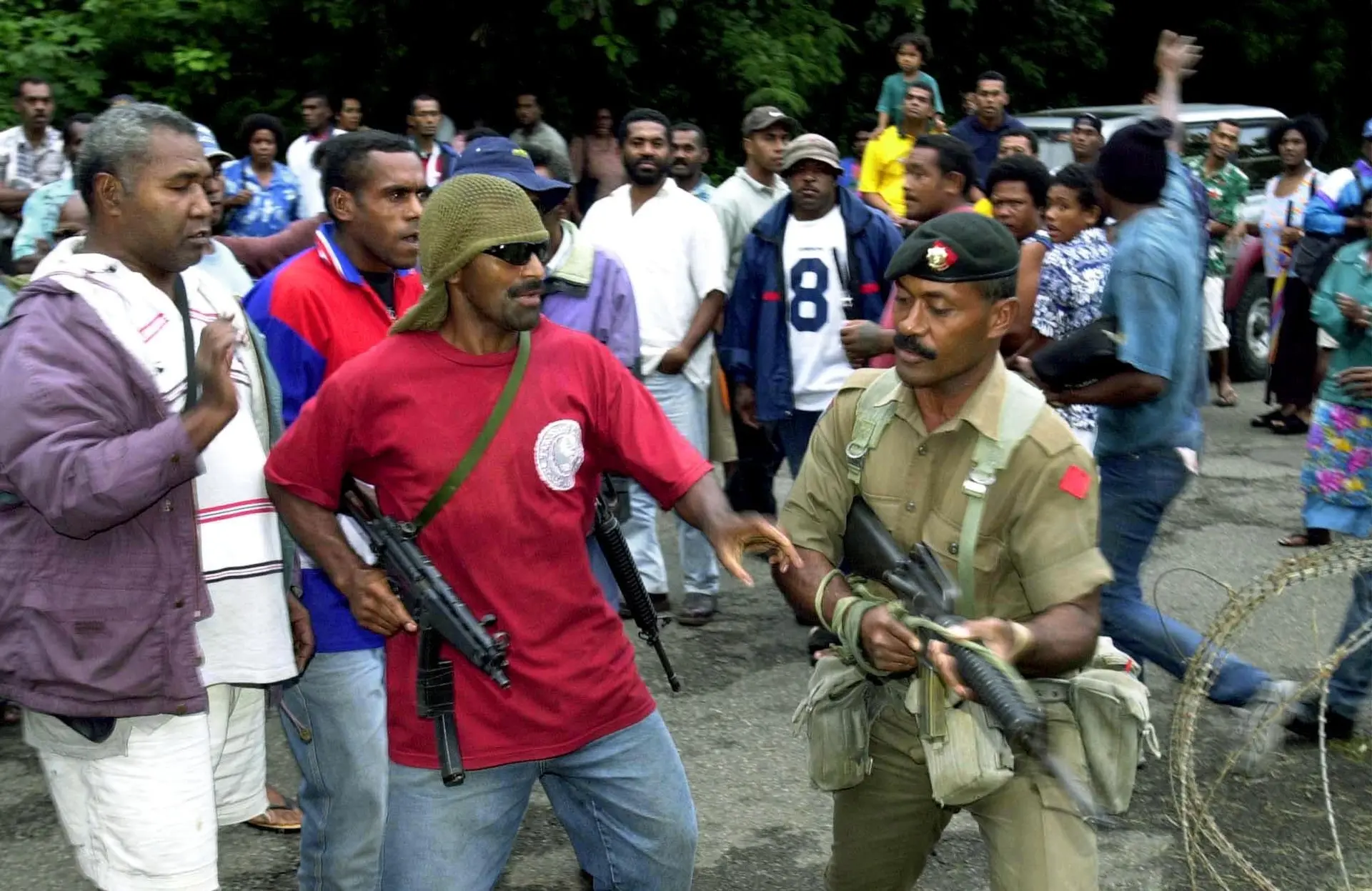
For nearly four decades, Fiji has lingered in political purgatory. We have constructed, as RFMF
Commander Major-General Ro Jone Kalouniwai so poignantly observed, a house "whose walls
were built to protect the architects of rebellion, rather than the citizens of this nation." But on
Related stories
Thursday, in a moment destined for the annals of our history, the very institution that once
wielded the spear of political intervention voluntarily extended the olive branch of justice.
Through its unprecedented submission to the Constitution Review Commission, the Republic of
Fiji Military Forces has accomplished what no government in our post-1987 era has possessed
the moral fortitude to do: it asked to be held accountable. By calling for the removal of the
"Mark of Impunity"—the constitutional shielding of past acts from legal scrutiny—the RFMF
has demonstrated not only institutional maturity but has also shamed our political class into
confronting a truth they have long and carefully avoided.
The Courage of Self-Examination
Let us be clear about the gravity of this moment. The Commander RFMF acknowledged that this
proposal carries "real cost." He admitted that by stepping out from behind legal protections, the
men and women of the RFMF, place themselves at legal risk and risk being perceived by some
within the ranks as committing a "breach of loyalty."
This is not the language of politicians seeking to placate the electorate; it is the language of
selfless leaders willing to sacrifice their own safety for our national soul. How many of our
political leaders, who have enjoyed the protection of these very immunity clauses, have
demonstrated such self-sacrifice? The military is effectively declaring: "If we have erred, we are
willing to face the courts." This stands in stark contrast to our political establishment, which has
often treated the constitution, as a shield for the powerful rather than a sword for the powerless.
A Defining Moment for Government
The RFMF has now passed the ball to the government's court. For years, successive governments
have operated behind the very clauses the military now seeks to abolish, often arguing that
disturbing the immunity provisions would threaten stability—that we must choose between
"justice" and "peace." Today, that argument no longer holds water. The RFMF—the very
institution whose past actions justified those fears—has declared that such fears are no excuse for
inaction.
This is the government's moment to rise. It must now match the RFMF's moral courage with its
own political will. Rather than clinging to legal loopholes or treating the immunity clause as a
convenient shield, our government has a historic opportunity to demonstrate that it governs not
for the comfort of the powerful, but for the conscience of our nation. Commander RFMF has
shown that institutional survival should never be purchased at the expense of the national soul.
The government must now show that political survival should not be either. The challenge is
clear: will the government embrace the truth that justice is a precondition for lasting stability, not
a threat to it?
A Mandate from the Bose Levu Vakaturaga
This move aligns seamlessly with the calls of the Bose Levu Vakaturaga, which has advocated
for truth and reconciliation rooted in indigenous tradition. In many ways, the RFMF is finally
providing the institutional backbone to a moral imperative that iTaukei society—through its
traditional structures—has always understood: you cannot move forward until you have made
peace with the past.
The RFMF's proposal to replace blanket immunity with conditional immunity, tied to full public
disclosure through a strengthened truth and reconciliation process, is a masterstroke. It does not
seek vengeance; it seeks truth. It offers a pathway that honours international standards of justice
while respecting the unique cultural and historical context of Fiji. It is a proposal that prioritises
the nation over the institution—and it calls on government to do the same.
Redefining Patriotism
Commander RFMF's assertion that the "survival of any single institution can no longer be
purchased at the expense of this nation's soul" is a rebuke to the entire political class, past and
present. It redefines what it means to be a patriot. For far too long, patriotism in Fiji has been
defined by which coup you supported or which political party you belonged to. The RFMF is
now suggesting that true patriotism is the willingness to subject yourself to the same laws as the
ordinary citizen—to step off the pedestal and stand in the dabibi with the people you are meant
to serve.
The Path Forward
The Constitutional Review Commission now faces its greatest test. Will it show the "moral
courage" that Maj-General Kalouniwai has urged? And will the government, in turn, embrace the
Commission's recommendations rather than shy away from them?
The RFMF has given the government and the Commission the perfect cover to do the hard but
right thing. There is no longer an excuse that "the military will not allow it"—the military is
leading the charge. If government and Parliament fail to act, it will not be protecting the nation
from instability; it will be failing the citizens who have been denied justice for generations. The
government must meet this moment with the same boldness shown by the RFMF. It must see this
not as a political liability, but as the greatest chance in a generation to forge a Fiji where the law
applies equally to all, and where peace is built not on silence, but on truth.
The RFMF has shown us that true strength is not the ability to seize power, but the humility to
relinquish it. Now, the government must show that true leadership is not the ability to hold
power, but the wisdom to use it for redemption. The alternative, as Commander RFMF warned,
is a "nation of perpetual drifting"—a cost that our children and grandchildren should never have
to bear.
The spear has turned and is showing government the way. The question is: will our government
dare to till the soil?
---
Ro Naulu is a commentator on current Fijian affairs. These are his personal views.