Police admit raids alone failed to curb Kadavu drug trade, turn to chiefs
Police say enforcement alone has failed and communities must now take greater responsibility.
Thursday 30 July 2026 | 10:00

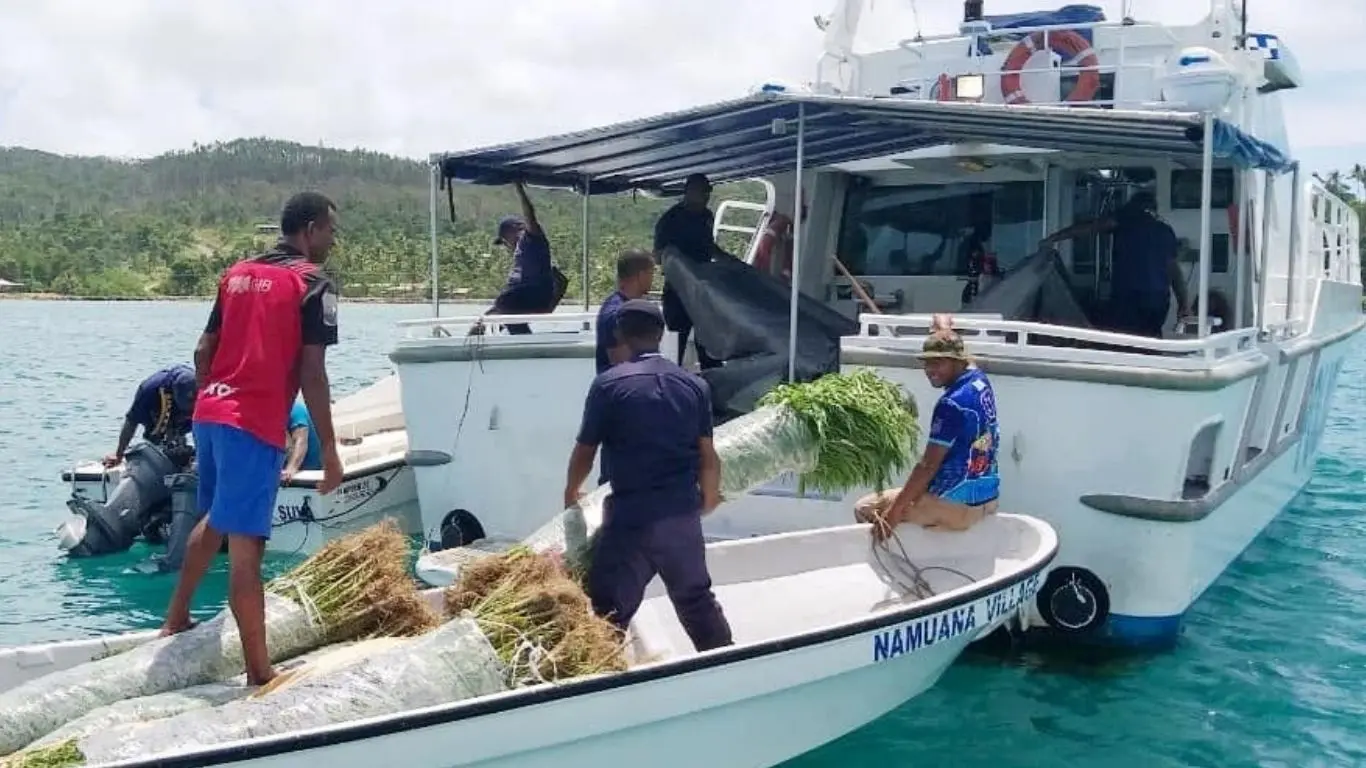
Marijuana plants seized by police during an earlier operation in Kadavu.
Photo: Police Media Cell
The Fiji Police Force is changing its approach to tackling drugs in Kadavu.
It is now shifting from police-led operations to a community-driven strategy that places greater responsibility on local leaders.
After 12 years of drug operations on the island, police have acknowledged that enforcement alone has not delivered lasting results, prompting a new strategy that puts chiefs, village leaders and communities at the centre of the fight.
Related stories
Divisional Police Commander Central, Superintendent Luke Cerenasiga, said Kadavu had become too dependent on police teams deployed from Suva, leading to the decision to reduce the direct police presence and strengthen community ownership.
"We have been carrying out operations in Kadavu for the past 12 years, but we have not seen a significant impact," SP Cerenasiga said.
He said the new approach was designed to encourage local authorities to take greater responsibility for addressing drug-related activities within their communities.
"We decided to reduce our direct operational presence in Kadavu. The aim is to allow local authorities and communities to take on their responsibilities and deal with drug-related issues within Kadavu."
Under the strategy, village leaders, chiefs and district representatives will be expected to identify drug problems, report offenders and work alongside police and the Ministry of iTaukei Affairs to safeguard their communities.
Kadavu has long been a major focus of Fiji's anti-drug campaign, with police uncovering large-scale marijuana plantations over the years.
In 2021, police seized marijuana plants from farms in Kadavu with an estimated street value of more than $539 million, underscoring the scale of the illegal drug trade in the province.
SP Cerenasiga said police had been trialling the new approach for the past two months while working closely with the Turaga na Roko Tui Kadavu to coordinate community-led action.
He said the issue was confined to only a small number of communities.
"Kadavu only has a small number of communities affected. Overall, Kadavu remains a good place. Only certain parts of the island have experienced these problems."
Call on chiefs
SP Cerenasiga said communities such as Tavuki had demonstrated a willingness to address drug-related issues but required stronger leadership and government support.
He acknowledged that Kadavu's size and the limited number of police officers remained significant challenges, adding that strengthening the Criminal Investigation Department's presence would be vital in dismantling organised drug networks.
He also urged chiefs across Fiji to follow the example set by Namosi, where traditional leaders declared the province drug-free and used customary authority to discourage drug activities.
However, he stressed that any action taken by chiefs must remain within the law and involve both police and the Ministry of iTaukei Affairs.
SP Cerenasiga also rejected claims that police officers were involved in the drug trade in Kadavu, saying no such reports had been received.
He warned that any officer found engaging in illegal drug activities would have "no place in the Fiji Police Force."
The strategy marks a significant shift in the fight against drugs in Kadavu, moving away from an enforcement-led model towards one built on partnerships between communities, traditional leaders and government agencies.