Dialogue Fiji warns against postponing upcoming General Election
Dialogue Fiji says any election delay beyond Parliament's mandate would be unconstitutional.
Friday 19 June 2026 | 10:00
Updated 19 June 2026 | 11:05 FJT

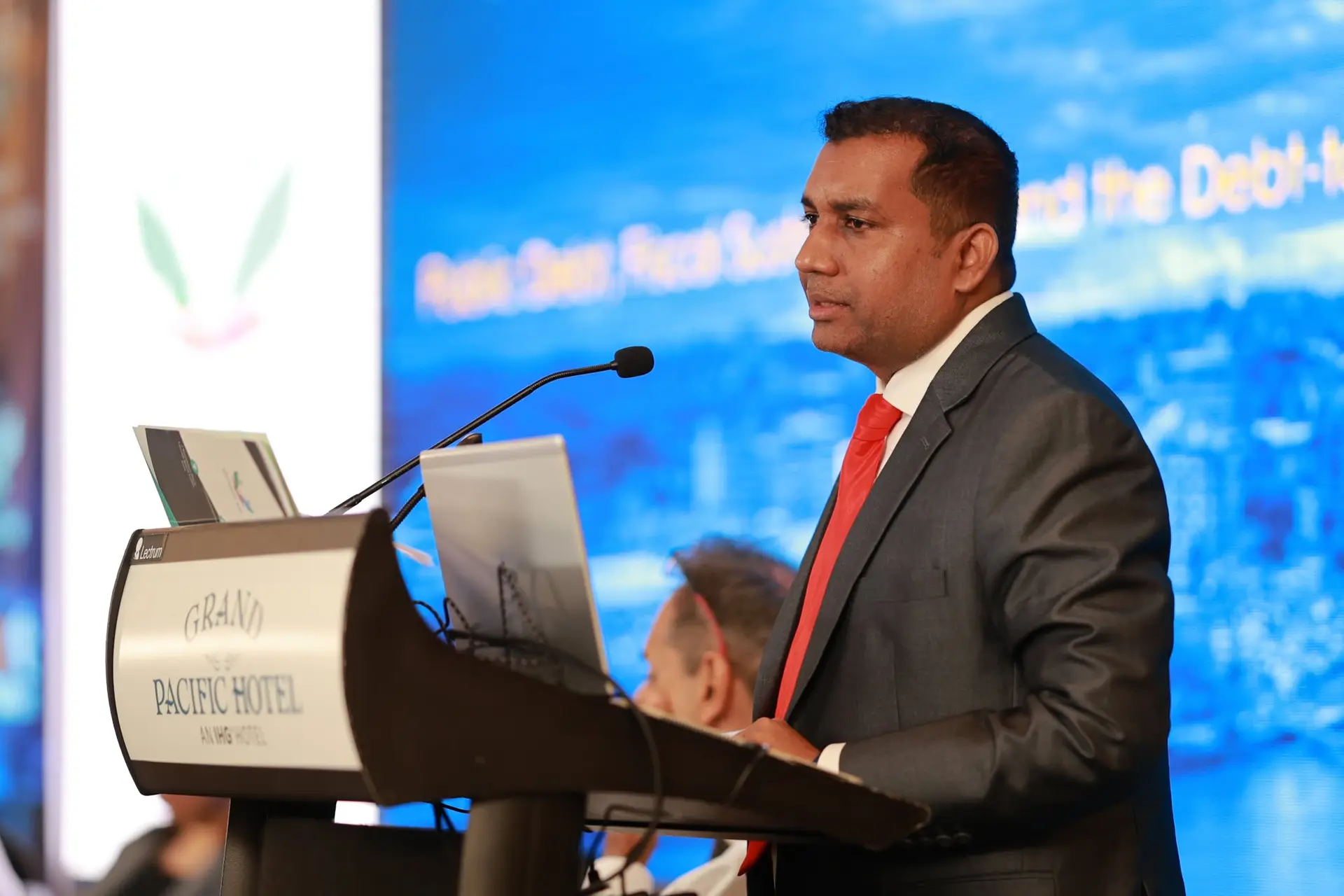
Centre for Democracy and Dialogue executive director Nilesh Lal.
Photo: Supplied
Any move to delay Fiji's next General Election beyond the constitutional deadline could trigger a legitimacy crisis, economic fallout and possible international sanctions, Dialogue Fiji executive director Nilesh Lal has warned.
His comments follow remarks by Prime Minister Sitiveni Rabuka that any decision to postpone the 2027 General Election would require parliamentary approval.
Mr Rabuka said Government was weighing several factors, including the work of the Constitutional Review Commission and ongoing electoral reforms, before confirming whether the election would proceed as scheduled under the 2013 Constitution.
Related stories
However, Mr Lal argued that Parliament has no legal authority to extend its own term or delay elections beyond the mandate given by voters in the 2022 General Election.
"It will be called a military or a self-coup, and it is going to lead to a huge legitimacy crisis," he said.
He said Parliament's mandate expires four years after an election and any continuation beyond that period without fresh polls would be unconstitutional and undemocratic.
"The mandate of Parliament that was given to it by the 2022 election is going to expire. Parliament will no longer have any legal authority to make decisions or make laws once that term is completed," he said.
Mr Lal warned that delaying elections would damage Fiji's democratic reputation and could reverse gains made since the return to elected rule in 2014.
He also cautioned that such a move could prompt a strong international response, including the withdrawal of diplomatic recognition, financial assistance and concessional loans.
"There could be sanctions, withdrawal of recognition, and financial and economic sanctions," he said.
Mr Lal said any constitutional change affecting Parliament's mandate must ultimately be decided by the people, not elected representatives.
"It is the people who can make changes to the Constitution, not Parliament," he said.
Mr Rabuka maintained that Government would remain guided by constitutional requirements while considering reforms, adding that any changes would require parliamentary approval.
According to the Electoral Act, the only valid reason under the law to postpone an election is force majeure -unforeseen, insurmountable acts of God or catastrophic events entirely beyond human control.