Women dominate voter rolls but remain underrepresented in politics
Even in older age groups, including those aged 61 to 70 and above, women remained a consistent presence, with thousands registered and actively participating in the electoral process.
Tuesday 28 April 2026 | 19:00
Updated 13 May 2026 | 18:45 FJT

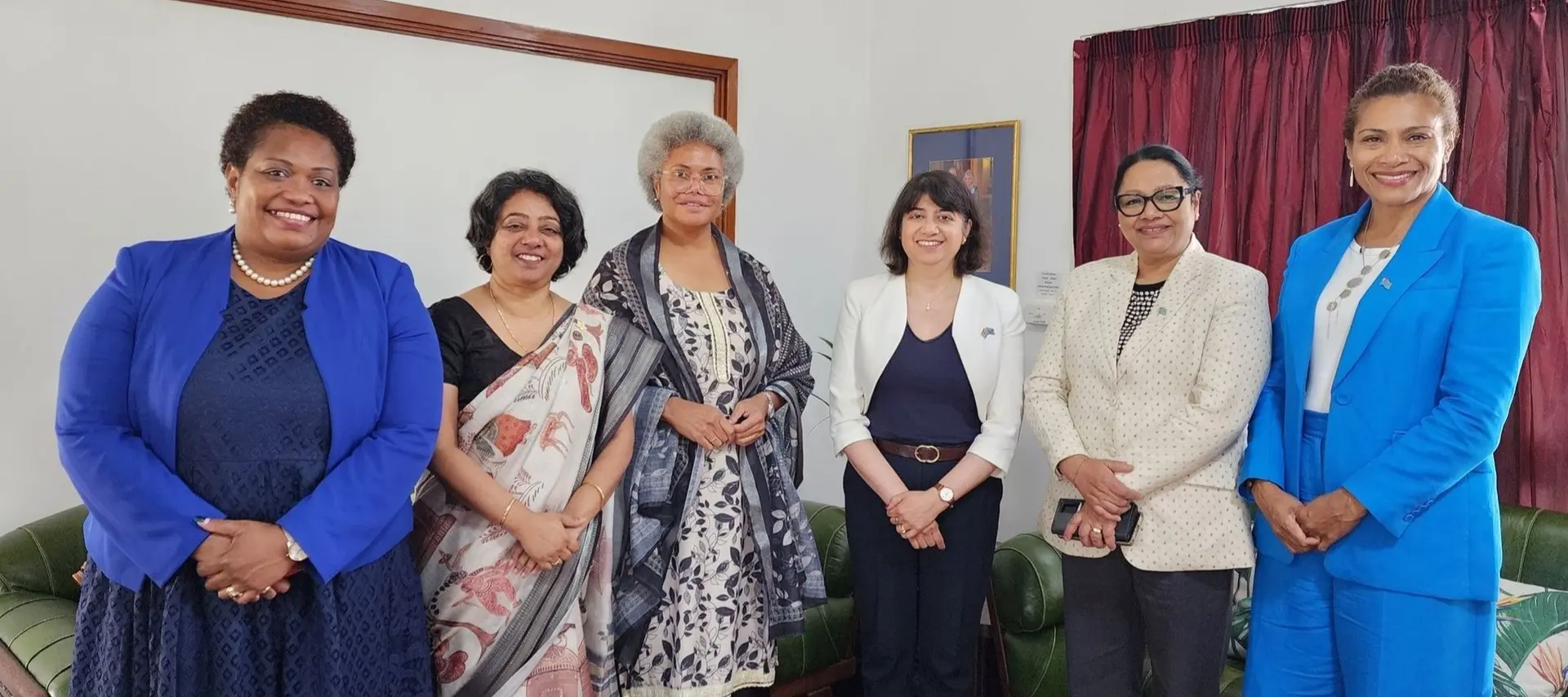
The five women members of the Fiji Parliament met with United Kingdom’s Minister of State for the Indo-Pacific and Minister for Equalities. Seema Malhotra.
Women are turning out in strong numbers at the ballot box, but their growing presence as voters is yet to translate into equal political representation.
Figures from past general elections show a steady rise in voter registration, increasing from 591,101 in 2014 to 693,915 in 2022, while turnout declined from 84.6 per cent to 68.3 per cent over the same period.
A closer look at the 2022 General Election data reveals that women make up a significant share of registered voters across all age groups and divisions, in many cases matching or even outnumbering male voters.
Related stories
Among young voters aged 18 to 20, more than 31,000 were registered, with female voters slightly outnumbering males in key divisions such as Central and Western. This trend continues across major voting blocs.
In the 21 to 30 age group, one of the largest segments, there were 154,740 registered voters, with female numbers nearly equal to males across all divisions, including 36,316 women in the Central Division and 27,832 in the Western Division alone .
Similarly, in the 31 to 40 age group, which recorded 159,494 registered voters, female participation remained strong, with over 34,000 women registered in the Central Division and more than 29,000 in the Western Division.
The trend continues among older voters. In the 41 to 50 age group, women accounted for tens of thousands of registered voters across all four divisions, while in the 51 to 60 category, female voters again closely matched male numbers.
Even in older age groups, including those aged 61 to 70 and above, women remained a consistent presence, with thousands registered and actively participating in the electoral process.
The data highlights a clear pattern: women are not only present in Fiji’s electoral system but form a critical pillar of the voting population across all demographics.
However, despite their strong presence on the voter rolls and at polling stations, women remain underrepresented as candidates and in Parliament.
Minister for Women, Children and Social Protection Sashi Kiran has reinforced calls to strengthen women’s leadership, warning that progress will remain limited unless systemic barriers are addressed.
Ms Kiran reflected on her own journey into political leadership, describing it as one that required resilience, persistence and navigating spaces where women often face heightened scrutiny.
She said persistent challenges, including public perceptions of women in leadership, resistance within political spaces, and the structural barriers that continue to limit women’s participation.
A key concern raised was the role of media coverage in shaping public attitudes.
Ms Kiran noted that women in politics were often judged on peripheral or personal matters, rather than the substance of their work, achievements and policy contributions.
She stressed the need for more balanced and responsible reporting that reflects performance and impact, saying fair coverage was critical in shifting public perception and building confidence in women leaders.