Poor lunchbox habits blamed for childhood obesity in the North
Health officials have raised concerns after obesity rates among primary schoolchildren in the Northern Division increased by 40 per cent in five years.
Thursday 04 June 2026 | 16:30

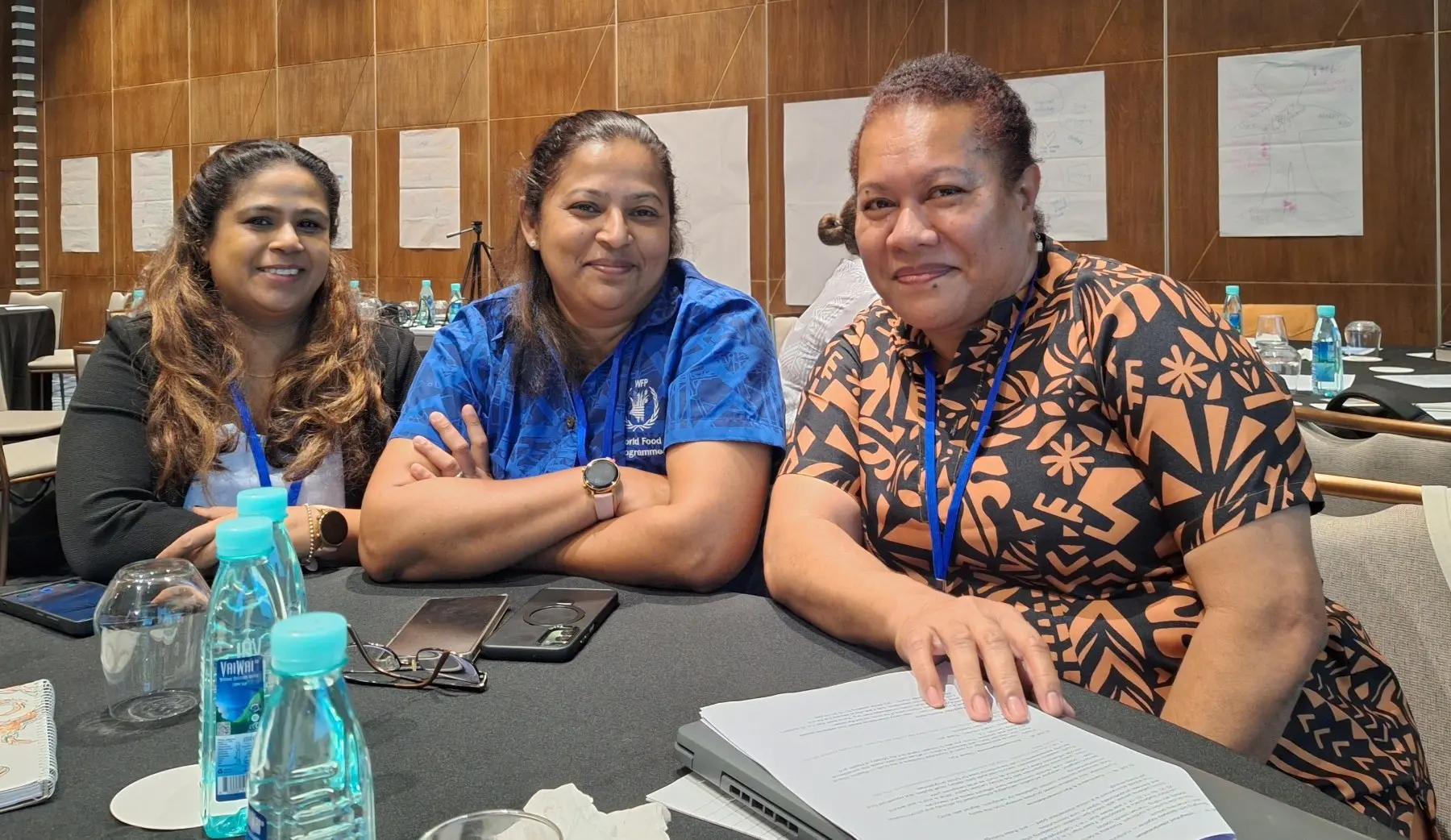
From left: National Food and Nutrition Centre senior nutritionist Kriti Prasad with World Food Programme food security and nutrition policy officer Alvina Karan and Ministry of Health and Medical Services Northern Division dietitian Sainimere Vulibeci at the Pacific School Food Talanoa in Nadi.
Photo: Katherine Naidu
Health officials say overweight and obesity among primary schoolchildren in the Northern Division have increased by 40 per cent over the past five years.
The findings have raised concerns about worsening nutrition habits despite improvements in undernutrition.
The data was presented by Ministry of Health and Medical Services Northern Division dietitian Sainimere Vulibeci at the Pacific School Food Talanoa in Nadi this week.
Related stories
“A significant concern is the increase in overweight and obesity, which rose from five per cent in 2021 to seven per cent in 2025. This represents a 40 per cent relative increase,” Ms Vulibeci said.
The study analysed nutritional surveillance data from 100,207 students across Macuata, Cakaudrove, Taveuni and Bua between 2021 and 2025. It also examined lunchbox audits conducted in 79 schools during the 2022-2023 and 2023-2024 financial years.
Ms Vulibeci said poor lunchbox quality remained a major concern.
“Only 4.8 per cent of Indo-Fijian students had balanced lunchboxes in 2023-2024, while carbohydrate-only lunchboxes increased from 19.8 per cent to 22.9 per cent. This meant fewer than one in 20 children met the balanced meal criteria.
“Among iTaukei children, the proportion of carbohydrate-only lunchboxes nearly doubled from 11.7 per cent to 18.3 per cent.
“The only improvement was recorded in the other ethnic category, where the rate fell from 10.6 per cent to 8.6 per cent,” she said.
Despite rising obesity rates, undernutrition improved, with severe thinness declining from four per cent to three per cent and moderate thinness falling from two per cent to one per cent.
Ms Vulibeci said the COVID-19 pandemic had compounded challenges for families and schools.
“In some rural communities, whatever food a child brings to school may be the only food available to them. Therefore, this issue must be approached with sensitivity and an understanding of the socio-economic realities faced by many families.”
She called for culturally tailored lunchbox guidelines, stronger caregiver education and closer collaboration with the Ministry of Education to improve children's nutrition nationwide.








