Young teacher helping highland students discover new career pathways
Rohen Mani Goundar says vocational exposure gives remote students more career choices
Monday 13 July 2026 | 15:30
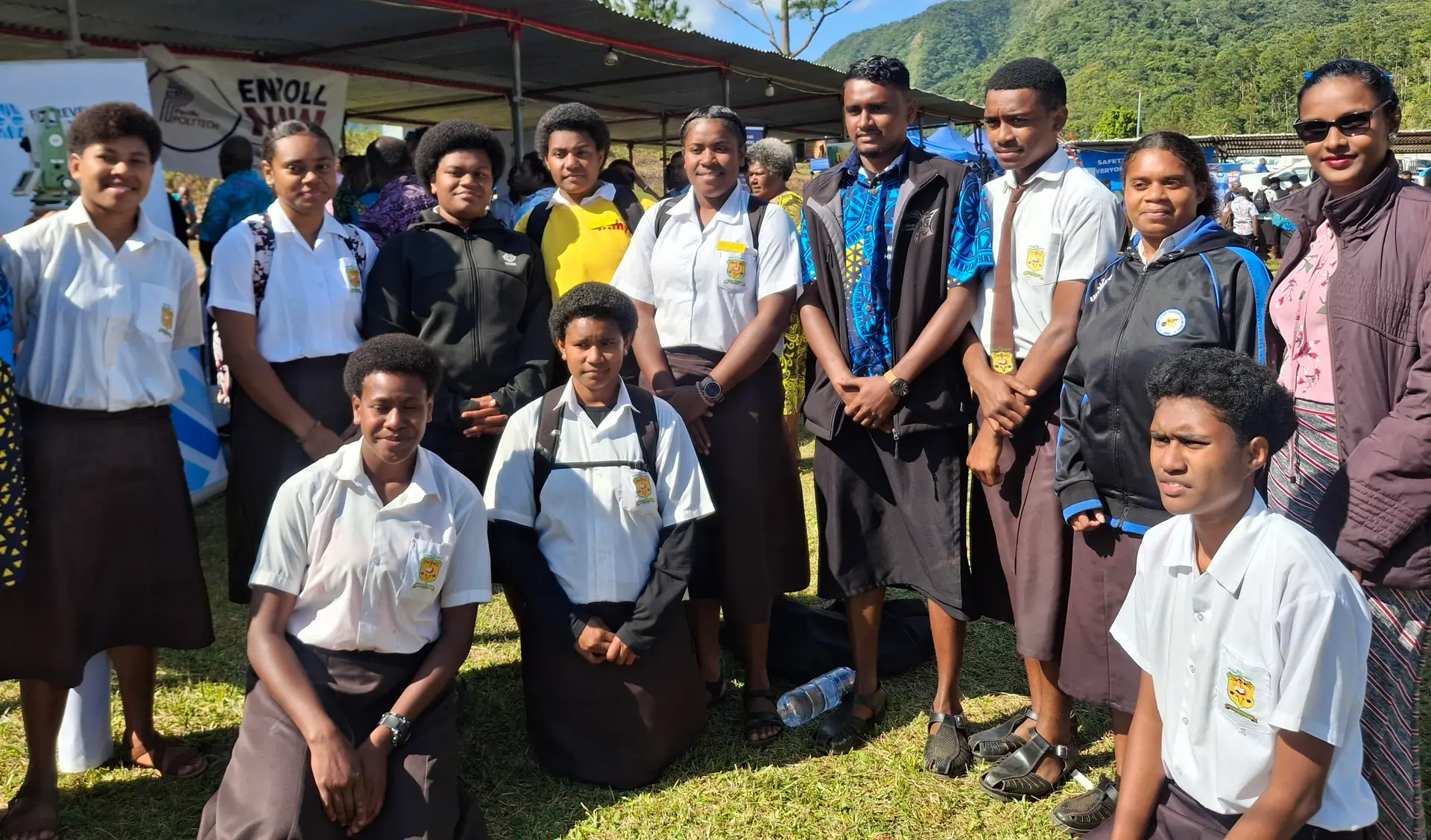
Rohen Goundar (4th standing from right) with a teacher and students of Nadarivatu High School.
Photo: Mereleki Nai
At 24, Rohen Mani Goundar is doing more than teaching lessons at Nadarivatu High School — he is helping students in Fiji's highlands see possibilities beyond the mountains they call home.
The Year 12 and Physical Education, Music, Arts and Craft (PEMAC) teacher believes practical skills and vocational education can open doors for students who may otherwise struggle to find their path after school.
Last Thursday, he accompanied students to a roadshow held during the opening of the new Nadarivatu District Office, where representatives from Pacific Polytech introduced them to vocational education and career opportunities.
Related stories
For many of the students, it was a rare chance to learn about careers beyond traditional academic pathways.
"Many students are not top academic performers, and some are at risk of leaving school early. Exposure to trades such as carpentry and joinery helps them plan their futures," Mr Goundar said.
Originally from Raviravi, Ba, Mr Goundar received his first teaching appointment at the boarding school in 2024.
Nadarivatu High School serves students from four primary feeder schools in the highlands, and teaching there means taking on responsibilities well beyond the classroom.
"Teaching at a highland boarding school comes with many challenges, including hostel supervision and adapting to the cold climate," he said.
Despite the demands, Mr Goundar says the experience has made him a stronger teacher.
"Such experiences foster professional growth and resilience among teachers."
He believes exposing students to vocational training is especially important in remote communities where career guidance and training opportunities are limited.
"The programme gives students a clearer understanding of career pathways and practical skills that support their next steps after school.
"These initiatives help students in remote areas envision practical futures and gain skills relevant to their local communities. Exposure to vocational options also increases student engagement and provides alternative pathways beyond traditional academics."
Mr Goundar said seeing students discover new interests and ambitions made the challenges of teaching in a remote school worthwhile.
He also praised the support he has received from colleagues since arriving at the school.
"The staff and the head of school have been very friendly and supportive. Collaborative relationships among staff members help overcome the challenges of teaching in a remote area," he said.