Fiji launches zero-emissions cargo vessel for island shipping
Fiji has launched its first island-suitable zero-emissions cargo vessel, marking a major step towards cleaner and cheaper maritime transport for remote communities.
Tuesday 12 May 2026 | 16:00
Updated 13 May 2026 | 18:29 FJT

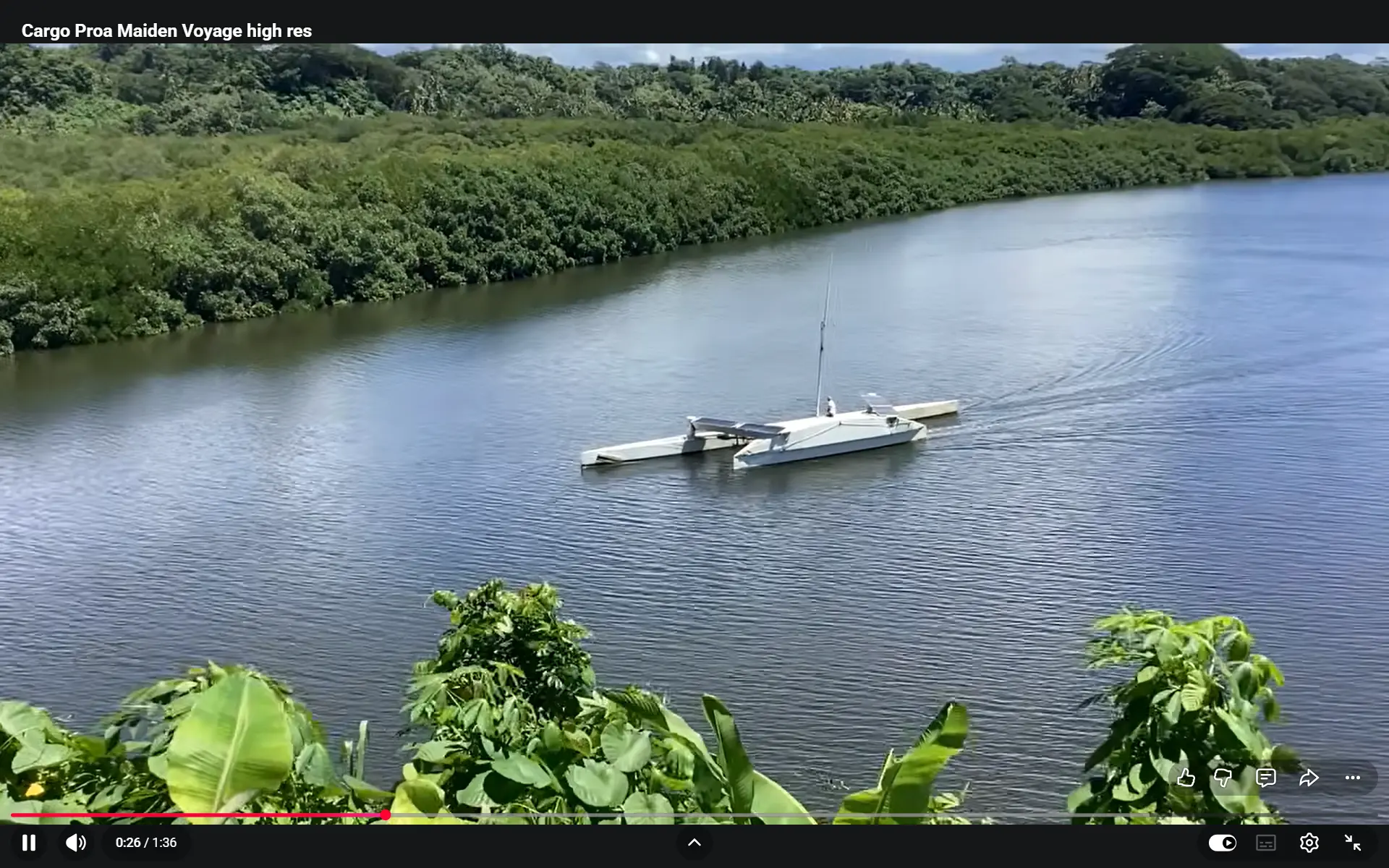
The 24-metre cargo proa prototype completed its maiden voyage this week as part of a United Nations Development Programme-funded initiative aimed at establishing a new Fijian industry focused on zero-emissions shipping.
The 24-metre cargo proa prototype completed its maiden voyage this week as part of a United Nations Development Programme-funded initiative aimed at establishing a new Fijian industry focused on zero-emissions shipping.
Loosely based on the traditional Fijian drua, the vessel was designed and built by the Harryproa team and is capable of carrying two tonnes of cargo on the open ocean and up to 10 tonnes in sheltered waters with only two crew members.
Built using low-tech fibreglass and high-tech resin infusion, the vessel is designed to avoid rust and rot while remaining affordable to produce.
Related stories
The prototype was completed in 2000 man hours.
The vessel is powered by a “short line” kite system when winds are favourable and a solar-electric motor when conditions are calm.
Developers say the kite system requires minimal training and avoids the need for expensive deck equipment.
Cargo is carried in boxes placed on deck, with the containers designed to be small enough for villagers to carry themselves.
The boxes will be produced from recycled waste plastic by Moce Benu, a Fiji-based business.
The vessel is also designed to sail directly onto shallow beaches, allowing villagers to quickly unload and reload cargo without relying on port infrastructure.
Developers say the process is intended to be faster, simpler and more reliable than conventional cargo handling.
The prototype is currently undergoing testing in the Namata River near Bau as part of Maritime Safety Authority of Fiji approval requirements before longer proving voyages begin.
Following approval, the Fiji-based design team plans to further refine the vessel for safer operation, easier handling and low-cost production in Fiji and overseas.
Depending on final optimisation requirements, developers estimate each vessel could cost as little as $100,000.
They say that amount would allow up to 60 cargo proas to be built for the cost of a recently purchased $6 million second-hand vessel servicing the Kadavu and Taveuni routes.
A 20-passenger version is also being considered.
Developers believe the vessels could operate continuously and service remote villages that larger ships are unable or unwilling to reach, improving transport links and creating economic opportunities for maritime communities.
“Fiji not only talks to the world about the need for reducing CO2 emissions, it is now showing how it can be done.”