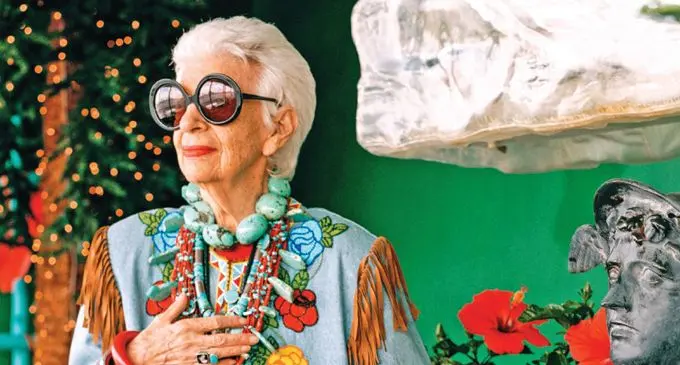
There is perhaps no global fashion icon as consistently wild, untameable, and expressive as Iris Apfel.
She is the queen of eccentricity and this year will be celebrating her 97th birthday, proving that there is no age limit to fashion and self expression.
Easily recognisable by her signature oversized black rimmed glasses, and statement accessories collected from right across the world, and more recently from multicultural New York boroughs like Harlem and the Bronx, Ms Apfel’s bravery can inspire us right here in Fiji as she bravely throws on colour, and is more focused on how she feels, rather than what people tell her is “in”.
Related stories
Iris Apfel’s background
Born to a middle class Jewish-American family in Astoria, Queens, Apfel’s father owned a glass-and-mirror business and her mother owned a fashion boutique.
She went on to study Art History at New York University before attending Art School at the University of Wisconsin.
She has been quoted as saying that “you can’t learn style. Style, I think, is in your DNA.
“You can learn how to be more fashionable, you can learn how to be a better dresser, but I don’t think you can learn style.”
The inherent nature of her style has led to Ms Apfel becoming an icon in the global fashion world, sometimes described a rebel (a term she rejects) who bucks “trends” and instead celebrates unique expression through fashion.
Apfel’s fashion sense
Her collection of exotic and bold fashion was catalogued over many years when she owned and operated Old World Weavers, a textile firm, with her husband Carl Apfel.
The firm was engaged in several significant restoration projects including work at the White House for nine presidents including Truman, Eisenhower, Kennedy, Johnson, Nixon, Ford, Carter, Reagan and Clinton.
On their travels she would collect non-Western, artisans clothes, much like what we produce in Fiji and the Pacific, and she would wear these clothes to New York high society parties.
Sadly, Ms Apfel’s travels did not bring her to Fiji, but her passion for colour, for exaggeration, for making statements through what she wears should inspire us!
A 2005 exhibition of Apfel’s style at the Metropolitan Museum of Art in New York, curated by Stephane Holy-Towner entitled Rara Avis (Rare Bird): The Irreverent Iris Apfel, perfectly packaged the life of one of the world’s greatest fashion icons, and describes perhaps how we should all be when it comes to fashion.
When asked if she needed to be fearless to be fashionable she responded, in an irreverent style, “I never think of things like that, but I guess maybe you do. But why should I worry?
“The fashion Police are not going to come and put me in jail! I love bright colours, but I never did anything that I did to be a rebel... I just did it because I thought it was fun and it was good for me. And as long as I didn’t offend my mother, what anybody else thinks is their problem, not mine!”
Self art
Ms Apfel is an artist, describing herself as a “blank canvas”, she draws her expressions on through what she wears.
In a way we all are. Everything we wear tells a story, every outfit tells people who we are, and who we are becoming. A lesson we can all learn from Ms Apfel is to look in the mirror and to see ourselves reflected in what we are wearing,
“It’s rather sad, because there will be this nice little woman in Squeedunk who sees Angelina Jolie in a dress, who of course looks ravishing, and she’ll buy the dress and it will look pitiful.
“I think the worst faux pas in fashion is to look in the mirror and see somebody else - which so many people do... style is: attitude, attitude, attitude.”
It’s an interesting question to ask yourself - what does what you are wearing today say about you? Even people who say they don’t care about fashion dress to tell the world they don’t care about fashion. There is no escaping it. Fashion is communicative. So say something.
Business of fashion in Fiji
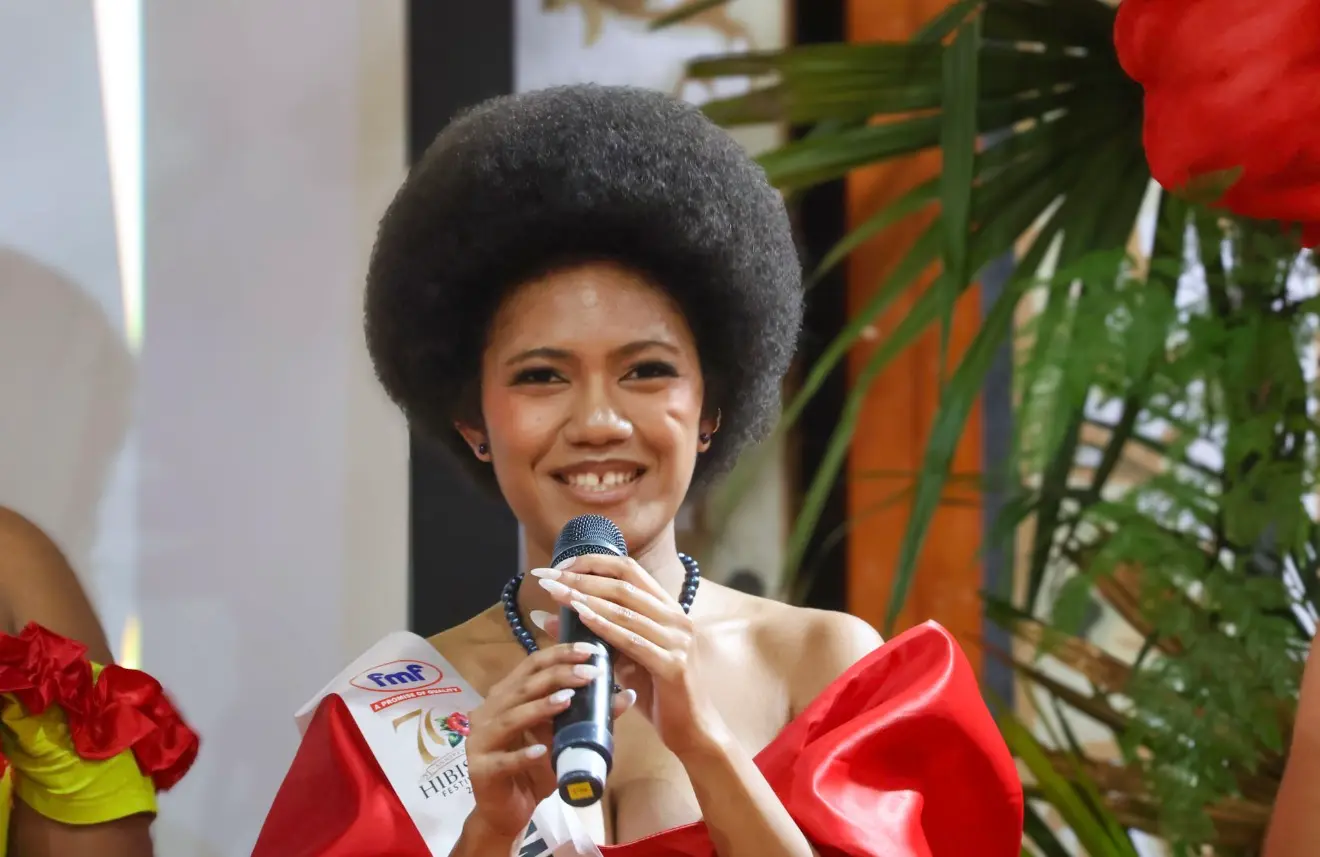
The depth of fashion is beginning to be understood in Fiji, particularly in our fashion capital Suva, where we are seeing an identity form around the way designers create.
Stylists and creative directors are also taking ownership of this identity.
We are beginning to recognise ourselves in the mirror as we are. It is this expression that will help us build successful fashion labels, not the opinions of others who would seek to simplify our style.
Let’s be bold, because our fashion will tell our story, and that’s what matters most.
“That’s what’s interesting if you really want to study fashion, it’s a photograph of daily life. The political climate, the economic climate, the social behaviour - it’s all reflected in fashion.” - Iris Apfel
To celebrate this incredible icon of fashion, the Fijian Fashion Festival and Fashion Council of Fiji will be having an Iris Apfel Party on March 10 from 6pm to 9pm at Shenanigans, Suva
Feedback: maraia.vula@fijisun.com.fj