Academic warns against credit sales, poor cash management
Accurate record‑keeping and financial discipline essential for business sustainability
Friday 01 May 2026 | 14:00
Updated 01 May 2026 | 15:46 FJT
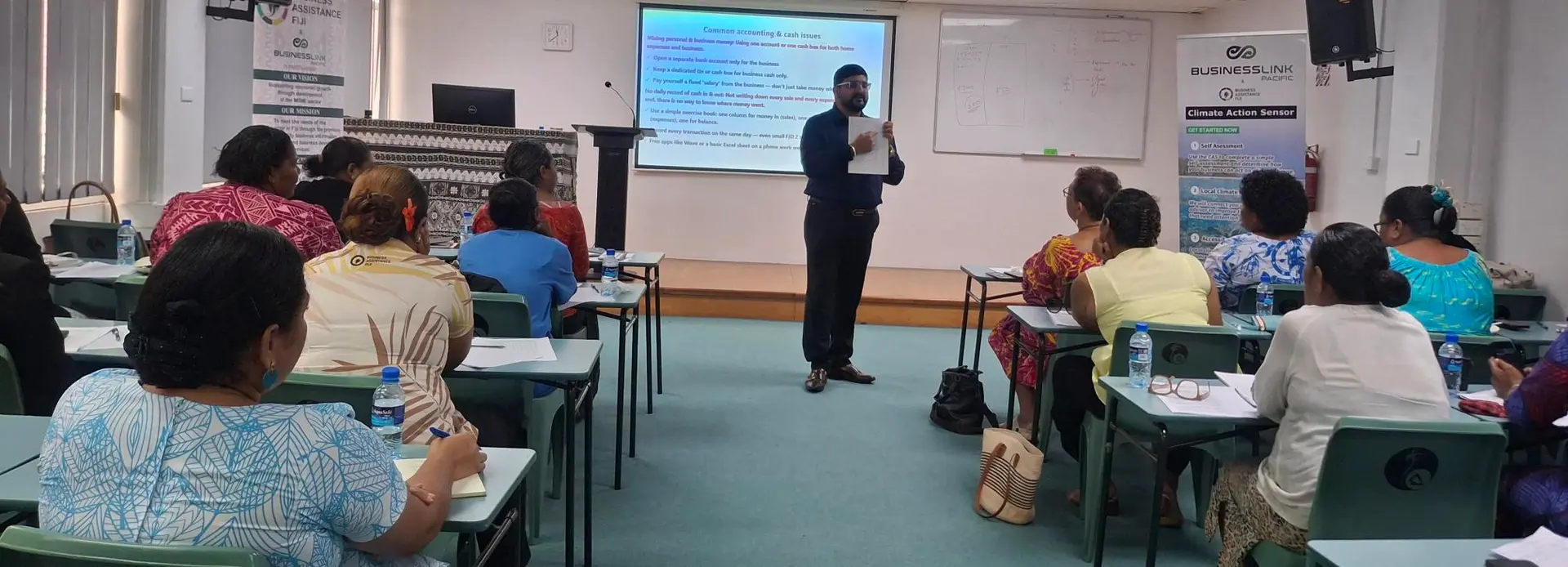
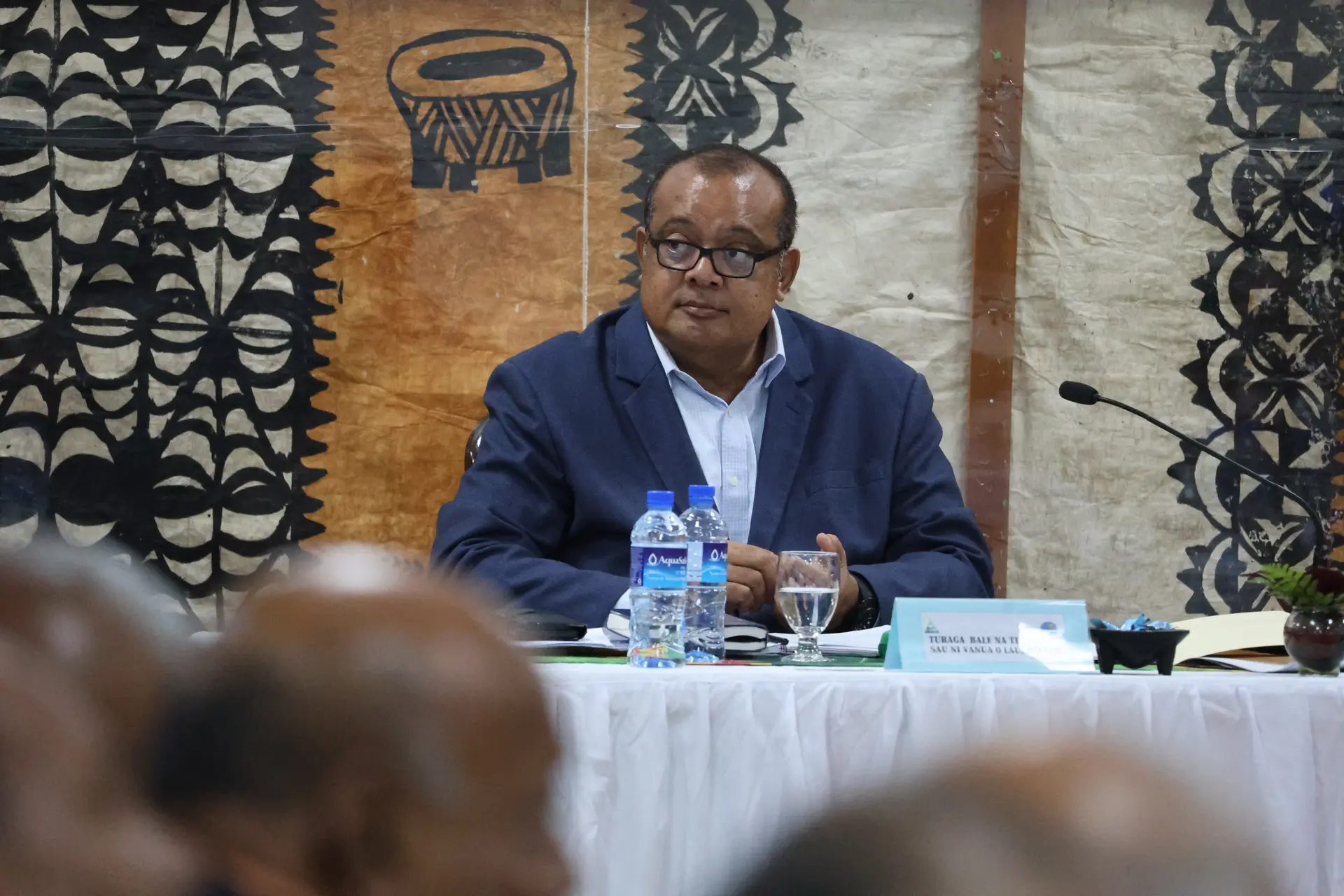
USP Graduate School of Business lecturer Avanish Shukla presenting during the Empowering Women Entrepreneurs in Fiji: Cash Management and Business Skills Workshop held at the USP Lautoka Campus.
Photo: Supplied
The common practice of 'kerekere' can pose serious risks to small businesses if not managed carefully, says University of the South Pacific (USP) Graduate School of Business lecturer Avanish Shukla.
Kerekere is a traditional Fijian practice of requesting and sharing resources within a community based on social obligation and reciprocity.
Mr Shukla was among presenters at the Empowering Women Entrepreneurs in Fiji: Cash Management and Business Skills Workshop held at the USP Lautoka Campus today.
Related stories
His session focused on foundational accounting concepts, including the going concern principle and its importance for business longevity.
He used real-world examples such as Nokia and Kodak to illustrate the risks of failing to adapt to market changes.
Mr Shukla stressed the need for accurate daily record-keeping, distinguishing between cash on hand and actual profit.
He also warned against underpricing, overpricing and excessive credit sales.
“So you need to be very careful when pricing your products or services,” he said.
He described 'kerekere' — informal requests for goods or services on credit — as a challenge for small enterprises.
“We live in a society where this word can be very dangerous in business,” Mr Shukla said. “‘I will pay you tomorrow,’ but tomorrow never comes.”
He advised small business owners to avoid credit sales where possible.
“Do not sell your products on credit because you need cash to restock,” he said.
“But if you must, record everything — who owes, how much, and when — and update it as payments are made.”
Mr Shukla recommended maintaining a separate ledger for credit sales and setting clear credit limits.
“You cannot keep selling on credit. There must also be a budget for slow seasons. Not every day is the same — there are peak periods and times of low or no sales,” he said.
He also encouraged businesses to build emergency cash reserves, budget for seasonal downturns and file tax returns regardless of size.
The session also covered the evolution of accounting practices, from barter systems to modern standards such as the dual-entry system and International Financial Reporting Standards (IFRS), with a recommendation that small businesses adopt simple cash-based accounting methods.
His overall message emphasised adaptability, disciplined financial tracking and forward planning as key to business survival and growth.