Companies And Business To Gain From Rakorako Series
IFC globally and in the Pacific has developed Gender Smart Solutions that address childcare demands and workplace responses to domestic and sexual violence that improves their bottom line.
Tuesday 21 January 2020 | 07:16
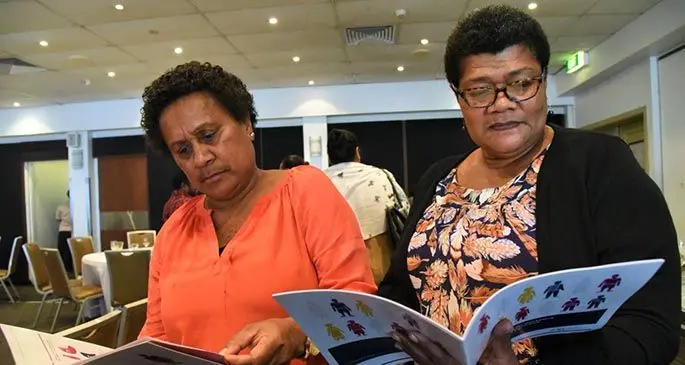
Women reading the “Business Case for Workplace Responses to Domestic & Sexual Violence in Fiji” report after its launch in Suva, last year.
The Fiji Human Resource Institute (FHRI) and the International Finance Corporation (IFC) will host a corporate breakfast for senior executives on Wednesday (22/01/2020).
A statement, released by the two bodies said: “IFC globally and in the Pacific has developed Gender Smart Solutions that address childcare demands and workplace responses to domestic and sexual violence that improves their bottom line.
“To hear more of the work in Fiji, around the region and globally join us to learn more on how to transform your business for a safe, family friendly workplace and empowered workforce.”
Related stories
The corporate breakfast will be held at the Fiji Commerce & Employers Federation (FCEF) Board Room, Suva from 7:30am – 9:30am.
Meanwhile, IFC last year launched the Rakorako series in partnership with the institute.
In an interview, East Asia Pacific Operations Officer-gender, Shabnam Hameed said: “Rakorako is a series aimed at the private sector to help remove barrier to women and men workforce participation. It works in two ways to address two particular issues:
1.Working parents and their child care responsibilities
2.Supporting employees who are affected by domestic and sexual violence.
The Business Study
This is in response to the study called The Business Case for Workplace Responses to Domestic and Sexual Violence in Fiji,” produced by the International Finance Corporation in partnership with the Australian aid programme.
The report identifies the impact domestic violence in the region has on businesses and their productivity — building the case for businesses to deliver programmes that educate and support staff who are victims.
Ms Hameed, said: “The workshop series comes out of the research that we had undertaken with the private sector in recently around the employers support childcare and the business case and also the cost of domestic and sexual violence to Fijian businesses.
“The workshop series is aimed at providing practical guidance on how to address this issues and remove this barriers.”
The first learning series was held in Suva and Nadi, last year, while the second series will be held next month.
IFC Private Sector and Gender specialist Sarah Twigg said: “The time is right for action.
“The findings of the report have spurred some positive first steps towards tackling childcare in Fiji from both government and business.
“The Fijian Government has announced the setting up of a national taskforce to examine options to meet the growing demand for childcare services.
“Several of Fiji’s largest private sector employers are now thinking long term about how they can better support working parents through childcare initiatives, such as offering greater flexibility, parent and caregiver information sessions or setting up childcare services onsite.
“The companies that benefit the most are those that provide a variety of childcare options – from back up care for emergencies, to flexible working arrangements to on-site childcare services.”
Feedback: maraia.vula@fijisun.com.fj