Fishing Days Nearing Sudden End: Chongy
Isoa Chongsue, a fourth-generation Kulukulu resident, believes his fishing days are nearing an untimely, sad and sudden end.
Sunday 23 October 2022 | 16:11

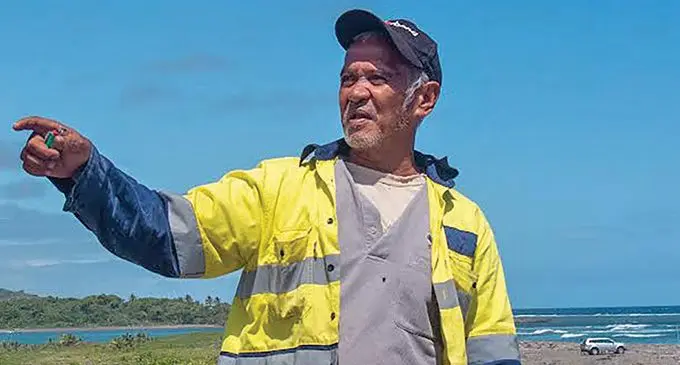
Isoa Chongsue, a fourth-generation Kulukulu resident, believes his fishing days are nearing an untimely, sad and sudden end.
The mounting challenges he is faced with – from the rise in cost of fuel, silting from the Sigatoka river, and a dredging exercise that he believes adversely impacted his fishing business – often disheartens the 62-year old.
“Water that floods Masa (home to sustainable farming for a Kulukulu community), takes a lot more time to recede, than before, ruining crops,” he said.
Related stories
“The river, it’s worse now; buggered.
“It’s a disaster now.
“We can’t farm like we used to, because it damages all the hard work we do.
“It requires 10 times the work we used to do.”
Chongy, as he better known, must now work twice as hard to put food on the table, afford his daughters’ high school educational needs, among his other priorities, all through the sale of fish he catches.
“You only need to drop anchor a few metres outside the reef to realise the level of mud that’s there,” he said.
“When you pull out the anchor, there is mud on it; that was never the case before.”
A sole breadwinner, he must continue to afford school lunches, school sandals, his growing children’s clothes and needs.
“Sometimes there’s no sugar on the table; that’s our reality.”
While his children sleep, Chongy heads out to fish.
“When my children come back from school, I am out fishing; I spend less time with family, and more time fishing,” he said.
“Before, I would fish once a day, get a good catch, rest for a few days, before I head out again.
“I have to work three times as hard now, go out fishing more than once daily, to even try to measure up to what I used to catch.
“It’s tough; it is tough.
“It’s too much.”
He echoes the sentiment of fishermen who now sail as far as Vatukarasa, and near Vatulele, for a worthy catch.
Back in the day, most fisher folk of the area would fish just outside the Kulukulu reef, and near the proverbial “Lucky Corner”, to return with a respectable catch.
“We catch deep sea fish now, because nothing is biting in waters near the coast,” he said.
“Fuel at the time was $10 to take us out and bring us back.
“Today, we could be spending anywhere above $50.”
With talks of iron ore extraction proposed for areas around Kulukulu, he asks if the end is upon his lot.
“How will the iron sand project impact us?” Chongy laments.
“Is it the end for us?
“The river was a beauty before the dredging; not the same now.
“The fish were big near the reef before; not now.”
In the days of old, boat owners did not suffer setbacks at low tide.
“Before the dredging, we would still be able to take the boat out - any boat owner around here can tell you the same,” Chongy said.
“Nature was at its best then.”
Villagers of Kulukulu would travel by river to Sigatoka Town in the past; an activity that stopped after the Sigatoka River was dredged, Chongy said.
Upstream from the Kulukulu estuary, clogged up debris that include plastics, bottles, and rubbish, and overgrown mangroves, threaten the longevity of the waterway, he said.
WHY WAIT
In the face of what Chongy says is irreversible damage, he believes iron sand mining plans must not be delayed.
“My source of livelihood is finished,” he said.
“What does the mining company have to offer?
“I used to live like a prince; now, it’s too hard now, it’s gone.
Further dredging will not solve the problem, Chongy said.
“If there is compensation, pay us, so we can move away from here, and move on with our lives,” he said.
“There used to be jumping jack fish when we would go out to sea.
“We messed with the best part of nature – the river mouth, it’s dead.
“We better move on.”
Feedback: frederica.elbourne@fijisun.com.fj