Lau woman turns traditional knowledge into thriving export business
Former agriculture officer says traditional skills can create sustainable village livelihoods.
Thursday 16 July 2026 | 15:00
Updated 16 July 2026 | 16:07 FJT

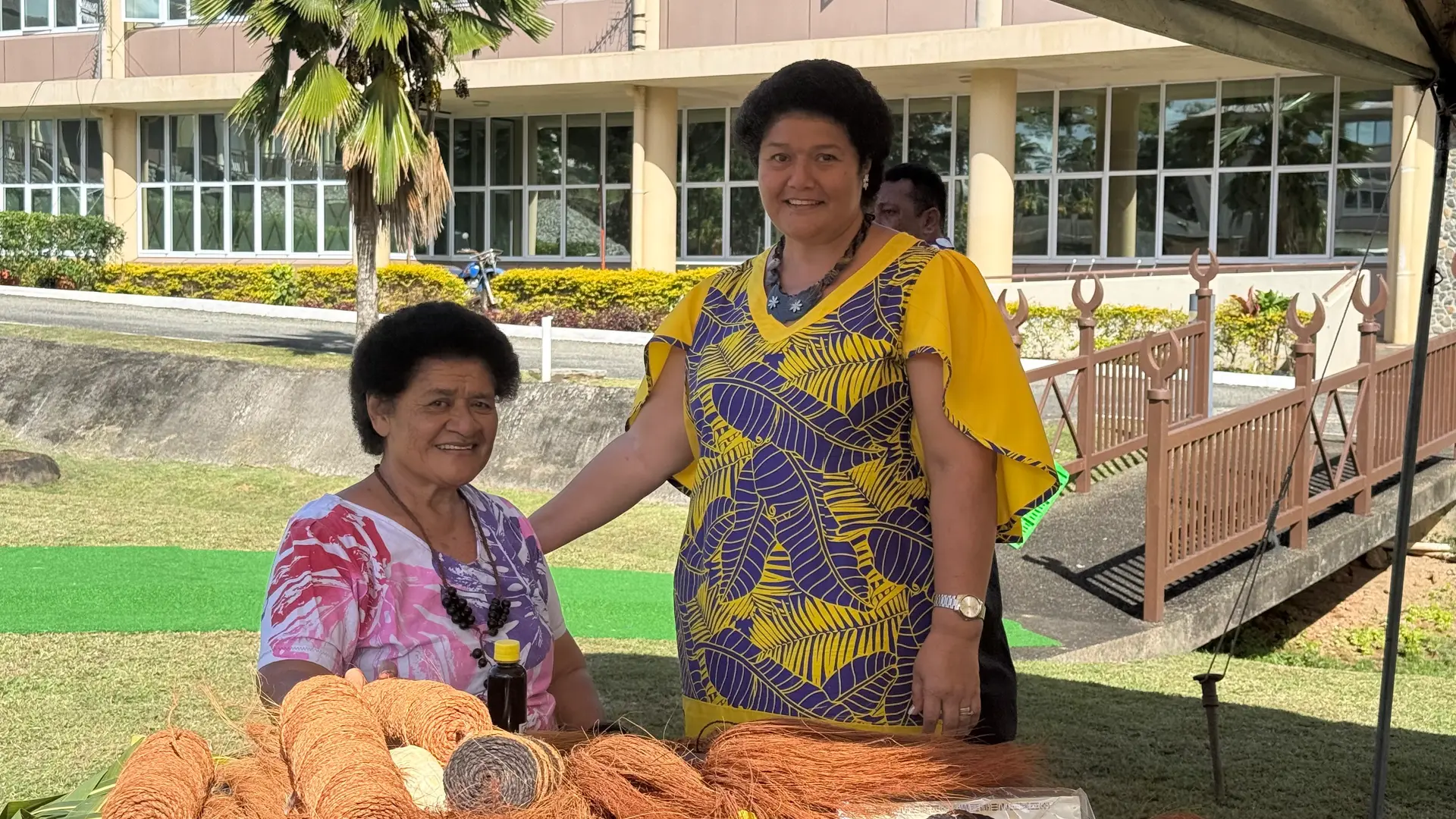
Susana Yalikanacea, left, with Mereseini Waqavakatoga with their produce on display at the GCC ground in Nasese, Suva.
Photo: Talei Roko
After retiring from the Ministry of Agriculture following 32 years of service, Susana Yalikanacea returned to her husband's home on Cicia Island in Lau with a mission — to turn traditional knowledge into a sustainable business.
Originally from Ono-i-Lau and married into Cicia, Mrs Yalikanacea produces traditional magimagi (sennit), dilo oil and handcrafted products using natural resources found on the island.
Through social media, she has built a customer base in New Zealand, Tonga, Australia and the United States.
Related stories
Mrs Yalikanacea said Cicia was renowned for two traditional treasures — magimagi and loaloa, the traditional black dye.
"We are trying to revive our traditional skills and knowledge," she said.
"Many people today no longer have the skills or knowledge to make these traditional items. Everything you see here is handmade. We do not use machines."
She said her 78-year-old husband continued to make the magimagi, with each piece taking about an hour to complete.
"We still use the traditional method of making the black dye. These days many people use imported black ink, but it does not last and it stains the hands."
Mrs Yalikanacea said traditional items were gradually being replaced by modern alternatives.
"The ai roi ni turaga should be used by men, but nowadays many are using ordinary fans instead."
She believes Fiji's villages hold untapped economic potential.
"There is money in our villages. We simply need to understand how to use the abundant natural resources around us.
"We do not have to look overseas or move to urban centres to earn an income. The opportunities are already in our villages, but many people have lost the skills to make use of them."
Mrs Yalikanacea said she moved to Cicia in 1981 and began developing the land in 1985.
"Although my husband can no longer do the physical work he once did, we are still earning an income from our own resources."
She said younger generations had been encouraged to learn traditional skills, but few had taken up the opportunity.
"My message is simple: Go back to the land. There is mana there.
"Learn the skills and use the natural resources around you to create products. That is one way we can help reduce urban drift from our islands."
Mrs Yalikanacea also makes jewellery and handicrafts from coconut shells and other parts of the coconut.
"A heap of coconuts might cost only $3 to $5 at the market, but in the village one coconut can generate about $50 if every part of it is used to make products with cultural value.
"From four coconuts you can earn about $200. The opportunity is already there on our land."
She said social media had opened international markets for her products.
"I sell through my Facebook page and my customers are overseas.
"Last week, we spent two days in Nadi and I earned more than I did while I was employed.
"You do not need to worry about finding a market. Focus on producing quality products, keep enough stock and remain consistent."