Power rationing off… for now
“Every kilowatt-hour saved helps reduce fuel usage, lowers electricity costs, and strengthens Fiji’s energy security,” Mr Gibson said.
Wednesday 27 May 2026 | 14:30

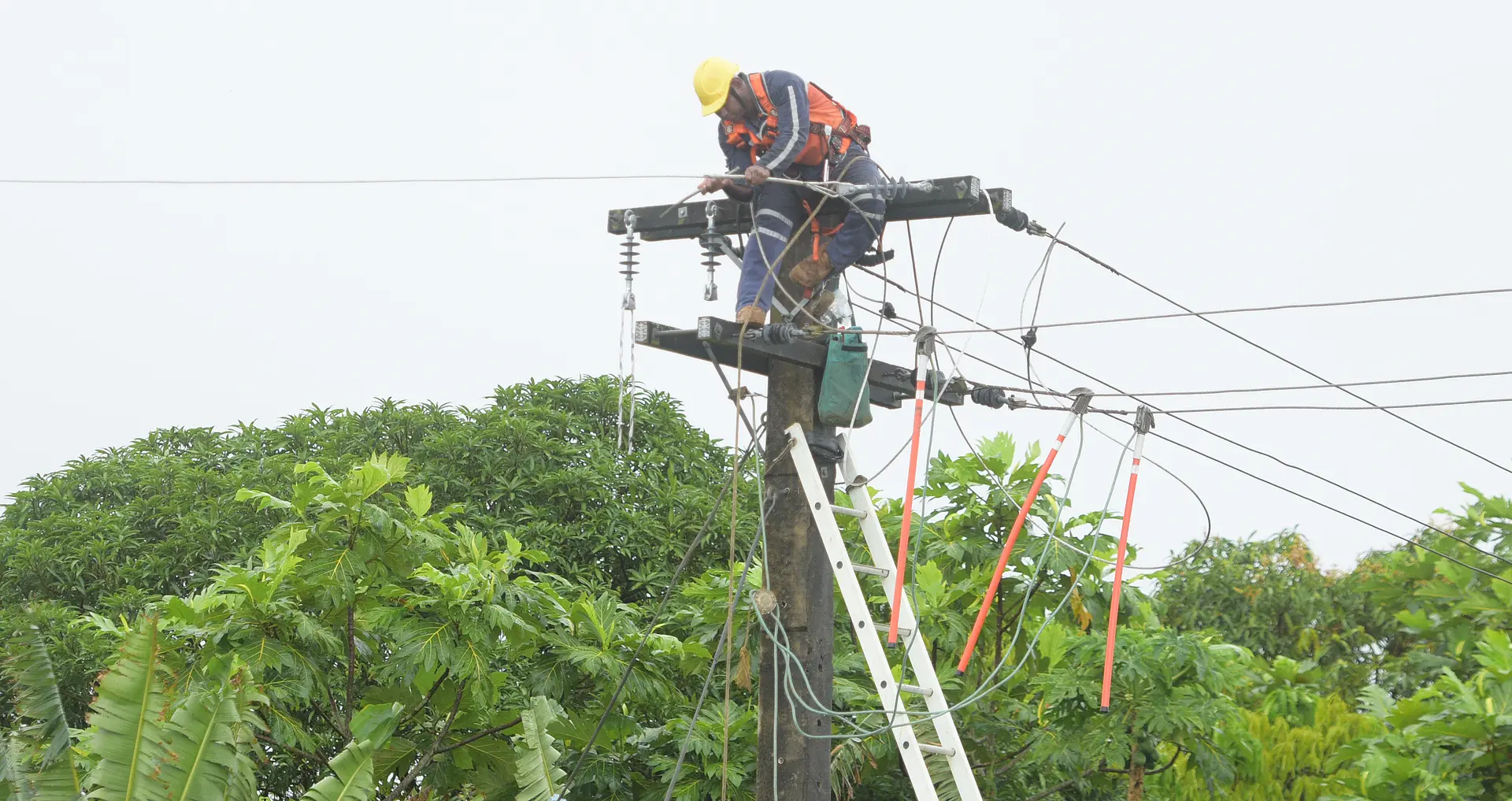
Energy Fiji Limited wireman working on power line at Ratu Dovi Road, Suva
Photo: Ronald Kumar
Energy Fiji Limited (EFL) has deferred its planned nationwide power rationing that was set to begin June 1, 2026.
While this would likely bring relief to households and businesses bracing for the scheduled blackouts, the threat has not been entirely ruled out.
EFL chief executive Fatiaki Gibson said the decision followed the Fijian Competition and Consumer Commission’s (FCCC) approval of a 5.91-cent-per-kilowatt-hour interim fuel surcharge, which came into effect yesterday, with an ongoing coordination with Government.
Related stories
“Every kilowatt-hour saved helps reduce fuel usage, lowers electricity costs, and strengthens Fiji’s energy security,” Mr Gibson said.
“Energy conservation is no longer optional – it is a national responsibility.”
EFL had earlier warned that without urgent financial support by May 22, controlled load shedding or nationwide power cuts could start from June 1 as rising global fuel prices pushed the company’s costs well beyond what it charges customers.
Finance Minister Esrom Immanuel welcomed the deferral, saying it was the right outcome.
“That should be a good decision from them and good for all of us,” he told this masthead.
Mr Immanuel said the surcharge was a temporary measure until the global fuel crisis eased. Minister for Public Works Ro Filipe Tuisawau urged Fijians to use electricity wisely during the ongoing crisis, calling on families to review their budgets and reduce unnecessary power use at home.
Prime Minister Sitiveni Rabuka said EFL’s decision to defer rationing was likely linked to improvements in fuel supply and Government’s reallocation of budget funds to cover the surcharge.
EFL warned, however, that if conditions worsen, power rationing could still be reintroduced.
About 45 to 50 per cent of Fiji’s electricity generation still relies on imported fuel, and the country is entering the dry season with reduced water levels at the Monasavu hydroelectric dam.
Low-income households consuming under 100kWh monthly remain protected under the Government’s electricity subsidy.
Energy saving measures
EFL advised some simple changes in electricity usage can significantly reduce household and business electricity bills, lower national fuel consumption, and support Fiji’s long-term energy security and renewable energy transition.
Businesses and institutions are encouraged to:
- Reduce non-essential lighting after working hours;
- Optimise air-conditioning systems and cooling settings;
- Schedule high-energy activities outside peak demand periods where possible;
- Promote staff awareness on energy conservation practices; and
- Invest in energy-efficient appliances and equipment.
Home customers are encouraged to:
- Switch off lights, fans, televisions, and appliances when not in use;
- Turn appliances off at the wall to avoid standby power consumption;
- Use LED bulbs instead of conventional lighting;
- Limit air-conditioner use and maintain temperatures between 24°C–26°C;
- Use natural ventilation wherever possible;
- Iron clothes in batches instead of multiple smaller sessions;
- Boil only the amount of water required or store boiled water in a thermos to retain the heat;
- Minimise the use of clothes dryers and electric water heaters; and
- Ensure refrigerator seals are functioning properly and avoid unnecessary opening of refrigerator doors.








