The Impact Of The Trade War On The Financial Markets
In 2017, the US launched an investigation into Chinese trade policies and has steadily imposed tariffs on Chinese products throughout 2018.
Saturday 23 March 2019 | 16:37
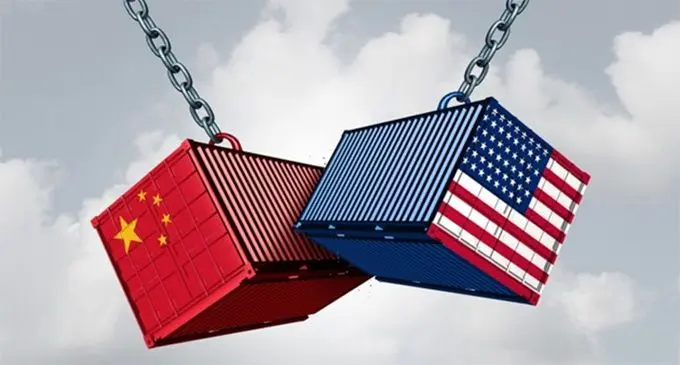
The world’s two largest economies (the US and China) have been locked in an escalating trade battle for nearly two years now.
In 2017, the US launched an investigation into Chinese trade policies and has steadily imposed tariffs on Chinese products throughout 2018.
So far, the US has imposed three rounds of tariffs on Chinese goods, totalling more than $250 billion.
Related stories
China has responded by saying the US has launched the largest trade war in history and with its own tariffs worth $110 billion.
US politics and the trade war that has emerged in recent months offer multiple trading opportunities, but there are three or four instruments that are highly relevant to traders.
The most directly affected instrument is probably stocks, which tend to move down upon news that trade tariffs are to be introduced or that talks are not going well.
Trade tariffs make goods more expensive to consumers and thus generally drive down demand.
If consumers buy fewer products, the stock prices of the companies producing those products will go down.
Even so, some stocks are more exposed than others. Companies with extensive operations in the Chinese market or who sell to China are at a higher risk, since they will be targeted by Chinese tariffs.
Industrial sectors and even tech sector stocks have already been impacted and may face further difficulties.
Specifically, Caterpillar, Apple and Boeing are among those who stand to suffer in a prolonged trade war. Apple, for instance, makes around 15 per cent of its sales in China.
Boeing sells airplanes worth millions to Chinese airlines, where demand for air travel continues to rise.
There is also a risk that China might instruct its airlines to buy from Boeing Rival Airbus instead.
Apple chief executive officer, Tim Cook has also directly blamed the trade war for poor iPhone sales in China.
It’s true that the Chinese economy has shown many signs of economic weakness and is drastically slowing from its impressive figures in previous years.
Most analysts agree that China is already suffering the consequences of the trade war, but warn that the longer it continues, the greater the chances that the US and other economies will also slow down.
Commodities such as Gold and Crude Oil are also affected by the situation. The precious metal tends to increase in value in times of uncertainty, such as when trade war tensions are high, and go down in value when investors are happy to take risks.
Crude oil has a more direct correlation with demand, if demand increases, prices follow, and vice versa. This means if economic growth is higher, Crude prices will grow, while in times of a downturn, Crude prices are more likely to fall.
How many tariffs have been introduced so far?
The US and China are involved in senior-level negotiations.
Some reports suggest that no breakthrough is expected, but it is possible that the US will agree to extend the deadline a further 90 days if progress is made.
If this middle way is achieved, no immediate answer, but no new tariffs and a promise to continue talks it may have a slightly positive upward pressure on stocks.
No significant impact on the US dollar and slight downward pressure on Gold prices might also be in the cards.
If talks end with no agreement and existing tariffs are extended, markets are expected to react negatively with stocks falling in the short to medium term.
The US dollar would likely be boosted in value and Gold would probably rise as investors move away from riskier assets and invest in Gold instead. On the other hand, Crude prices may stagnate or drop back to their lowest levels so far this year.
The best case or bull scenario for stocks is also the least likely: the US and China sign a large ranging agreement to end the trade war and to cancel existing tariffs.
This would likely push stock prices sharply higher and market sentiment would improve greatly potentially leading to a far better result for stocks by the end of the year.
This result would likely provide a welcome boost to oil prices too.
At time of writing trade talks have been extended and some progress has been reported, which had a slight positive effect on sentiment. Even so, a real agreement, or even a joint communique, is far from occurring.
And, it shouldn’t be forgotten that the US and the EU have their own stalled trade talks to resolve with the US threatening a 25 per cent tariff on EU car imports which has already negatively affected stock prices of companies like BMW and Volkswagen.
“What are the implication of the trade war to small island nations like Fiji? Will we get crushed by these giants? Will it hurt our economy?
The reality so far as that that when US get the cold and China gets the flu at the same time, the world economy slows down. This means that there are risks that domestic growth may be lower, albeit marginally”.
Feedback: maraia.vula@fijisun.com.fj