What It Means To Be A Cabinet Maker
Interested individuals venturing into this trade needs passion drive and at the top of that list skills training to perfect this trade.
Sunday 03 March 2019 | 11:47

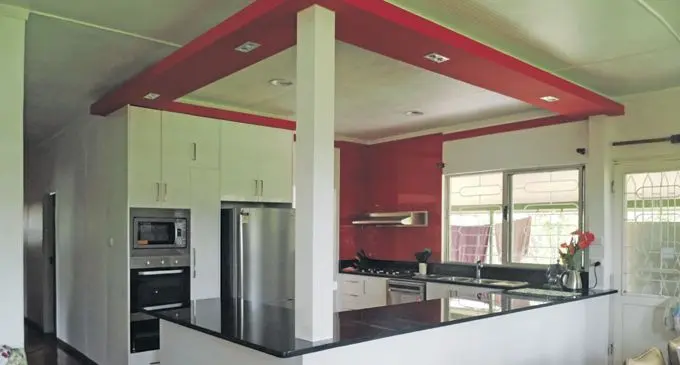
Cabinet making is one of those trade which demands for craftsmanship at its best.
There has been tremendous shift from traditional to modern cabinet making: this shift include the new modern day exquisite designs and layouts, types of fittings, and a wide range of materials.
In Fiji there is a demand for skilled cabinet makers in the building sector.
Related stories
Interested individuals venturing into this trade needs passion drive and at the top of that list skills training to perfect this trade.
A cabinetmaker as the name would suggest, is someone who creates built-in cabinets, as well as fine wood furniture.
A cabinetmaker will build to a customer’s specifications, providing the customer with original drawings of what the finished product will look like.
Various woods, materials and styles can be used.
What does a Cabinetmaker do?
Before the art of industrial design came to be, cabinetmakers were responsible for the entire creation process of a piece of furniture, from its initial conception to its shape and colour all the way to final production.
Some of the more famous cabinetmakers like George Hepplewhite, Thomas Chippendale and Thomas Sheraton even authored books about the art of furniture making, featuring their designs and compositions.
Interested in becoming a cabinet maker?
A person needs to be trained to become cabinet makers through formal training or they could have learnt on the job through industry experience.
However, you can also do trade test certification in cabinet making trade after gaining the necessary training and experience.
This would open many opportunities in your career but it is very important to gain the experience as well.
Gaining Experience
It is vital for a cabinet maker to gain experience in order to become a skilled worker.
Industry statistics indicate that it takes about one year of work experience to learn the basic tasks and operations related to cabinet making.
Hence, it can take three or more years to become a skilled worker.
Certification and training programs also provide possibly vital hands on instruction that can help cabinet-makers become more skilled.
There are many factors that would affect how a person has gained experience.
This would be depend on their exposure to the different types of material and machinery that is used at your workplace.
The types of jobs that you do will also teach important lessons that’s not learnt in a formal training institution.
Career Pathways
If you are a hands-on person, who enjoys working creatively on furniture, then this is one of most interesting job prospects for you. Getting trained through NTPC’s Technical Training Division’s modular programs provides opportunities for learning and also provides the necessary hands on experience to enter into workforce.
In the industry there will be new techniques learnt everyday with different machinery so it is important that a person tries to enhance their skills.
It may take some years to master the skills of this trade and Trade Testing is the best way forward into gaining recognised qualification for your skills sets.
As such trade test provides avenues to progress from being an assistant tradesperson to a qualified, skilled and competent tradesman.
National Trade Testing Scheme (NTTS)
This scheme is offered by the National Trade Testing Department of the National Training and Productivity Centre of Fiji National University.
The scheme ensures that competent, efficient and experienced persons receive proper recognition for their skills.
Tradespeople passing any of the trade tests will be issued with nationally recognized certificates of competency and employers can be assured that applicants for employment possessing these certificates have actually attained the degree of skill certified.
Under the NTTS a total of 29 different trades are offered for skills assessments of which cabinet maker is one of it. Certification is offered at 3 different Levels, namely:
- Class III Assistant Tradespersons Level
- Class II Qualified Tradespersons Level
- Class I Supervisor Level
Testimonial
For Mukesh Prasad, has always been fascinated with cabinetmaking from a young age so he took it up while in school. “Working with furniture attracted me into taking up cabinet making trade,” he said.
The 40 year old then attended Montfort Technical Institute in Savusavu for two years, where he came to know about trade testing.
“I sat for my class III trade test in 1998 and joined the work force.
“It was not easy but I was always interested in learning new techniques and I tried to grasp as much as I could to learn,” he said.
“My inspiration came from the senior tradesman and I always challenged myself to complete tasks before time and with perfection.”
Along the way, Prasad faced many other challenges in his career but this did not stop him from gaining recognition of skills in the field.
“I worked hard and got my Class II and Class I certification in 2007 and 2009 respectively.
“In 2017, I started my own business Elegant Furniture and Joinery and I now I can proudly say that all the hard work as eventually paid it off for me,” he said.
“To anyone who is seeking a career in cabinet making trade is to keep working hard, take on challenges in a positive manner as there are a lot of opportunities in this field.”
For Rajneel Singh, the fascination to transform a piece of wood into furniture, drew him into the trade.
“My career started off working in big industries and where I was not provided much motivation, I had decided to master this trade and one day to have my own business.
I achieved success through experience and I was determined to deliver quality output,” he said.
“I learnt about trade testing and was determined to get my skills recognised.
“I attended evening classes and was able to complete all three of my trade test class certification.
“I specialise in designing, 3D modelling as well as joinery and cabinet making.”
Mr Singh operates his own business Unik Designs and Joinery Solutions in Nausori.
The 35 year old said the trade Test certification provided him with security and to his then employer satisfaction of having a qualified tradesperson.
He said through NTPC he was able to complete the various short courses in PLC programming, Graphic designing, Cabinet making modules.
“This also provided me with monetary benefit in terms of negotiating based on skills and qualification.
“I dreamt of being an entrepreneur and I started operating my own cabinet making and joinery business in Joinery and Cabinet Making,” Mr Singh said.
“You may ask why is important for those who are in the trade sector to complete their trade test exams, because it allows individuals to be legally certified and qualified.
“Allows individuals to negotiate for better pay once skills are enhanced after experience is gained. And to be academically as well as practically qualified.
“This certifications also provides opportunity in future to upgrade qualification.”
Feedback: maraia.vula@fijisun.com.fj








