Community-based NCD prevention project launched in Vanua Levu
Labasa workshop trains health workers on community-based prevention strategies.
Monday 27 April 2026 | 14:00
Updated 27 April 2026 | 15:51 FJT

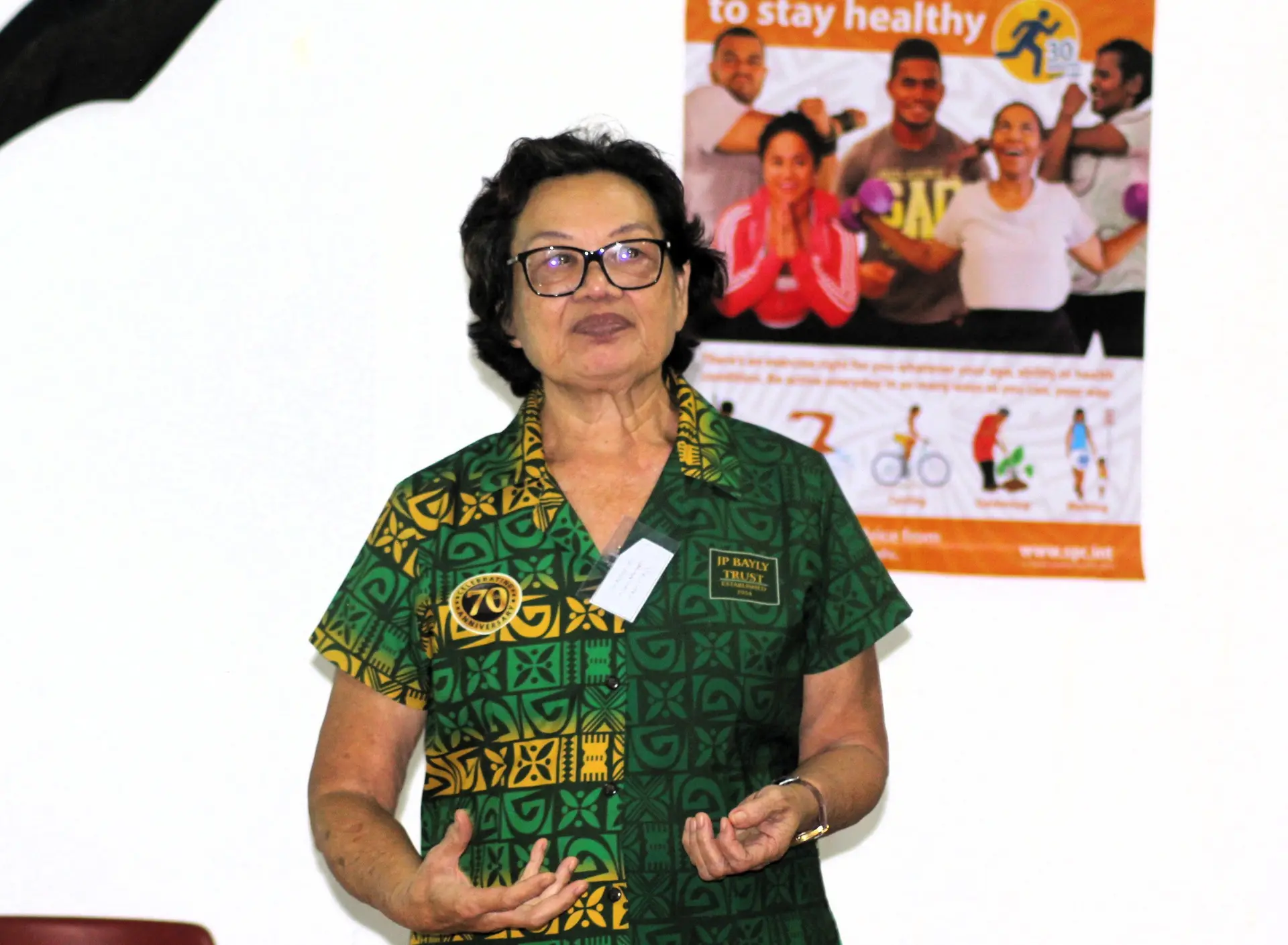
JP Bayly Trust Non-Communicable Diseases (NCDs) project manager and board trustee, Dr Rufina Latu, during her presentation in Labasa recently.
Photo: Sampras Anand
Three medical areas in Vanua Levu will take part in a Non-Communicable Diseases (NCD) prevention and control project, under a partnership between the Ministry of Health and the JP Bayly Trust.
Trust project manager and board trustee Dr Rufina Latu said the organisation is continuing to work with the ministry across divisions in Suva, Lautoka and Labasa to implement community-based interventions targeting NCD risk factors.
She said the approach encourages community participation and a settings-based model.
Related stories
The three medical areas selected for the pilot project are Navunikabula Zone 6 (Korotari), Wasavulu/Naqai/Nacula Zone 5, and Korowiri and Vunivau villages.
A one-day workshop was recently held in Labasa for nurses and community health workers to strengthen their knowledge of community interventions for NCD mitigation.
Dr Latu said the workshop focused on developing NCD action plans for each selected medical area.
She said NCDs remain a national crisis, contributing significantly to mortality rates and modifiable risk factors.
According to the 2025 NCD Steps Report, launched earlier this year, NCDs account for 80 per cent of all deaths in Fiji.
Dr Latu said the workshop helped participants better understand key NCD risk factors, community participation, and health settings approaches.
It also trained participants on engaging zone nurses and community health workers in community-based NCD programmes.
Similar interventions have also been rolled out in Lautoka and Suva.
She said addressing modifiable risk factors could prevent about 80 per cent of heart disease, stroke, and type 2 diabetes cases, and more than 40 per cent of cancers.
The five key modifiable risk factors identified are smoking, poor nutrition, excessive alcohol consumption, kava use, and stress.
Dr Latu said NCDs are causing premature deaths and remain a major focus area for prevention efforts.
“There is a national call for action to overcome NCDs or prevent them before complications take control of our people’s lives,” she said.
She said the programme aims to be community-driven, with village leaders playing a key role in supporting prevention measures.
Dr Latu also noted rising stress levels in communities, saying simple prevention steps are essential in reducing NCD risks.