Rajendra Chaudhry found guilty of professional misconduct
The Chief Registrar alleged the post denigrated three Fiji Court of Appeal judges.
Wednesday 04 March 2026 | 07:00


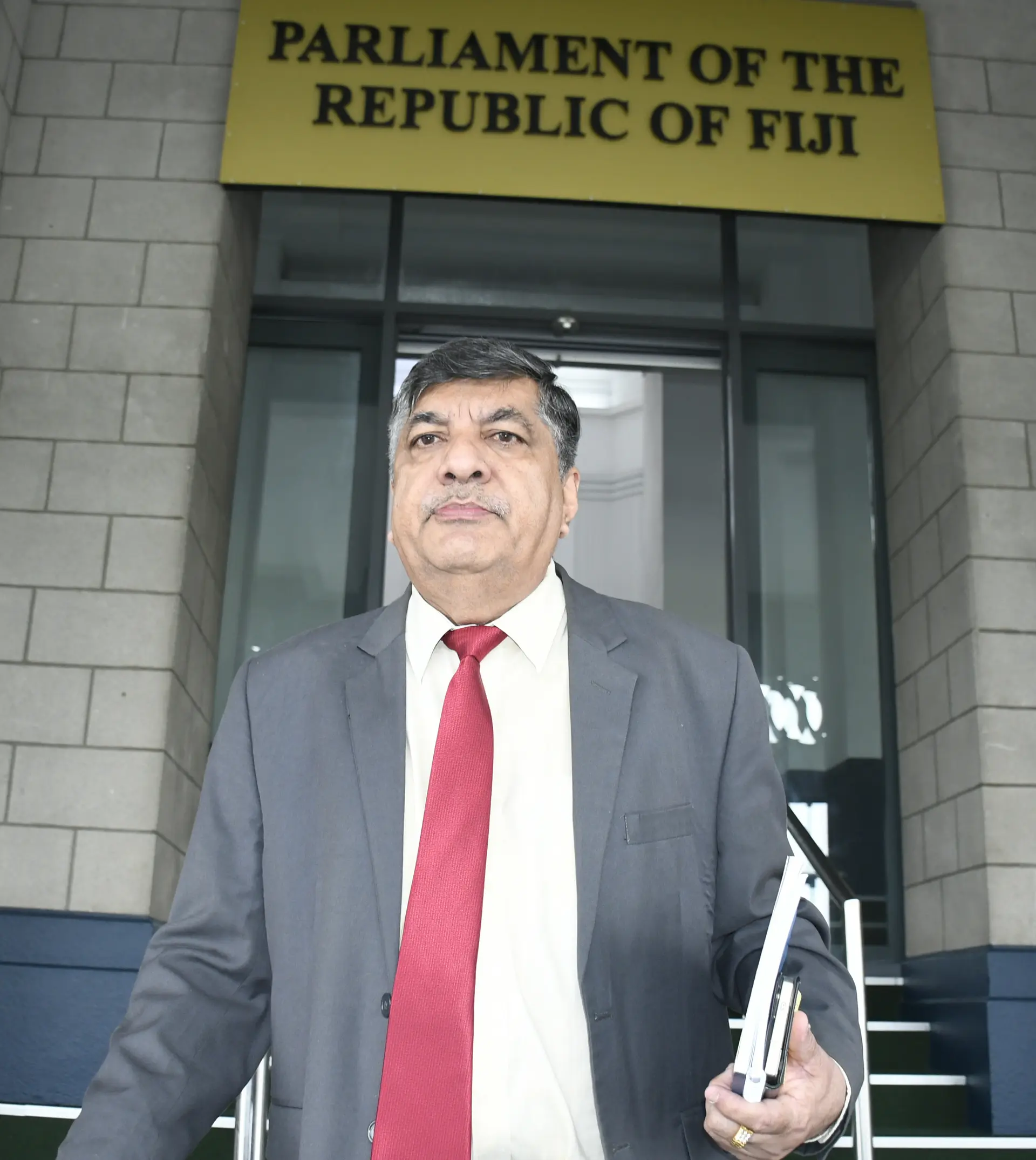
New Zealand-based lawyer Rajendra Chaudhry.
Photo: Facebook
New Zealand-based lawyer Rajendra Chaudhry will learn his sanction on March 10 after the Independent Legal Services Commission (ILSC) found him guilty of two counts of professional misconduct on Monday.
The case arose from a March 9, 2018 Facebook post headlined, “When 3 Judges of the Fiji Court of Appeal get it so wrong!!!!”, referring to the written judgment in Anand Kumar Singh v The Chief Registrar (ABU 058/2013).
The Chief Registrar alleged the post denigrated three Fiji Court of Appeal judges.
Related stories
Chaudhry opposed the charges, arguing that the ILSC lacked jurisdiction because he did not hold a valid practicing certificate at the time and that Rule 3.2(i) of the Rules of Professional Conduct and Practice did not apply to him. He maintained his comments were fair comment based on reliable evidence and did not amount to professional misconduct.
Both parties relied on written submissions and documentary evidence. No witnesses were called.
In his ruling, Justice Daniel Goundar found the Facebook post crossed the line from permissible criticism to impermissible denigration.
On count one, Justice Goundar found the post targeted the character and integrity of the judges rather than the reasoning of the judgment.
“Describing the judges as ‘lackeys of the Regime’ is not legal analysis but a personal attack that the judges abandoned their judicial independence and rendered decisions to please the government,” he ruled.
The statement, “These judges have no clue what they’re talking about,” was described as an intemperate assertion of judicial incompetence.
The court found the language was inflammatory and designed to provoke rather than illuminate.
“Even if there were systemic concerns about judicial independence — which is not for me to determine in this proceeding — these do not give legal practitioners license to personally attack and denigrate judges in intemperate language,” Justice Goundar said.
He cautioned that while freedom of expression is a right, it is not absolute. Limitations under Rule 3.2(i) of the Rules of Professional Conduct and Practice and the disciplinary regime in the Legal Practitioners Act are intended to maintain public confidence in the judiciary and the proper administration of justice.
Both parties have 13 days to file submissions on mitigation and sanction before the final penalty is delivered on March 10.