Shocking data shows children most at risk inside their own homes
Nearly 5000 child abuse cases reported between 2021 and 2023
Thursday 30 April 2026 | 14:30
Updated 30 April 2026 | 16:12 FJT

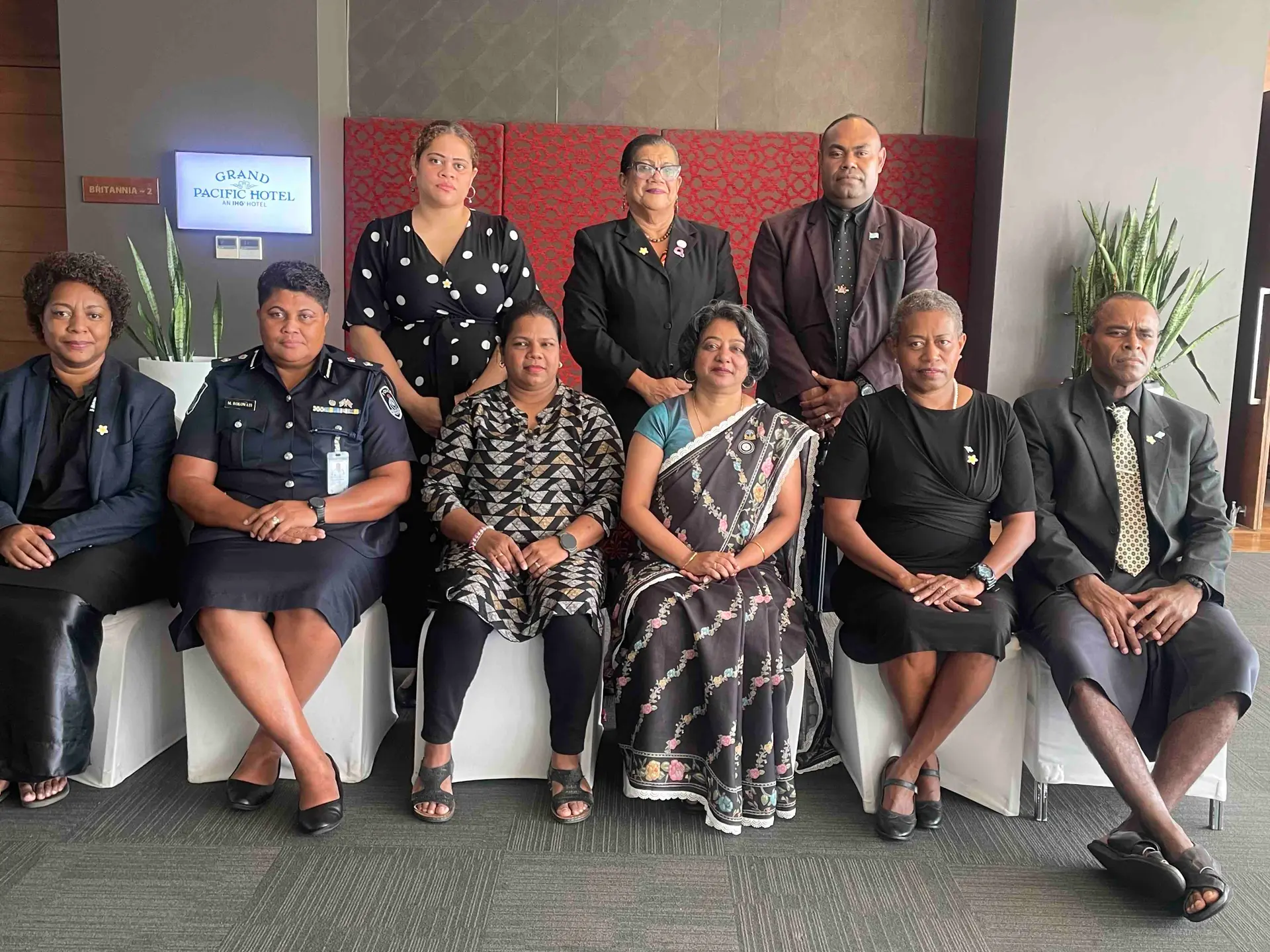
ourth from left: Minister for Women, Children and Social Protection, Sashi Kiran, with other stakeholders at the opening of the National Action Plan in Suva on April 30, 2026.
Photo: Rariqi Turner
Half of all child abuse cases in Fiji are carried out by immediate family members, challenging the long-held belief that children are safest in their own homes.
This was revealed by Minister for Women, Children and Social Protection Sashi Kiran during the opening of the National Action Plan on the Elimination of Violence Against Children validation workshop in Suva today.
Ms Kiran said the figures were confronting and required urgent action, as violence against children continued behind closed doors in both rural and urban communities.
Related stories
Data presented at the workshop shows 50 per cent of perpetrators are immediate family members, while 68 per cent of reported cases involve neglect, physical abuse, and sexual abuse.
The statistics also reveal that nearly 5000 cases of child abuse were reported between 2021 and 2023. More than half of the victims were girls, and many were under the age of 12.
At the same time, evidence from national surveys shows violence is deeply rooted in everyday life.
About 80 per cent of children aged one to 14 have experienced some form of violent discipline, with one in five facing severe physical punishment such as being hit in the head or repeatedly beaten.
She acknowledged that while people care, the systems meant to protect children were not always working together.
“Our children are not being failed because people do not care,” she said. “They are being failed because systems do not always connect. And when systems fail to connect, children fall through the gaps.”
The workshop aims to strengthen the national response, bringing together government agencies, civil society groups, and community leaders to develop a coordinated plan to end violence against children.
Ms Kiran said laws such as the Child Care and Protection Act 2024 and the Child Justice Act 2024 had provided stronger direction, but warned legislation alone was not enough.
The proposed plan focuses on stronger leadership, better coordination of services, support for frontline workers, and clear messaging that violence against children is never acceptable.
“Na gone na noda i yau — children are our treasure,” she said.
She called on communities to take shared responsibility in protecting children, urging families, leaders, and institutions to move away from silence and towards action.








