Tender process ‘compromised’, High Court told
She said the procurement process was undermined after she received a letter from then Permanent Secretary for Health Salanieta Saketa directing that the tender be awarded to preferred suppliers and requesting a waiver.
Wednesday 25 March 2026 | 19:00
Updated 25 March 2026 | 20:17 FJT

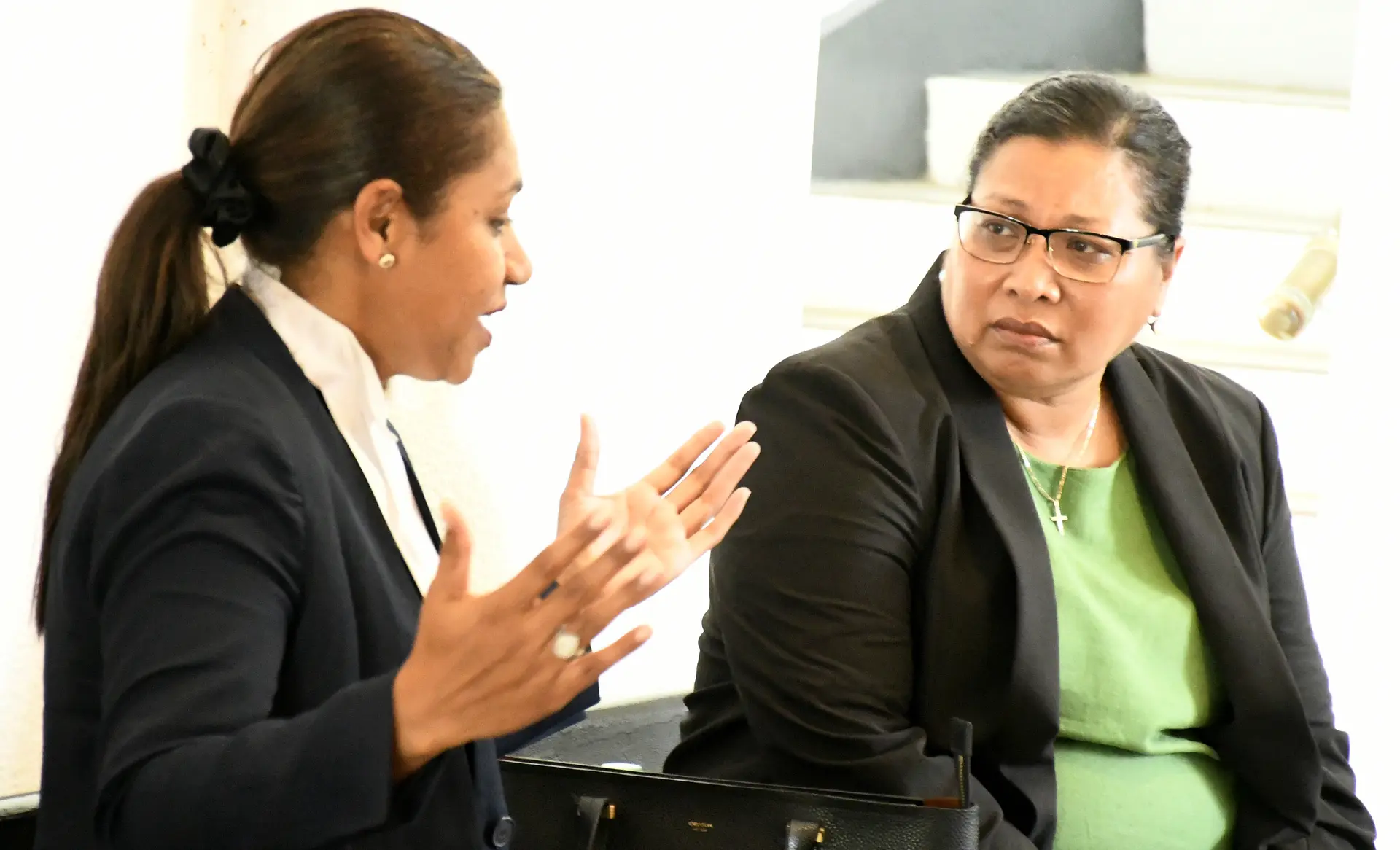
Assistant Director of Public Prosecutions Laisani Tabuakuro and former director of the Fiji Procurement Office, Millie Low.
Photo: Ronald Kumar
The former director of the Fiji Procurement Office, Millie Low, told the High Court a government tender for rural laboratory equipment was “compromised” and could not proceed.
Low gave evidence as a key State witness in the trial of former Prime Minister Voreqe Bainimarama, former Attorney-General Aiyaz Sayed-Khaiyum and former Health Minister Dr Neil Sharma.
She said the procurement process was undermined after she received a letter from then Permanent Secretary for Health Salanieta Saketa directing that the tender be awarded to preferred suppliers and requesting a waiver.
Related stories
Low told the court the request was unusual as it was not supported by any documentation or schedule. She said she recommended the withdrawal of the tender, informed bidders the process had been terminated, and advised the Ministry of Health to review its procedures to protect the integrity of the system.
The court heard that decisions of the Tender Evaluation Committee are confidential and cannot be overturned by senior officials within ministries or departments.
During examination by Assistant Director of Public Prosecutions Laisani Tabuakuro, Low confirmed the waiver was approved by Mr Bainimarama. She said waivers are typically justified only in limited circumstances, such as urgent infrastructure needs or legal services.
Under cross-examination, defence lawyer Devanesh Sharma challenged the handling of the tender, taking Low through procurement regulations relating to waiver approvals.
“That basis has to be satisfied… it has got to be impractical… and it has got to be urgent,” Sharma said.
“Yes,” Low replied.
Low agreed waivers must meet strict conditions, including urgency and impracticality.
The court heard the Ministry of Health had raised concerns about its own Tender Evaluation Committee, alleging bias and irregularities while also recommending preferred suppliers. However, these allegations were not supported by evidence.
Low said the seriousness of the claims led to the matter being escalated internally, particularly as the Ministry indicated it would seek a waiver from the Minister for Finance. She confirmed the Fiji Procurement Office did not support the waiver request.
An internal memo later recommended withdrawing the tender, citing concerns the process had been tainted. Low also said an officer involved in preparing the memo had sat on the Tender Evaluation Committee and did not declare a conflict of interest.
“No, she did not declare,” Low told the court.
She agreed the process had reached a deadlock and could not proceed.
“Yes, we felt that the tender process had been compromised,” she said.
The court also heard conflicting recommendations within the Ministry, including differing views on suppliers, contributed to the breakdown of the process.
Mr Bainimarama, Mr Sayed-Khaiyum and Dr Sharma have pleaded not guilty to their respective charges.
Dr Sharma faces two counts of abuse of office and two counts of breach of trust by a person employed in the public service. Mr Bainimarama is charged with one count of abuse of office, while Mr Sayed-Khaiyum faces one count of abuse of office and one count of obstructing the course of justice.