Opinion: Re‑examining TLTB’s role and accountability
Friday 01 May 2026 | 17:00
An opinion examining land ownership, commercial returns and the fiduciary role of the iTaukei Land Trust Board
Dr Sushil K. Sharma’s article a few days ago, stated that the iTaukei own 91 per cent of the nation’s land. Yet more than a quarter of us live in poverty.
That single fact begs a simple question: if the land is ours, where is the money?
The answer he added, lay inside iTaukei Land Trust Board (TLTB). It manages an estimated $120–$130 million annually on behalf of over 400,000 landowners.
Related stories
And there are legitimate questions about why it has failed to deliver prosperity to the very people it was designed to serve.
But before we can fix the problem, we must ask an even more basic one: What purpose does TLTB actually serve?
Maximise return or subsidise others?
TLTB manages iTaukei land. It creates leases and sets terms, including lease payments. But what is its objective? To maximise return for landowners? Or to make land available to others at below‑market rates?
Consider a freehold landowner. No one questions their right to extract full commercial value from their land. They negotiate the best terms, charge market rates, and maximise their return.
That is understood. That is simply good business. But when TLTB attempts the same on behalf of landowners—to act commercially, to maximise returns, to charge market rates—suddenly there are complaints.
TLTB is accused of greed, of holding the nation hostage, of stalling development.
We are told we need to be commercial. To adopt business mindsets. To stop relying on handouts and start generating wealth. Yet when we act commercially with our own land, others complain.
Why the double standard? A freehold owner is celebrated for driving a hard bargain. A company is expected to maximise shareholder value.
But when TLTB tries to maximise value for 400,000 landowners—many living in poverty—it is criticised.
The land is ours. The commercial return belongs to us. So what is shameful about demanding fair value?
Here is the question no one wants to ask: Why are we iTaukei expected to subsidise others by not taking a commercial return on our own assets?
Every other landowner charges market value. Every investor demands it. But iTaukei are told we should not be commercial with our own land. We are told to be happy with what we get. We are told that demanding fair value is somehow un‑Fijian.
And then we wonder why iTaukei are not commercial. Why we remain poor. Why we cannot build wealth like others do.
The answer is right in front of us. From the beginning, we have been told to be generous, accommodating, to put others’ needs before our own, to accept less than market value because asking for more would be “greedy.”
No one else operates under that rule. No other landowner subsidises tenants. No other business accepts below‑market returns because it might inconvenience customers. No other shareholder tells management to aim for less.
Only iTaukei are expected to do that. Only iTaukei are told our land should be cheap for others.
Only iTaukei are made to feel ashamed for wanting a fair return.
The Bose Levu Vakaturaga: Accountability as shareholders
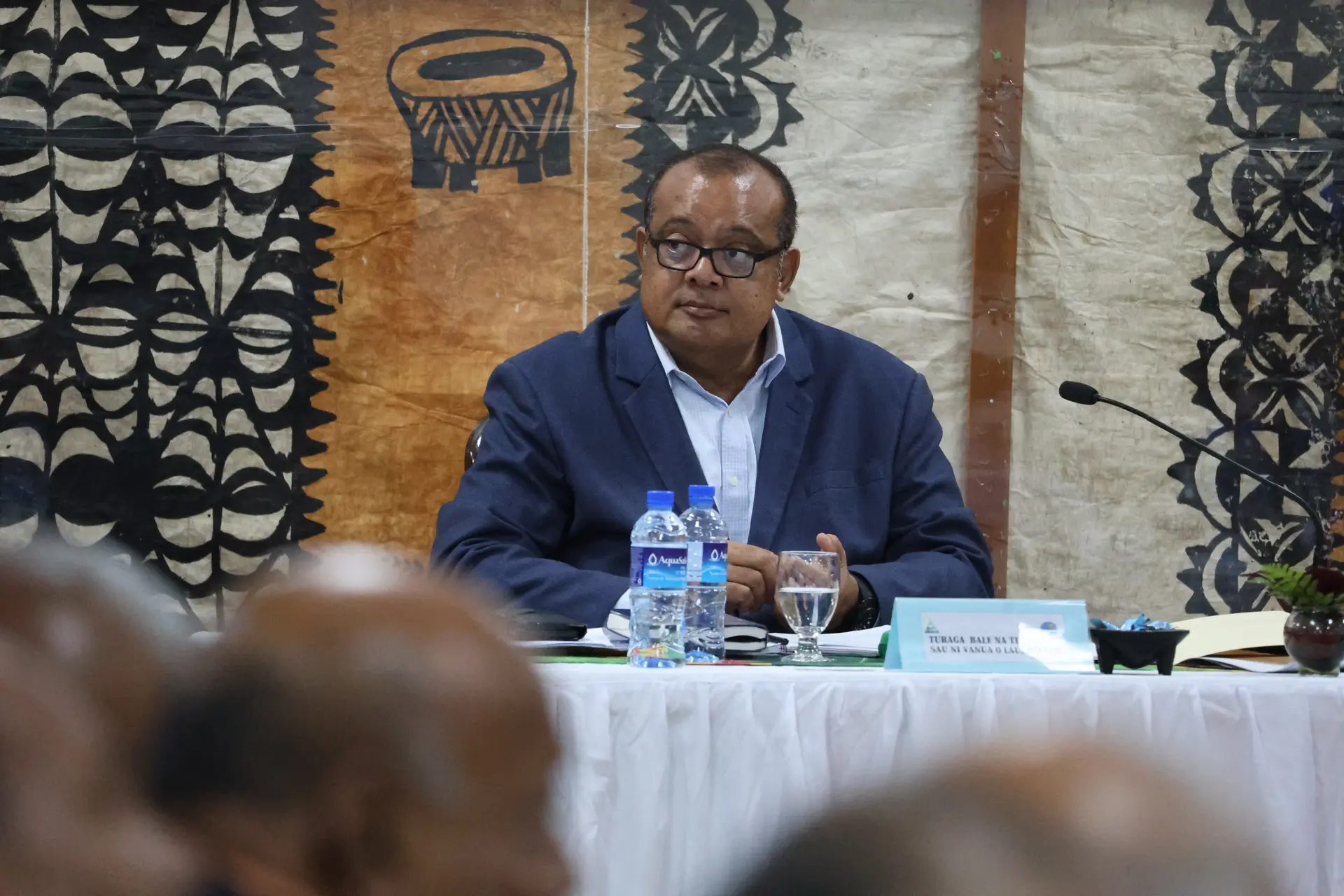
The Bose Levu Vakaturaga (BLV) is the supreme council for iTaukei interests. As such, it must hold TLTB accountable the way shareholders hold a company’s management accountable.
The principle is simple: maximise shareholder value. The value of the enterprise must constantly increase.
Returns to owners must constantly be maximised.
If the BLV held TLTB to that standard, returns to landowners would be maximised. That is not greed. That is fiduciary responsibility.
But the BLV has yet to do this. For decades—even before it was sent packing—it allowed TLTB to operate without genuine accountability. It accepted tiny returns. It accepted the status quo because challenging it would be uncomfortable.
The time for comfort is over. This BLV has woken up.
The fiduciary failure
Whatever the debate about commercial returns, one thing is clear: TLTB has failed as a fiduciary.
As disclosed before a Parliamentary Standing Committee, a $26.1 million welfare fund—money deducted from landowners’ own lease income and held by TLTB for their benefit—distributed just $1.1 million between 2010 and 2024.
Fourteen years. Less than five cents returned for every dollar taken. No independent audit of the remaining $25 million has ever been made public.
In a country where the indigenous population largely lives in poverty, this is not an administrative oversight. It is a fiduciary failure of the first order.
We have watched developments rise on our land while we remain poor. Leases granted.
Premiums collected. Profits generated. But the money has not reached the people.
Criticism without a way forward is just noise
The BLV has signaled that the time for change has come. So let us think ahead—not merely to tweak deductions or speed up consultations, but to fundamentally invert the relationship between
TLTB and the LOUs it is supposed to serve.
The myth of the happy Fijian—our supposed contentment with whatever we have—has kept us poor. We smile. We endure. But dignity is not a smile. Dignity is a dry floor and a well‑maintained roof.
TLTB was created in 1940 under colonial statute. Its original vision was not to turn landowners into passive recipients of tiny rent cheques.
It was to hold land in trust for the benefit of the people—for our livelihoods, our families, our futures.
We have strayed so far from that vision that the trustee now feels like an adversary.
We have been asleep too long. We have accepted the narrative that we should not be commercial.
We have accepted the double standard. We have accepted tiny returns while others profit from our land.
Time to wake up
Restoring Integrity: Who Sits at the Head of TLTB?
Here is a truth too long avoided. Under the current management arrangement, the TLTB board lacks the moral authority and cultural legitimacy it once had.
Before the 2006 coup, the chair of the TLTB Board was answerable to the President and the BLV—the unifying symbols of iTaukei sovereignty. That arrangement was not accidental.
It placed the stewardship of our land at the highest possible level of trust. It is time to return to the arrangements, as it was before the 2006 coup.
What the BLV and landowners must demand
The BLV has already signaled that the current relationship is broken. Now to the next steps:
- Demand that TLTB be held to its fiduciary duty to maximise returns for landowners—just as any management team is expected to maximise shareholder value.
- That the BLV act as a responsible shareholder, holding TLTB accountable for performance, transparency, and results.
- Demand that the double standard end: iTaukei must be allowed to act commercially without apology.
- Demand that the TLTB Chair be restored to pre‑2006 accountability, and that the board must be committed to delivering for the LOUs.
We put in our labour, our small contributions, our oversight. A trustee that forgets its purpose can be reminded. But a people that forgets its own agency will remain poor forever.
Conclusion
The land remembers who it belongs to. So do the iTaukei.
We can be commercial. We can be fair. We can maximise our return and still be good partners.
But we must first wake up. We must first demand that TLTB remembers its true purpose: to serve landowners, not to make land cheap for everyone else.
And we must restore the integrity of its leadership.
A nation is watching. The Vanua is waiting. And we have waited long enough. It is time to wake up.
(Ro Naulu Mataitini is a concerned citizen and a member of the Bose Levu Vakaturaga and these are his personal views. The article are of the author alone and not of Fiji Sun and/or its employees.)