Constitution failing rural Fijians, says FCOSS
Submission to CRC says legal rights not translating into real access for many Fijians.
Monday 27 April 2026 | 13:30
Updated 27 April 2026 | 15:33 FJT

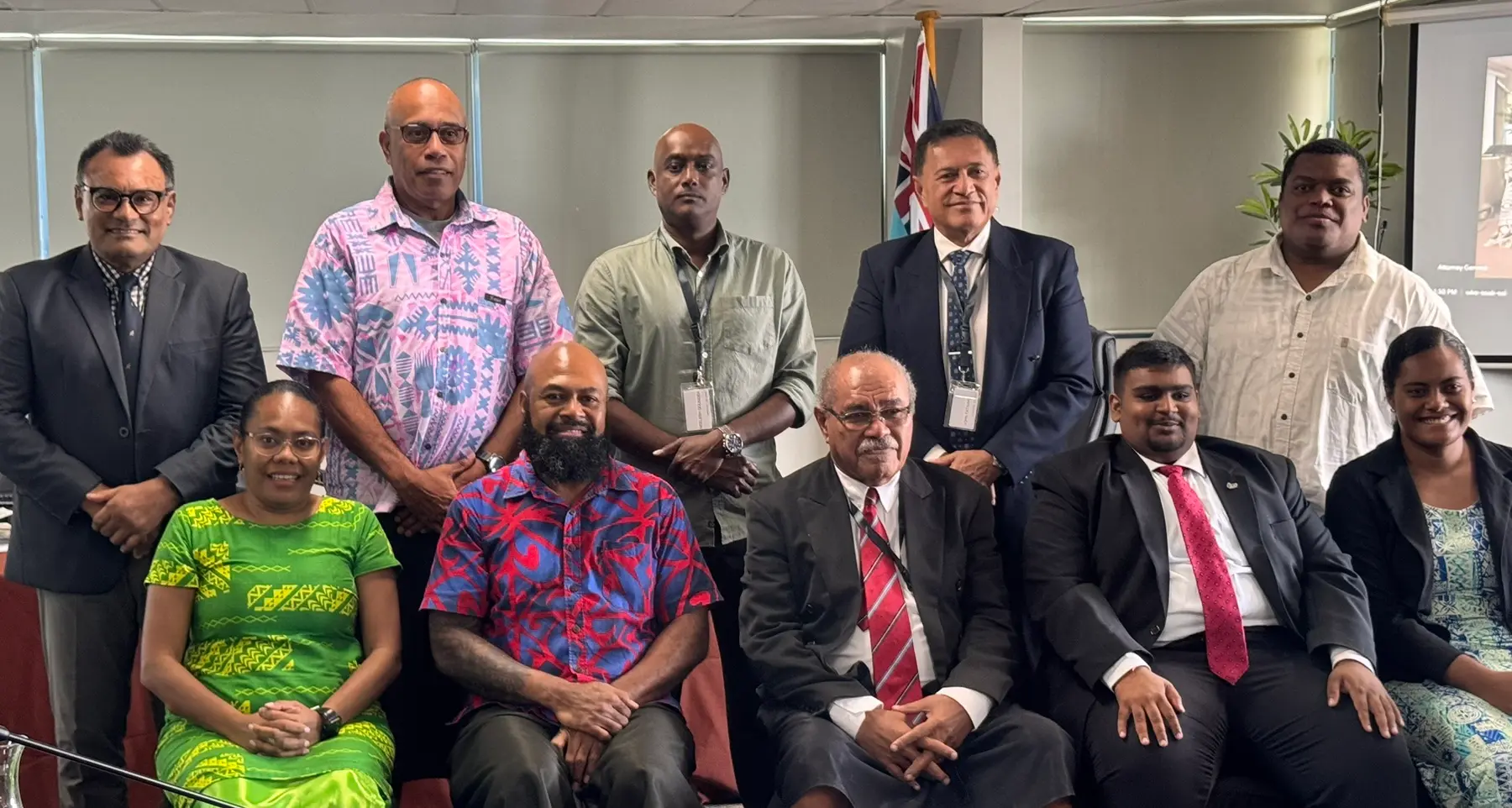
Fiji Council of Social Services (FCOSS) executive director Vani Catanasiga (sitting left) with FCOSS senior staff and the Constitutional Review Committee.
Photo: Supplied
A leading civil society organisation has warned that Fiji’s Constitution is failing to translate its promises into meaningful change for many citizens, particularly those in rural and marginalised communities.
In its submission to the Constitutional Review Commission, the Fiji Council of Social Services (FCOSS) said a widening gap between legal rights and lived realities is leaving vulnerable groups without access to justice, protection, and essential services.
The organisation argued that while the Constitution guarantees a broad range of rights, many remain “paper protections” due to limited awareness, weak enforcement, and systemic barriers.
Related stories
FCOSS executive director Vani Catanasiga said the Constitution must better reflect the everyday experiences of ordinary Fijians.
“The Constitution must reflect the values of ‘We the People’. Right now, there is a clear gap between what is promised in law and what communities actually experience on the ground,” Ms Catanasiga said.
She added that for many people, especially those in remote areas, basic rights such as access to courts or protection from exploitation are not fully understood or accessible.
The submission draws on findings from FCOSS programmes, including work on countering trafficking in persons and research into unmet legal needs.
These highlight how lack of awareness and limited access to legal support continue to undermine constitutional protections.
Among its key recommendations, FCOSS called for scaling back “clawback clauses” in the Bill of Rights that allow limitations based on state resources, arguing these weaken the enforceability of fundamental freedoms.
The organisation also proposed a “justice pipeline” framework to improve access to legal aid, alongside increased state investment in community education to ensure citizens understand and can exercise their rights.
Beyond legal access, FCOSS raised concerns about broader structural issues, including political participation, environmental protections, and accountability mechanisms.
It stresses that without stronger safeguards, constitutional rights risk remaining out of reach for those who need them most.
Ms Catanasiga said bridging this gap requires more than legal reform it demands a shift toward community-centered governance.
“If people do not know their rights, or cannot access them, then those rights do not truly exist in practice. We need a Constitution that lives in our communities, not just in our laws,” she said.
The submission forms part of ongoing consultations by the Constitutional Review Commission, as stakeholders across the country weigh in on potential reforms aimed at strengthening democracy, accountability, and human rights protections in Fiji.
FCOSS indicated it may provide further submissions as it continues consultations with communities nationwide.