DPP appointment process ‘too political’, review told
Acting DPP urges return to simpler model under earlier constitutions
Friday 24 April 2026 | 11:00
Updated 24 April 2026 | 12:24 FJT

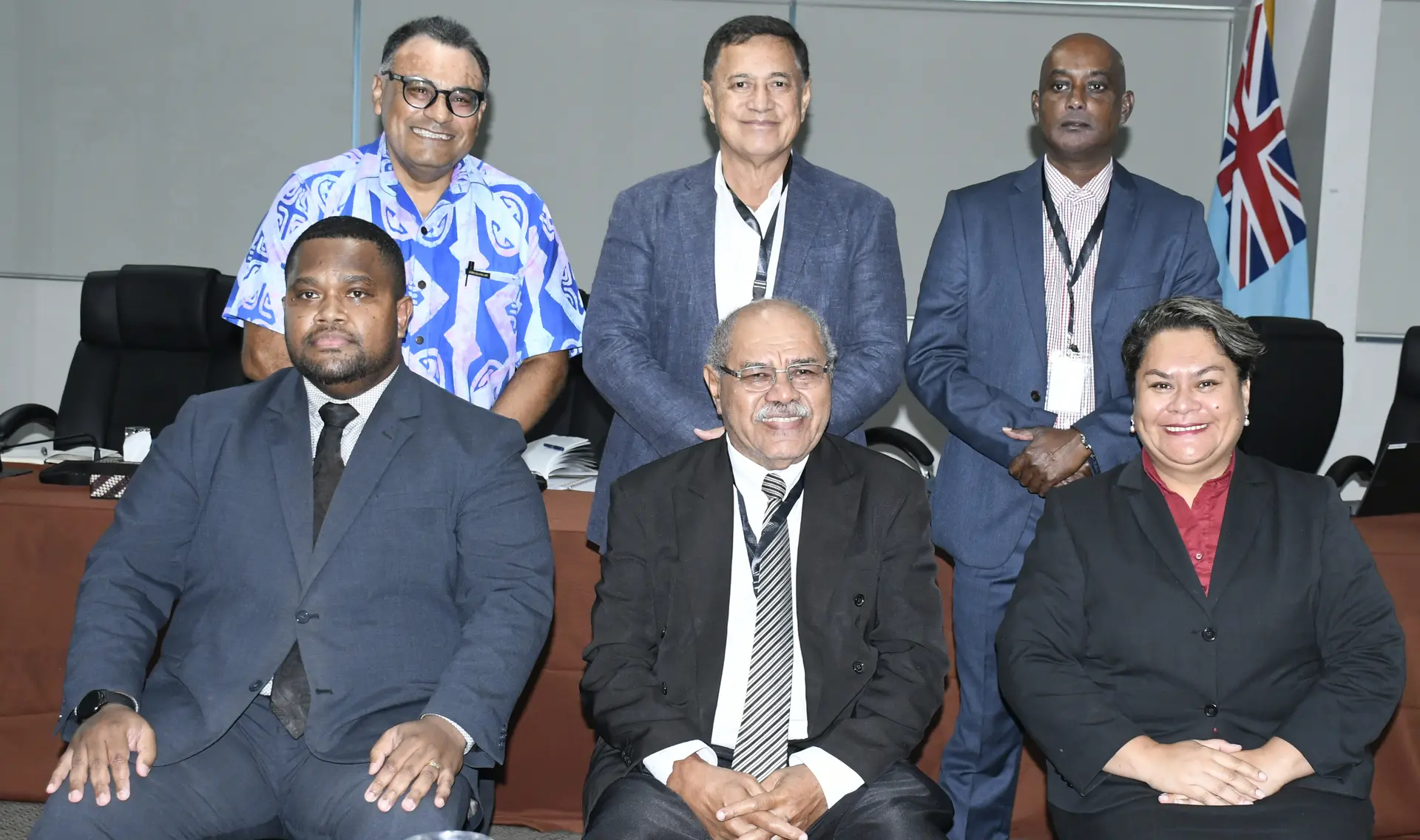
Sitting from left: Assistant Director of Public Prosecutions Meli Vosawale, Constitutional Review Committee chairperson Sevuloni Valenitabua and Acting DPP Nancy Tikoisuva with and members (standing at back, from left) Conway Beg, Dr John Fatiaki and Dr Neelesh Gounder after making their submission to the Constitutional Review Committee on April 23, 2026.
Photo: Ronald Kumar
Acting Director of Public Prosecutions Nancy Tikoisuva says the process for appointing the DPP is overly political and should be reviewed.
In her submission to the Constitutional Review Commission yesterday, Ms Tikoisuva questioned the framework under the 2013 Constitution, which mandates that the DPP be appointed by the President on the recommendation of the Judicial Services Commission (JSC), following consultation with the Attorney-General.
She argued that this adds an unnecessary layer of consultation and risks compromising the independence of the appointment process.
Related stories
The JSC itself already includes members appointed through processes involving the Attorney-General, creating what she described as “multiple layers of influence.”
“If the JSC is independent, why is further consultation required?” she asked.
Ms Tikoisuva said this structure opens the door to potential political interference, even if unintended.
She urged the commission to consider reverting to provisions from earlier constitutions, such as the 1997 Constitution of Fiji, where the appointing authority operated with fewer overlapping influences.
The concern, she explained, is not about current practice but about risks embedded within the system.
“The way it is structured creates at least the danger of political interference,” she said.
Her submission calls for a streamlined and more transparent process that reinforces the autonomy of the DPP’s office, an institution critical to maintaining public confidence in the justice system.
The recommendation adds to broader discussions about constitutional reform and the balance between independence and accountability in Fiji’s key legal institutions.
Feedback: sosiveta.korobiau@fijisun.com.fj