Fuel crisis sharpens urgency for local rice farming
Fiji Rice Ltd chairman tells parliamentary committee reliance on imported rice is a growing food security risk.
Friday 24 April 2026 | 14:30

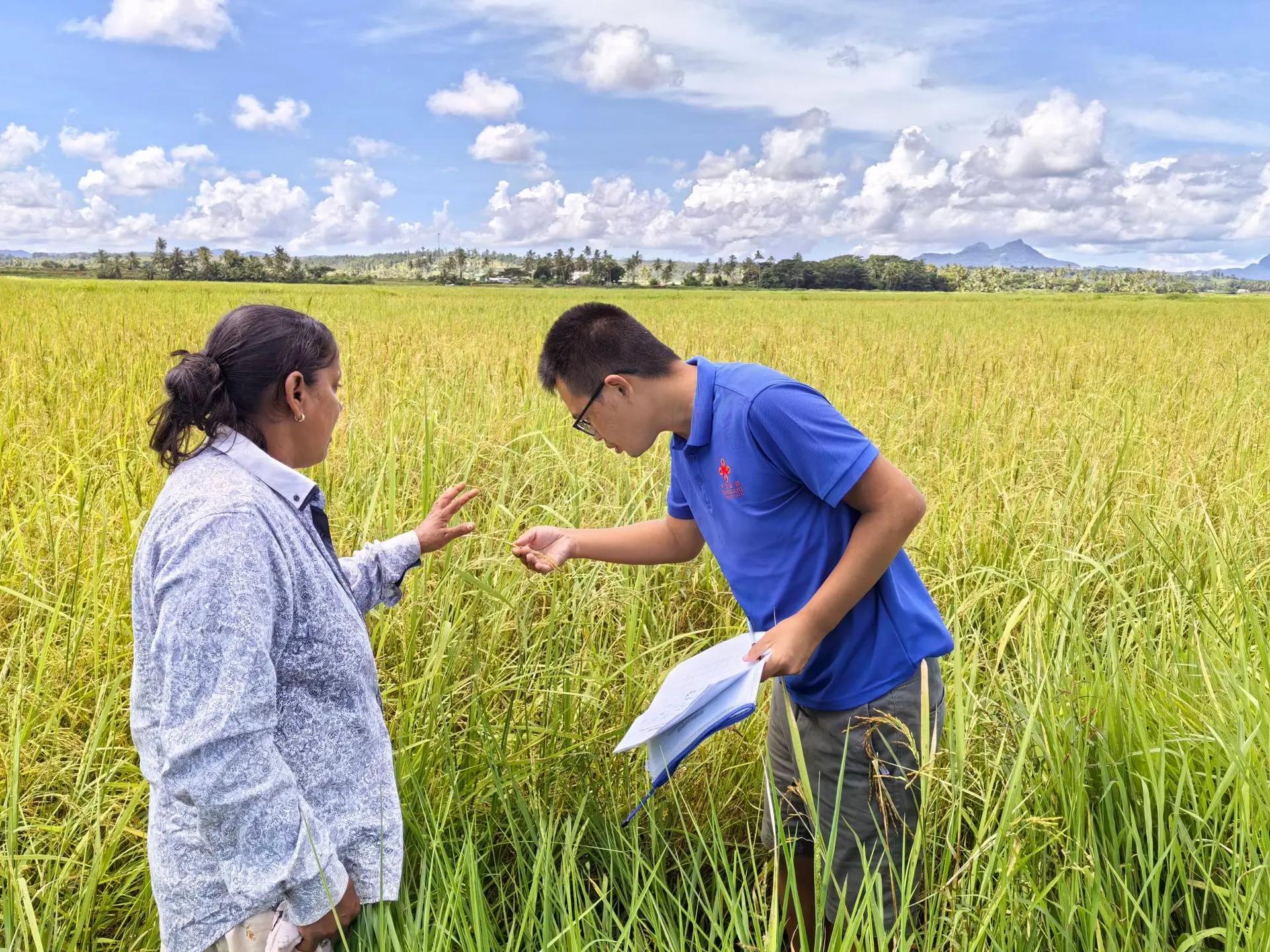
A Chinese rice expert conducting field surveys and providing guidance to a farmer on rice cultivation in Dreketi, Vanua Levu.
Photo: China Fiji Rice FB
A global fuel crisis triggered by the war in the Middle East, which has disrupted world oil supplies and pushed up prices in Fiji, has made growing more rice locally more urgent than ever.
This was highlighted by Fiji Rice Limited board chairman Raj Sharma during a parliamentary hearing before the Standing Committee on Economic Affairs today.
Mr Sharma said the country’s heavy reliance on imported rice, which costs between $60 million and $80 million annually, poses a serious food security risk at a time when global supply chains are already under strain.
Related stories
“Sustainability of food security is very much important for all of us. When we look at this fuel crisis and all those things that will happen, it is more important than anything else,” Mr Sharma said.
The Government activated a national fuel emergency plan earlier this month and approved the redeployment of $56 million within the existing budget to respond to the impact of the global fuel crisis.
Mr Sharma said the crisis was already being felt on farms, with farmers who would normally sell 17 to 18 tonnes of paddy to Fiji Rice now keeping up to seven tonnes for their own families as a food security buffer.
“We are going house to house to secure rice for people to sell to us,” he said.
Opposition MP Premila Kumar acknowledged food security concerns but pressed for results, warning that production had fallen from 13,000 metric tonnes in 2022 to around 6,000 before partially recovering, despite continued government investment.
Fiji imports more than 42,000 tonnes of rice annually.