Government role in school curriculum under scrutiny
A Constitutional Review hearing has raised questions about how much control the Government should have over school curricula as new global challenges reshape education priorities.
Wednesday 15 April 2026 | 13:30
Updated 15 April 2026 | 17:24 FJT

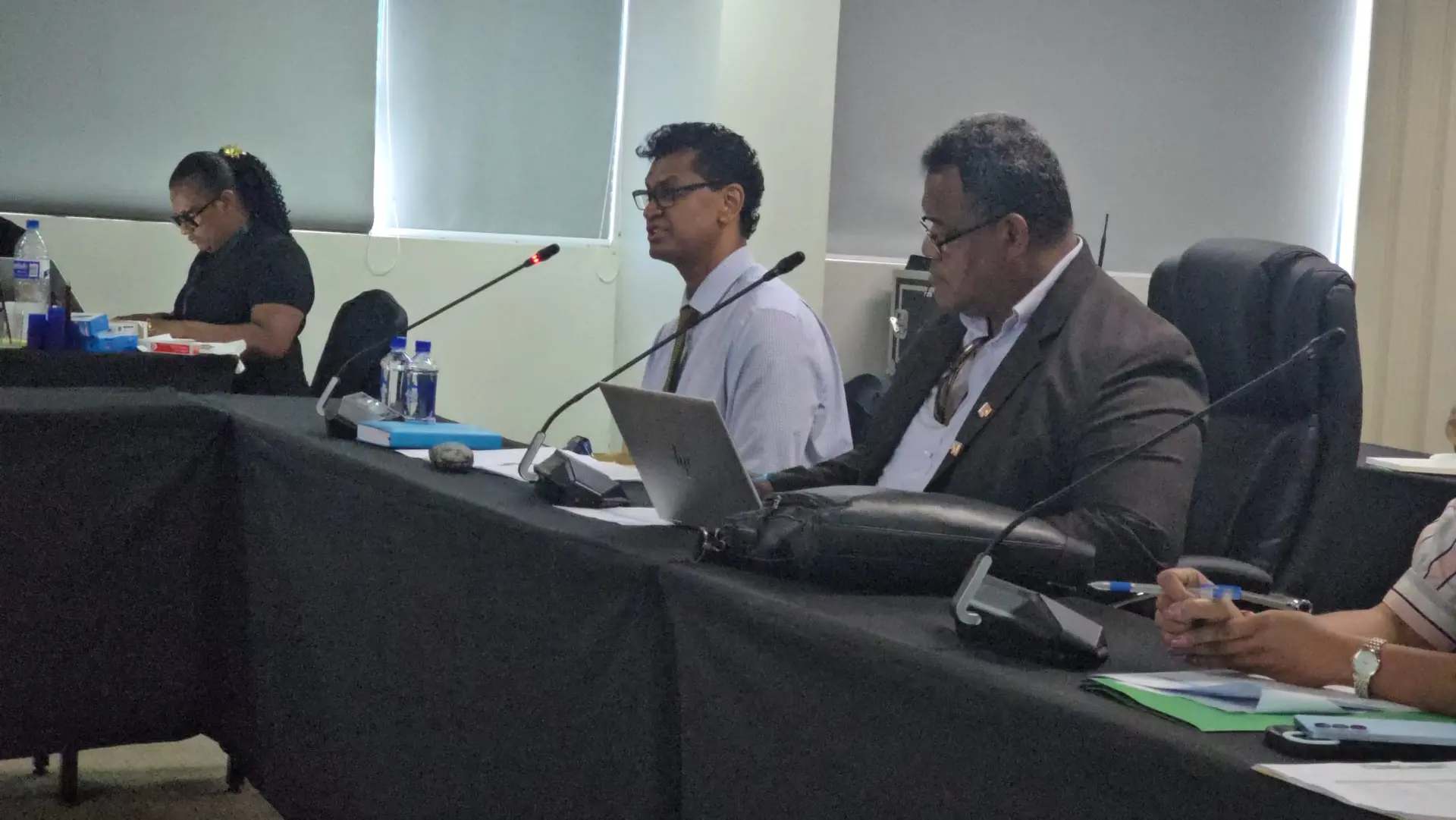
Ministry of Education permanent secretary Navin Raj Shayam (middle), speaking during the Constitutional Review Commission hearing on April 14, 2026.
Photo: Supplied
A discussion on Fiji’s education system has raised questions about how much control the Government should have over what is taught in schools, especially as new subjects like climate change and Artificial Intelligence (AI) become more important.
During a Constitutional Review Commission hearing on Tuesday, Commissioner Merewalesi Nailatikau asked the Ministry of Education to explain a section of the Constitution that allows the State to direct schools to teach subjects linked to health, civic education, and issues of national importance.
The law also requires all education institutions to follow such directions.
Related stories
Ms Nailatikau questioned whether this power is already being used in practice and if it fits with the idea of keeping education relevant to students’ real-life needs.
In response, permanent secretary for Education Navin Raj said curriculum relevance was a key priority for the Ministry.
He said schools must teach content that is useful, sustainable, and aligned with quality education standards.
He pointed out that education systems need to adapt to modern challenges.
According to him, topics such as climate change and AI were not fully included in older curricula but are now added because of their relevance.
“These issues are already affecting us and must be embedded in the curriculum so students are prepared for what lies ahead,” he said, adding that failure to adapt could leave students behind.
He also noted that there is a need to separate constitutional responsibilities from day-to-day education operations.
However, he said both areas must work together so that important subjects can be formally supported and included in the national framework.
Mr Raj also raised another concern, suggesting that the Constitution should clearly recognise students with special education needs.
The current provisions mainly refer to general education levels and do not specifically address children who require specialised learning support.
Mr Raj described this as an important gap, arguing that education policy must reflect the needs of all learners, not just those in mainstream primary and secondary schools.
Feedback: sosiveta.korobiau@fijisun.com.fj