Meth needle-sharing linked to Fiji HIV surge: Report
Experts warn needle-sharing among meth users is accelerating HIV transmission in Fiji.
Friday 15 May 2026 | 08:00

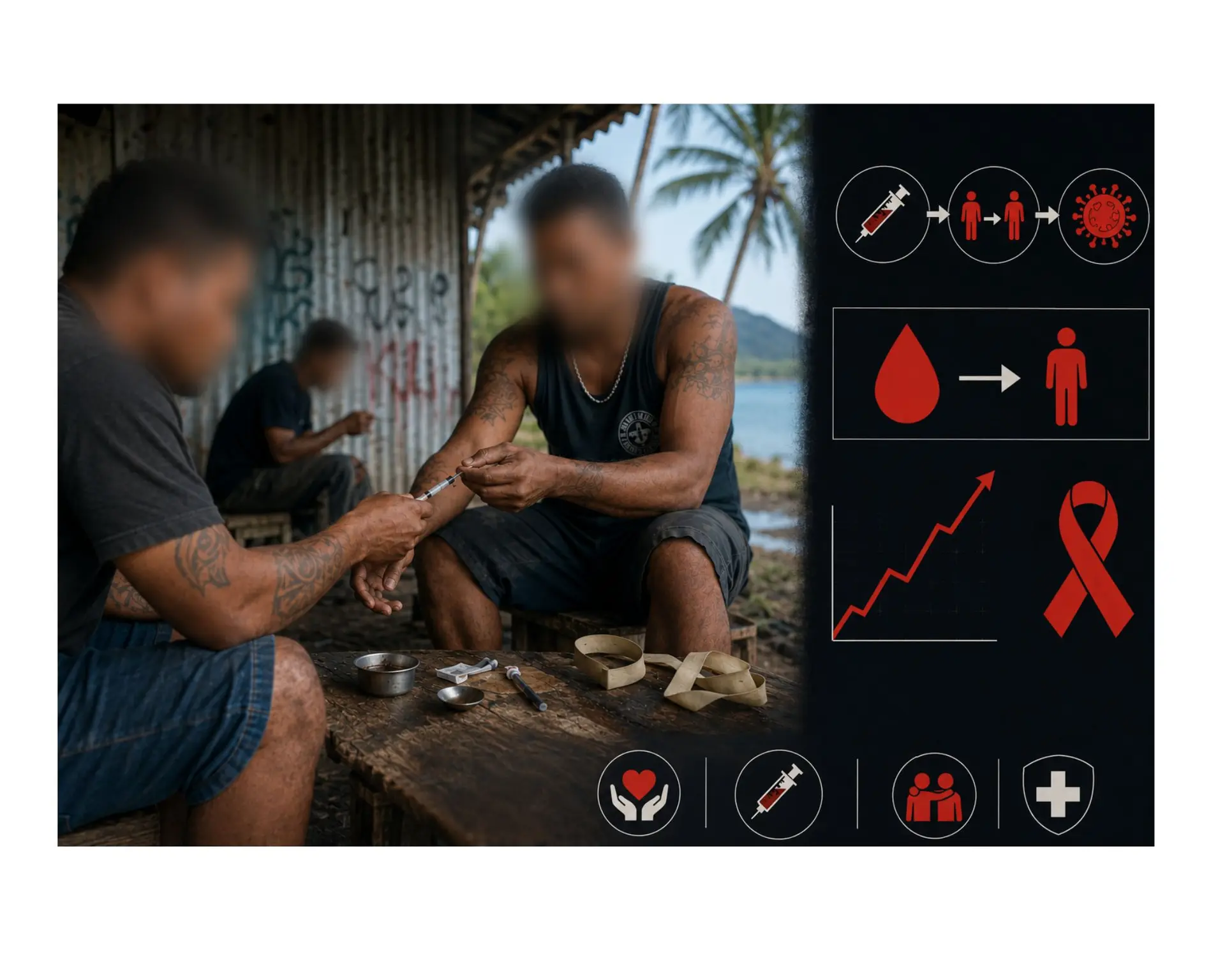
Needle-sharing among methamphetamine users in Fiji has triggered what experts are calling the world’s fastest-growing HIV epidemic, a new Pacific Security College policy paper has warned.
Source: AI Generated
Needle-sharing among methamphetamine users in Fiji has triggered what experts are calling the world’s fastest-growing HIV epidemic, a new Pacific Security College policy paper has warned.
Lead author Dr Nicholas Thomson said the link between drug injection and HIV transmission in Fiji was now so severe that it required urgent national assessment.
“There is an urgent need for rapid national and sub-regional assessments to better understand patterns of methamphetamine use, trafficking routes, impacts on communities and links to wider health risks such as HIV transmission,” Dr Thomson said.
Related stories
Dr Audrey Aumua, chief executive officer of The Fred Hollows Foundation New Zealand, said rising methamphetamine use, increasing HIV risk and growing numbers of people presenting with complex mental health needs were clear signs Fiji’s health system was under serious strain.
“Not only are these clear signals of systems under strain, they also reveal gaps in prevention, early intervention and community-based care,” Dr Aumua said.
HIV spreads rapidly when drug users share needles because infected blood passes directly between people.
The paper, Turning the Tide Together, published yesterday by the Pacific Security College and the Global Initiative Against Transnational Organized Crime, calls for a Pacific Islands Forum-led regional summit in 2027 to develop a shared drug strategy for the Pacific.