New gender-based violence protocol targets online abuse
Revised framework introduces measures to combat online abuse, strengthen child protection and improve access to justice.
Thursday 16 July 2026 | 12:00

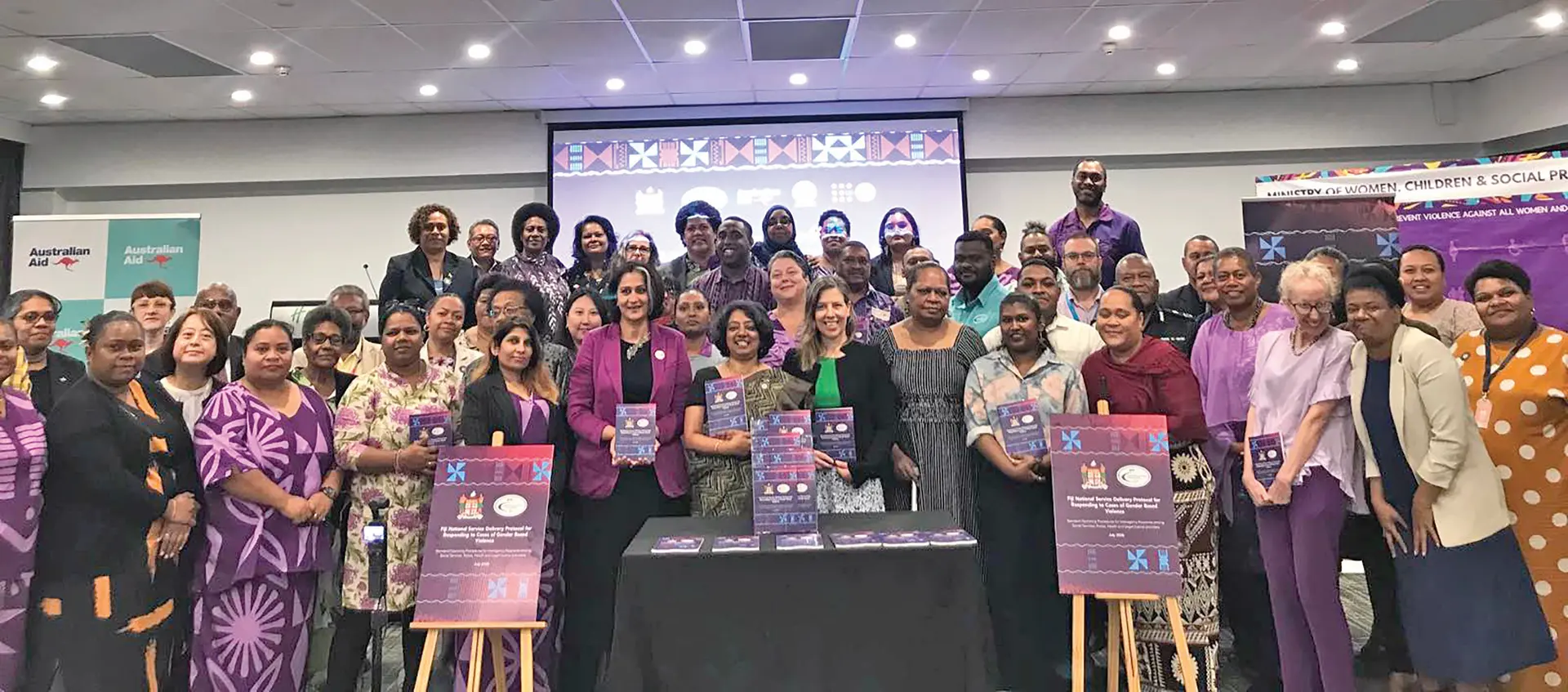
Standing sixth from left (front row) : UNFPA director and representative Bidisha Pillai, Minister for Women, Children and Social Protection Sashi Kiran, Australian High Commission Counsellor for Human Development Emma Cammack, during the launch of the Revised Fiji National Service Delivery Protocol For Responding To Cases Of Gender Based Violence at Holiday Inn in Suva on July 15, 2026.
Photo: Lavenia Waqanivanua
Fiji has strengthened its response to gender-based violence (GBV) with the launch of a revised National Service Delivery Protocol (SDP), introducing measures to address technology-facilitated abuse, strengthen child protection and ensure survivors receive coordinated, timely and survivor-centred services.
Minister for Women, Children and Social Protection Sashi Kiran said the updated framework reaffirmed the Government's commitment to ending violence against women and girls through a coordinated whole-of-government and whole-of-society approach.
Ms Kiran said gender-based violence remained one of the most pervasive human rights violations affecting women, girls, children and other vulnerable members of society. She said violence against women was not solely a women's issue but also a public health, human rights, justice and economic issue requiring collective action.
Related stories
The Minister said the original protocol, introduced in 2018, had served as the cornerstone of Fiji's coordinated response to gender-based violence. However, changes in legislation, institutional arrangements, international standards and emerging forms of abuse meant it required updating.
The revised protocol introduces a dedicated section on technology-facilitated gender-based violence, covering deepfakes, image-based abuse, cyberstalking, online extortion and digital coercion. It also establishes clear referral pathways to the Online Safety Commission and cybercrime authorities.
The protocol strengthens disability-inclusive services by requiring accessible facilities, sign language support and informed consent procedures. It also enhances child protection by aligning with the Child Care and Protection Act 2024 and the National Child Safeguarding Policy 2025.
It includes guidelines for responding to survivors in rural and maritime communities through mobile outreach and hotline services, strengthens faith-based service standards, improves responses during disasters and emergencies, and formally includes the Fiji Human Rights and Anti-Discrimination Commission to improve access to justice.
"Our objective through this protocol is simple, that every survivor, regardless of where they live in Fiji, receives professional, compassionate and timely support without having to navigate fragmented systems," Ms Kiran said.
Nationwide rollout of the revised protocol will now begin, accompanied by training and capacity-building programmes for frontline responders at national, divisional, provincial and community levels.
Collaboration
Australian High Commission Counsellor for Human Development Emma Cammack said the launch marked an important milestone in Fiji's efforts to strengthen support and protection for survivors of gender-based violence.
She said the revised protocol was the result of months of consultation and collaboration involving government agencies, civil society organisations, service providers, development partners and the United Nations.
Ms Cammack said Fiji already had strong laws and policies to address violence against women and girls, but effective implementation, coordinated systems and quality services were essential to ensure survivors received safe, timely and compassionate support.
"The true test of this protocol will be whether it improves coordination, strengthens service delivery and delivers better outcomes for survivors across Fiji," she said.
United Nations Population Fund (UNFPA) director and representative Bidisha Pillai described the revised protocol as more than a policy document, saying it reflected the collective commitment of government, civil society and development partners to ensure every survivor received safe, ethical, coordinated and survivor-centred care.
"Behind every statistic on gender-based violence was a woman, girl or family whose lives had been profoundly affected, making investment in frontline services one of the most important actions Fiji could take," she said.
"Protocols alone don't protect survivors. People do."
Ms Pillai said the protocol's success would depend on how consistently it was implemented by frontline service providers and whether survivors experienced safer, more coordinated and higher-quality services.
She said UNFPA would continue supporting the Government in implementing the revised protocol and advancing the National Action Plan to Prevent Violence Against Women and Girls to ensure every woman and girl could live free from violence and every survivor was treated with dignity, respect and compassion.