Policing vast waters a challenge
The navy assisted investigators by searching for a suspected narco-submersible vessel, it did not locate the craft.
Sunday 08 February 2026 | 10:00
Updated 08 February 2026 | 11:10 FJT

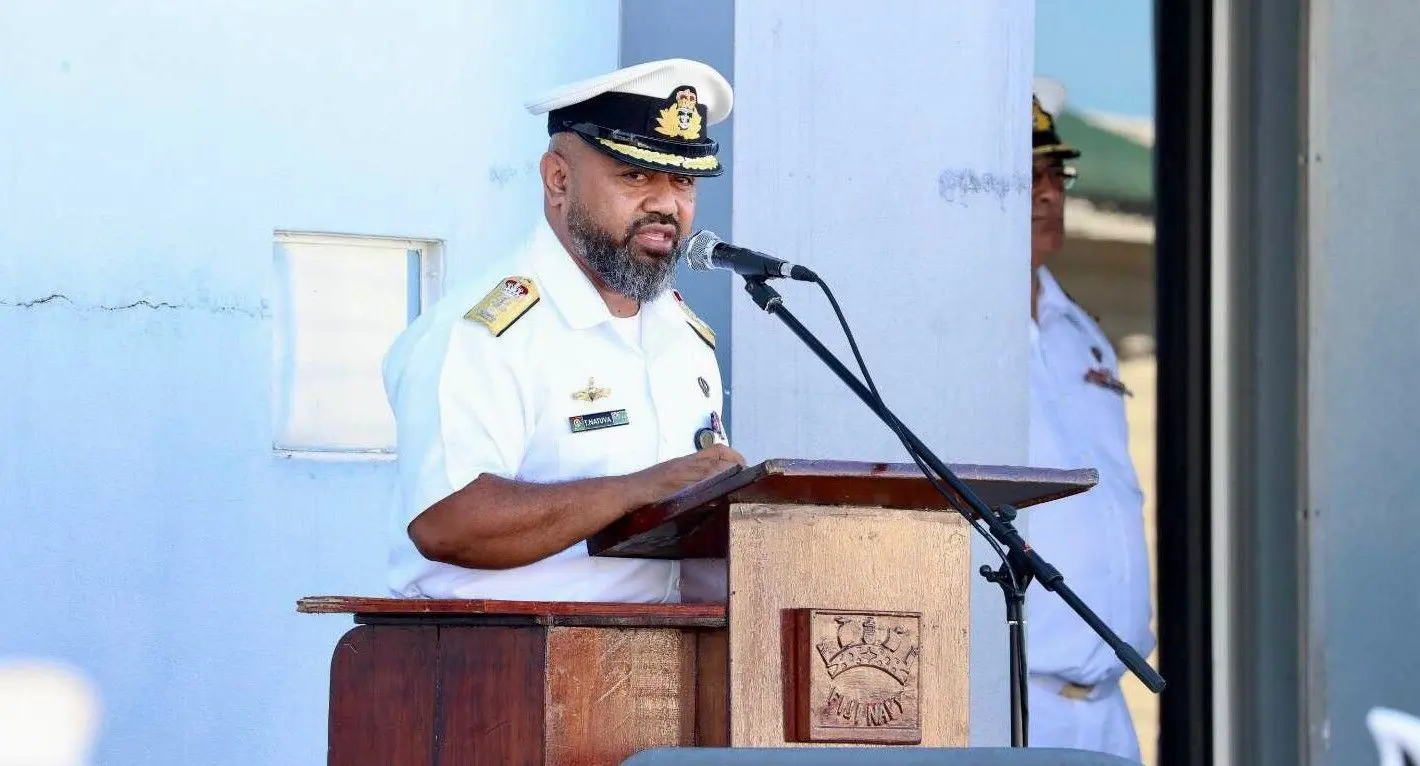
Republic of Fiji Military Forces Naval Division Commander, Commodore Timoci Natuva.
Republic of Fiji Navy.
The Fiji Navy has acknowledged significant challenges in monitoring the country’s vast maritime territory as regional drug trafficking through ocean routes continues to emerge as a growing security concern.
Republic of Fiji Military Forces Naval Division Commander, Commodore Timoci Natuva, said the Navy primarily provided operational support to law-enforcement agencies, including assisting with maritime searches and sharing vessel-tracking information when requested.
Commodore Natuva said the Navy had earlier assisted investigators by searching for a suspected narco-submersible vessel following reports received by authorities, but the search did not locate the craft.
Related stories
“We went to the area the following day and searched, but we couldn’t find it,” he said, adding that Police were continuing their own investigations into the matter.
While the Fiji Navy plays a supporting role in maritime interdiction and transport operations, Fiji’s extensive Exclusive Economic Zone (EEZ) presents major surveillance challenges.
“Our waters are vast. There are many gaps and we have limited capability to detect, let alone interdict, some of these activities,” Commodore Natuva said.
He stressed that improved coordination among agencies including the Fiji Police Force, Fiji Revenue and Customs Service (FRCS), and community-based coastal monitoring
networks was essential to strengthening maritime security.
“It’s about sharing resources and working together. We need to better understand how these criminal networks operate, what resources they use, and then assess how we can counter them using what we have,” he said.
Commodore Natuva highlighted the importance of international partnerships, noting that countries such as Australia, France and the United States provided valuable operational experience, particularly in dealing with narco-submersible vessels used by transnational drug networks.
Despite global advances in maritime surveillance, he noted that no single country can fully control its ocean space because of the scale and complexity of maritime environments.
“It’s a maritime security challenge for us, but there is now strong recognition that communities across our islands play a vital role. By synchronising the efforts of agencies and community networks, we can improve our response,” he said.
Authorities across the region have increasingly warned that the Pacific’s wide ocean spaces are being exploited by international drug trafficking syndicates using sophisticated maritime methods to transport narcotics.