USP researcher develops climate-smart solutions to protect Pacific taro
PhD research aims to improve soil health and strengthen taro production under climate change.
Monday 06 July 2026 | 17:00

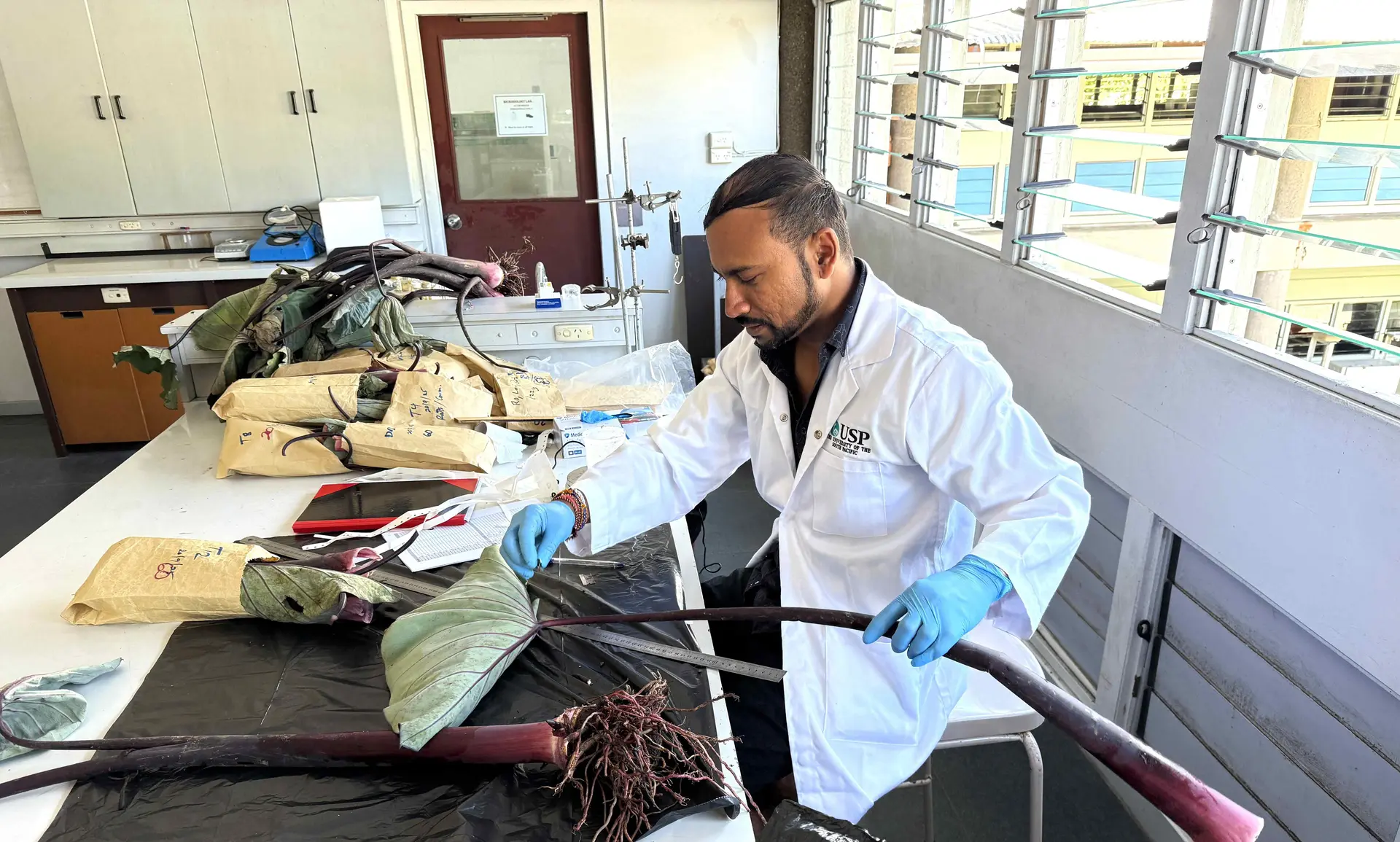
Agricultural researcher Abhineshwar Vinay Prasad.
Photo: Supplied
A University of the South Pacific (USP) researcher is developing climate-smart farming solutions to help safeguard taro production across the Pacific, warning that climate change and declining soil health are threatening one of the region's most important staple crops.
Ahead of World Rural Development Day, USP alumnus and agricultural researcher Abhineshwar Vinay Prasad said Pacific farmers were facing mounting pressure from rising temperatures, prolonged dry spells, flooding, saltwater intrusion and unpredictable rainfall.
“The agriculture sector in the Pacific island countries is on the frontline and is extremely vulnerable to climate change,” Mr Prasad said.
Related stories
He said farmers were also under pressure to meet growing local and export demand, but continuous cultivation was depleting soil nutrients, reducing crop yields and increasing pest and disease outbreaks.
“Farmers are making efforts to meet local and export food demand, but these efforts can lead to declining soil fertility,” he said.
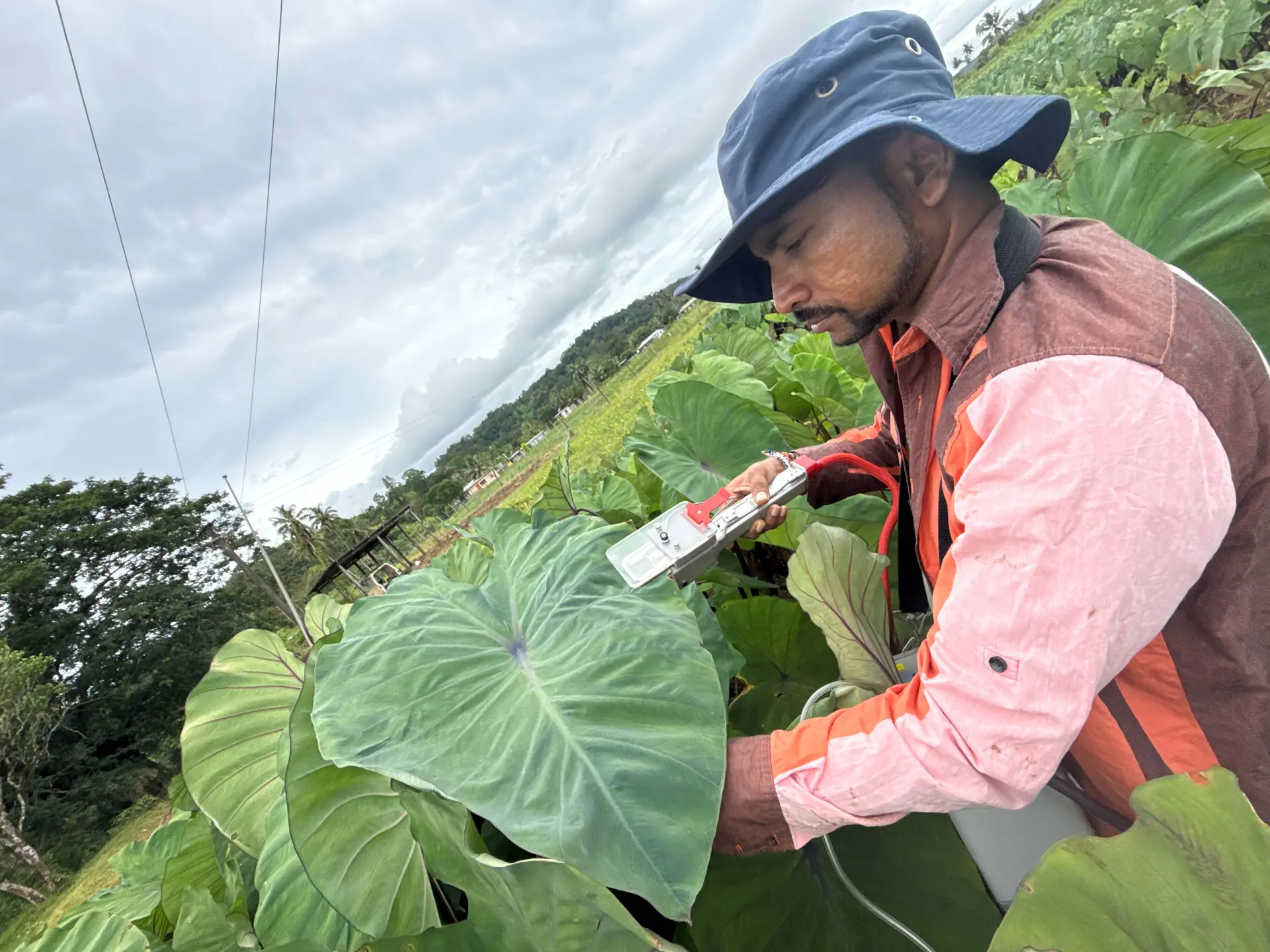
Mr Prasad's PhD research, based on taro field trials in Muaniweni, Naitasiri, aims to identify farming practices that improve soil health while increasing taro yields under current and future climate conditions in Fiji, Samoa and Tonga.
The research will enhance the internationally recognised Agricultural Production Systems sIMulator (APSIM) model by incorporating new taro varieties, soil water processes, nutrient cycling and soil biology to better predict crop performance under different climate scenarios.
“This study is exploring sustainable agricultural intensification practices to increase yields and improve soil health under current and future climate scenarios in Samoa, Tonga and Fiji,” Mr Prasad said.
Unlike many previous studies, the research also examines soil biodiversity, including bacteria, fungi and archaea, to better understand how healthy soils contribute to stronger crop production and long-term agricultural sustainability.
Using projected climate scenarios, including extreme weather events and El Niño-Southern Oscillation years, the study will assess farming practices such as mulching, intercropping and the use of organic and inorganic fertilisers to determine which methods best improve resilience and productivity.
Mr Prasad said the findings would provide practical guidance for farmers, agricultural planners, extension officers and policymakers by supporting better nutrient management, crop forecasting, resource planning and climate adaptation.
“Strengthening taro production is critical not only for food security and rural livelihoods but also for protecting one of the Pacific’s most culturally and economically significant crops in the face of a changing climate,” he said.