Navigating uncertainties: Perspectives on China’s foreign policy
China’s call for multipolarity, sovereign equality and inclusive development is resonating across the Global South as nations seek stability, dignity and a stronger voice in a rapidly shifting international order.
Thursday 12 March 2026 | 08:30
Updated 12 March 2026 | 12:25 FJT

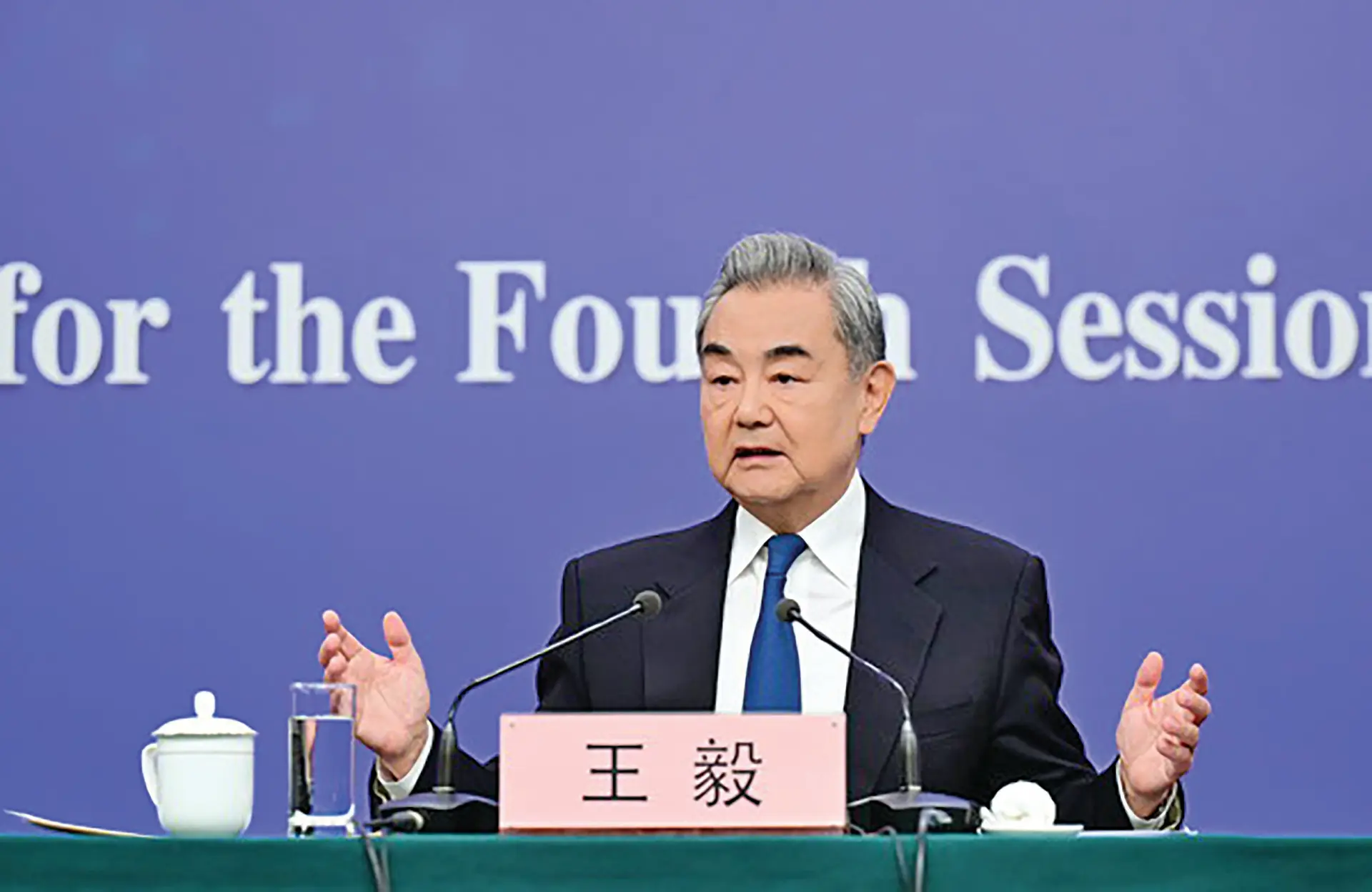
China’s Foreign Minister Wang Yi’s press conference during the fourth session of the 14th National People’s Congress was more than a diplomatic update.
For scholars and policymakers in the Global South, it was a moment of affirmation. In a world marked by turbulence, fragmentation, and unilateralism, China’s message of stability and multipolarity resonates deeply with our aspirations for dignity, sovereignty, and equitable development.
The Global South has long been positioned at the margins of international decision-making, often treated as passive recipients of policies shaped elsewhere.
Yet Wang Yi’s words remind us that our collective rise is now a defining feature of global transformation. China’s diplomatic message is not simply about its own trajectory—it is about the possibility of a more balanced world order in which our voices matter.
Certainty in a shifting world
Wang Yi’s insistence that China stands on the “right side of history” reflects a strategic orientation toward peaceful development and sovereignty. For nations long subjected to external interference, this stance is meaningful. China’s diplomats describe their country as “a builder of world peace, a contributor to global development and a defender of the international order.”
This message resonates because it contrasts sharply with the uncertainty generated by unilateral interventions and shifting alliances elsewhere. The Middle East burns once more, transatlantic relations strain under competing agendas, and Washington continues to pursue policies that prioritize dominance over dialogue. Against this backdrop, China’s consistency offers reassurance.
The evidence of China’s gravitational pull is visible in the flurry of foreign leaders visiting Beijing in early 2026. With China’s economy surpassing 140 trillion yuan ($20.3 trillion), attention is fixed on the forthcoming 15th Five-Year Plan.
For the Global South, this plan is not just a domestic roadmap, it signals opportunities for partnership, investment, and shared modernisation. It is a reminder that China’s growth is not isolated; it is intertwined with the prospects of others.
Managing major-power friction
The China-U.S. relationship remains the most delicate variable in global diplomacy. Wang Yi’s words—“Neither China nor the United States can remodel the other, but we can choose how we want to engage”—capture pragmatic coexistence.
For the Global South, this matters profoundly. When major powers clash, our economies and security often bear the brunt. Trade wars disrupt supply chains, sanctions destabilize markets, and geopolitical rivalries spill into our regions. The bruising year of 2025, marked by punitive tariffs, was a stark reminder of how vulnerable we remain to external shocks.
China’s approach offers a different path. Rather than seeking dominance, it positions itself as a defender of multilateral frameworks. On climate change, digital governance, and pandemic preparedness, Beijing emphasises inclusive cooperation. This is a message we understand well: global problems require global solutions, not unilateral dictates.
For countries weary of “decoupling” narratives, China’s consistency is reassuring. It signals that engagement, not exclusion, is the way forward.
Principles, proximity, and the global south
Wang Yi’s recognition of the collective rise of the Global South as “the distinct hallmark of the great transformation unfolding in the world” is affirming. Over four decades, our share of the global economy has grown from 24 percent to over 40 percent. We are no longer peripheral; we are central to the multipolar order.
China’s neighborhood diplomacy—turning its periphery into a “common home of peace, tranquility, prosperity, beauty and friendship”—is a model of regional integration. Initiatives like the Regional Comprehensive Economic Partnership and ASEAN engagement are building blocks of a “community with a shared future for humanity.” For us, this concept is not abstract—it is a vision of a world where our voices matter.
This approach also reflects a deeper cultural resonance. In many parts of the Global South, traditions of neighborliness and solidarity remain strong.
China’s emphasis on amity, sincerity, mutual benefit, and inclusiveness echoes values we hold dear. It is not about carving spheres of influence; it is about fostering cooperation that respects sovereignty and diversity.
Global governance and the United Nations
China’s Global Governance Initiative (GGI) advocates sovereign equality, international rule of law, and a people-centered approach. Its insistence on strengthening the United Nations rather than creating parallel structures is crucial. For the Global South, the U.N. remains the most legitimate platform for participation in global affairs.
By defending the U.N.’s centrality, China defends our inclusion. The GGI’s call to increase the voice and representation of developing countries aligns with our demand for a more just and equitable global governance system. For decades, we have argued that the institutions of global governance must reflect contemporary realities, not the power structures of 1945. China’s support for this reform is therefore not symbolic—it is substantive.
Moreover, China’s role in platforms like BRICS and the Shanghai Cooperation Organization demonstrates that alternative models of cooperation can complement, rather than undermine, the U.N. These forums provide space for Global South countries to coordinate positions, share experiences, and amplify our voices.
Multipolarity as destiny
Wang Yi’s articulation of multipolarity resonates deeply. He reminded us that “world history has always been written by many countries together, and the future of humanity will be forged through the collective efforts of all nations.”
For centuries, great-power rivalry inflicted disaster on humanity. The Global South knows this history intimately—we have lived its consequences in colonialism, proxy wars, and economic dependency. China’s pledge never to seek hegemony or expansion, inscribed in its Constitution, is therefore not just a domestic commitment—it is a reassurance to the world.
An “equal and orderly multipolar world” is precisely what we seek. Equal, because every nation must have its place. Orderly, because rules must be upheld, not manipulated. Without this vision, we risk being dragged once more into competing blocs. Multipolarity is not a luxury; it is a necessity for survival and dignity.
The global south’s affirmation
Wang Yi’s statement that “China’s heart is with the Global South; China’s root is in the Global South” reflects shared destiny. Platforms like BRICS, the Shanghai Cooperation Organization, and the Group of 77 and China empower us to speak up for peace and fair development.
China’s advocacy of inclusive globalization is equally important. In an era of protectionism and fragmentation, Beijing’s call for openness offers hope. For the Global South, this is not about charity—it is about fairness. We seek an international environment where our development is not obstructed, where sovereignty is respected, and where modernization is possible without coercion.
This affirmation also carries psychological weight. For too long, the Global South has been portrayed as a problem to be managed rather than a partner to be engaged. China’s recognition of our rise challenges this narrative. It tells us that we are not merely recipients of aid or subjects of intervention—we are co-authors of the future.
Certainty as confidence
Ultimately, the message from Beijing is clear: In a world of growing uncertainty, China offers itself as a point of certainty and confidence. Not through dominance, but through stability and opportunity.
As a Global South academic, I find Wang Yi’s words affirming because they reflect our lived realities. We know what it means to be marginalised, subjected to unilateralism, and denied agency. China’s message is different. It recognises our rise, affirms our dignity, and invites us into a shared future.
In a fragmented international landscape, many are choosing to hear China’s voice. And that voice, grounded in certainty, is likely to carry increasing weight in the multipolar order now taking shape. For us, this is not simply about geopolitics—it is about the possibility of building a world where peace, development, and justice are not privileges, but rights.
Conclusion: A shared future
Wang Yi’s press conference was not just a statement of China’s foreign policy—it was a message to the world, and especially to the Global South. It affirmed that our rise is real, our voices matter, and our future is shared.
China’s diplomacy offers certainty in uncertain times. It offers stability without hegemony, cooperation without coercion, and opportunity without exclusion. For the Global South, this is not only affirming—it is empowering.
As we look ahead, the challenge is to translate these principles into practice. Multipolarity must be built, not assumed. Global governance must be reformed, not merely defended. And solidarity must be deepened, not just declared. In this journey, China’s voice of certainty will remain important. But equally important is our own voice—the collective voice of the Global South, rising to shape the future of humanity.
(Joseph Veramu works in the area of planning and development. The views expressed in the article are of the author alone and not of Fiji Sun and/or its employees.)