Protecting Pacific health and economies through safer food
FAO has also supported multisectoral collaboration – bringing together agriculture, health, trade and environment sectors.
Saturday 06 June 2026 | 17:00
Updated 09 June 2026 | 19:09 FJT

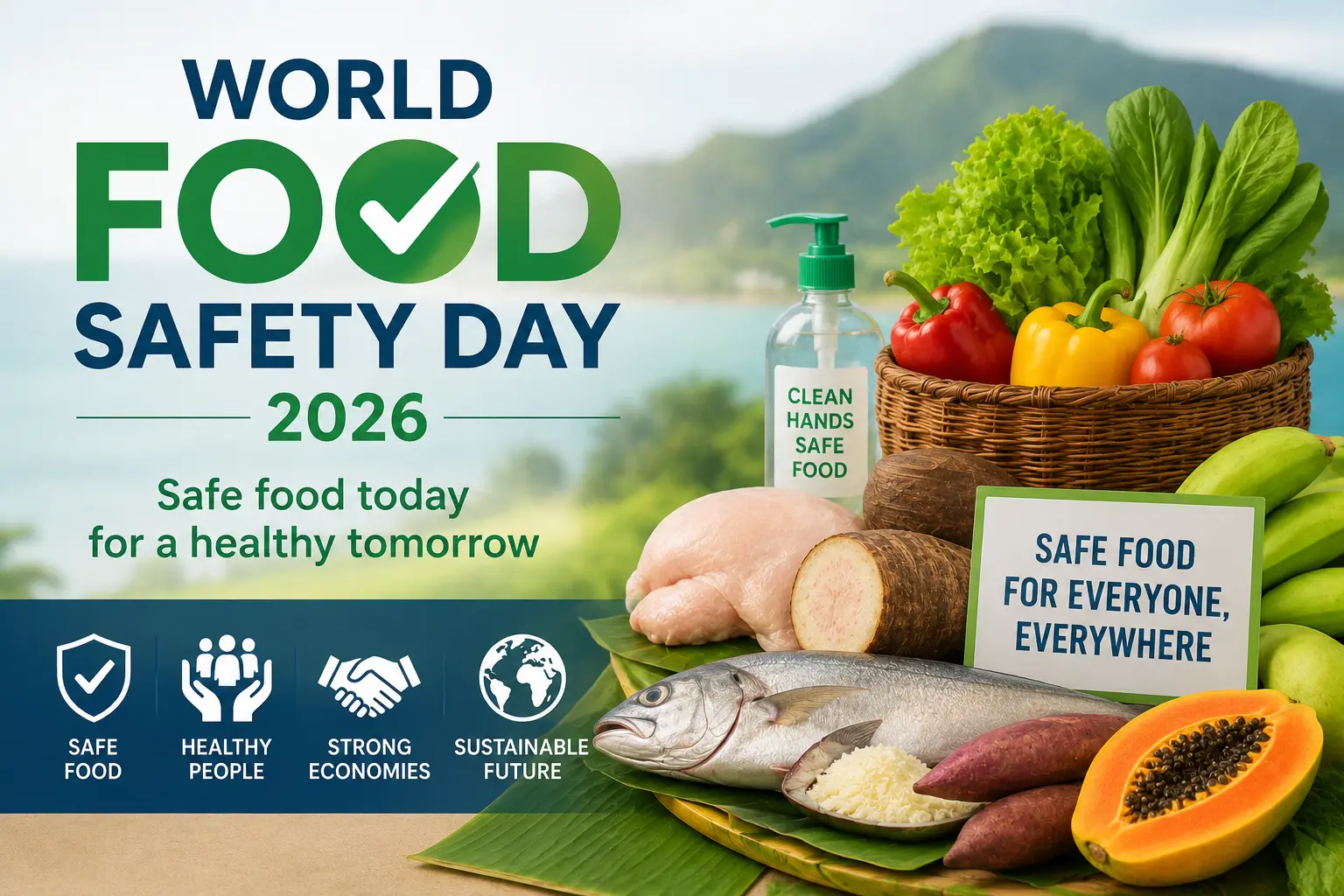
On 7 June 2026, Pacific Island countries around the world will mark World Food Safety Day under the theme “From burden to solutions – safe food everywhere.” This year’s message highlights a critical reality: while foodborne diseases remain a significant burden, they are largely preventable through science, strong systems and collective action.
For Pacific Small Island Developing States (SIDS), food safety is more than a health concern – it is a foundation for resilient food systems, sustainable livelihoods and economic stability.
Communities across the Pacific depend on fisheries, local agriculture and imported foods. Unsafe food can lead to illness, disrupt education and productivity, and affect tourism and trade – key pillars of Pacific economies.
In recent years, the Pacific Island countries have worked to strengthen food control systems and adopt international standards aligned with Codex Alimentarius to better protect consumers and facilitate trade. Countries are strengthening the gaps based on national circumstances.
For example, in Fiji, efforts have focused on improving food inspection systems, strengthening market hygiene and raising consumer awareness whereas, Samoa has advanced work on integrated food system approaches, linking food safety with nutrition and non-communicable disease prevention.
This shows positive momentum to strengthen the food safety systems in the Pacific. Through these ongoing efforts, the Pacific continues to align itself with a global community of 188 Codex member countries dedicated to shared food safety standards.
The Food and Agriculture Organization of the United Nations (FAO), together with partners, has supported these efforts through Technical Cooperation Programme (TCP) projects and regional initiatives over the past four years.
These include building the capacity of food inspectors and laboratories, supporting policy and regulatory development, and promoting risk-based approaches to food safety management.
FAO has also supported multisectoral collaboration – bringing together agriculture, health, trade and environment sectors – to strengthen national food control systems and ensure that safer food contributes to healthier diets across the Pacific.
These efforts reflect a key principle: food safety is a shared responsibility. Everyone along the food chain – farmers, fishers, food businesses, regulators and consumers – plays a role in preventing contamination and protecting public health.
Looking ahead, stronger and more coordinated action is needed to safeguard food for future generations. First, Pacific countries should continue investing in surveillance and data systems. Reliable information on foodborne disease risks allows governments to identify priorities and take targeted, cost-effective action.
Second, regional collaboration should be strengthened. By sharing knowledge, harmonizing standards and learning from each other’s experiences, Pacific SIDS can accelerate progress and build more resilient food safety systems.
Third, education and awareness must be expanded. Communities, schools and households should be empowered with practical knowledge – such as safe food handling, storage and preparation – to prevent illness. Simple actions can significantly reduce risks and protect vulnerable groups, especially children.
Finally, sustained commitment from governments, the private sector and development partners is essential. Food safety must remain a priority within national policies, supported by science, innovation and inclusive partnerships.
As we mark World Food Safety Day 2026, there is a shared opportunity across the Pacific to turn knowledge into action – moving from burden to solutions and ensuring that safe food reaches everyone, everywhere.
As highlighted by Mr Guangzhou Qu, FAO Subregional Coordinator (SRC) for the Pacific, “We must work together to address food safety challenges and build a safer, healthier future for the next generation of Pacific Small Island Developing States.”
About the author
Jia Ni is the Nutrition and Food Systems Officer at FAO Subregional Office for the Pacific Island Countries. The organization works with the member nations to transform agrifood systems through sustainable plant protection and regional coordination.