Four Fiji weather stations record driest October in history
Nadi Airport received just 0.3 millimetres of rain during the entire month, breaking its previous October record of 1.8mm recorded in 1987.
Tuesday 10 November 2026 | 13:00

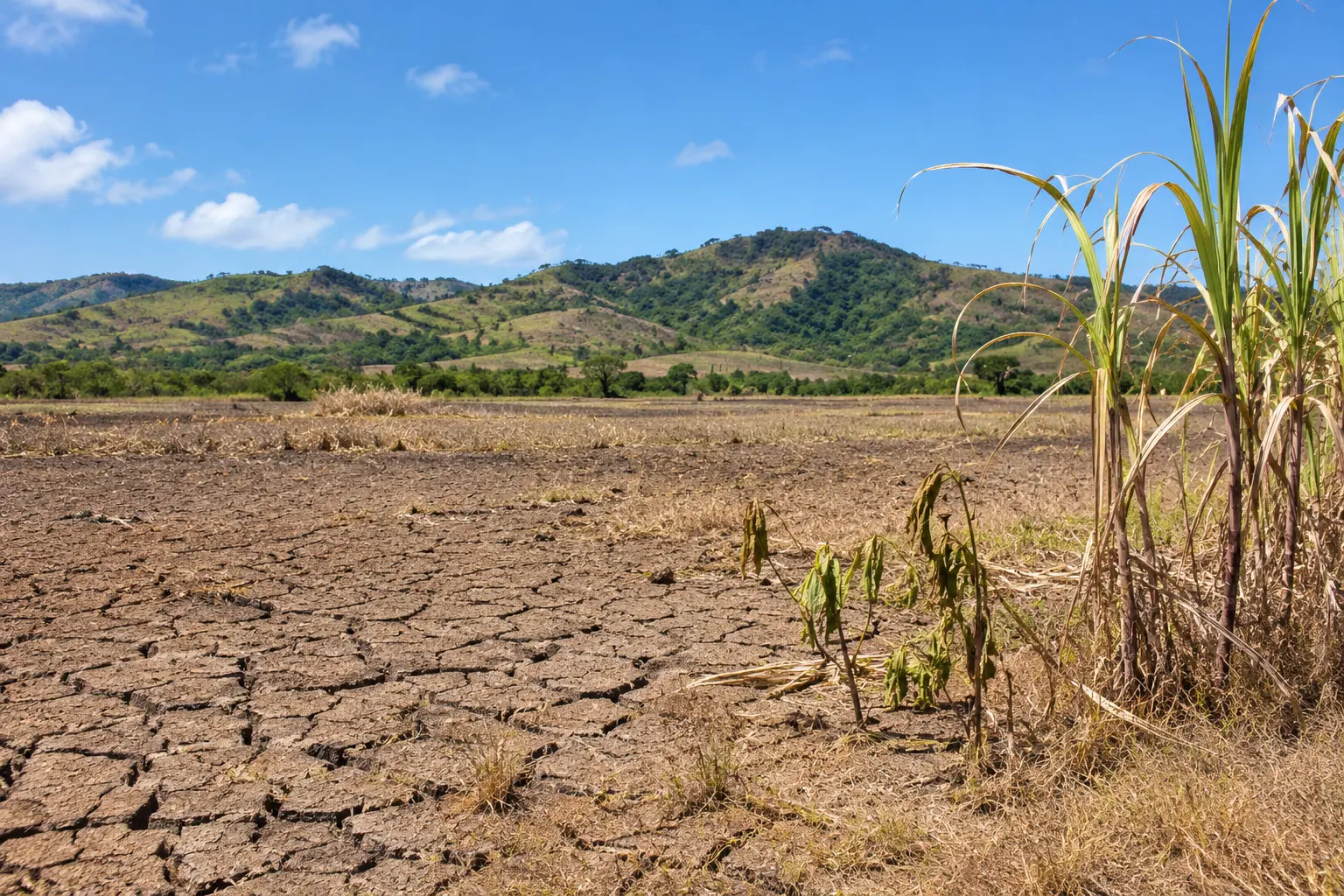
Four long-established weather stations in Fiji recorded their lowest October rainfall totals on record as prolonged El Niño-related dry conditions continued to affect communities across the country.
The Fiji Meteorological Service's October 2026 Climate Summary, issued on November 6, revealed that Nadi Airport, Yasawa-i-Rara, Viwa and Rotuma recorded their lowest October rainfall totals since observations began at their respective stations.
Nadi Airport received just 0.3 millimetres of rain during the entire month, breaking its previous October record of 1.8mm recorded in 1987. Rainfall records at the station date back to 1942.
Related stories
Yasawa-i-Rara recorded only 0.4mm, compared with its previous October low of 26.3mm in 2021.
Viwa received 0.6mm, breaking its previous record of 1.9mm set in 2025.
Rotuma recorded 29.2mm, its lowest October total since records began in 1912. Its previous record was 80mm in 1914.
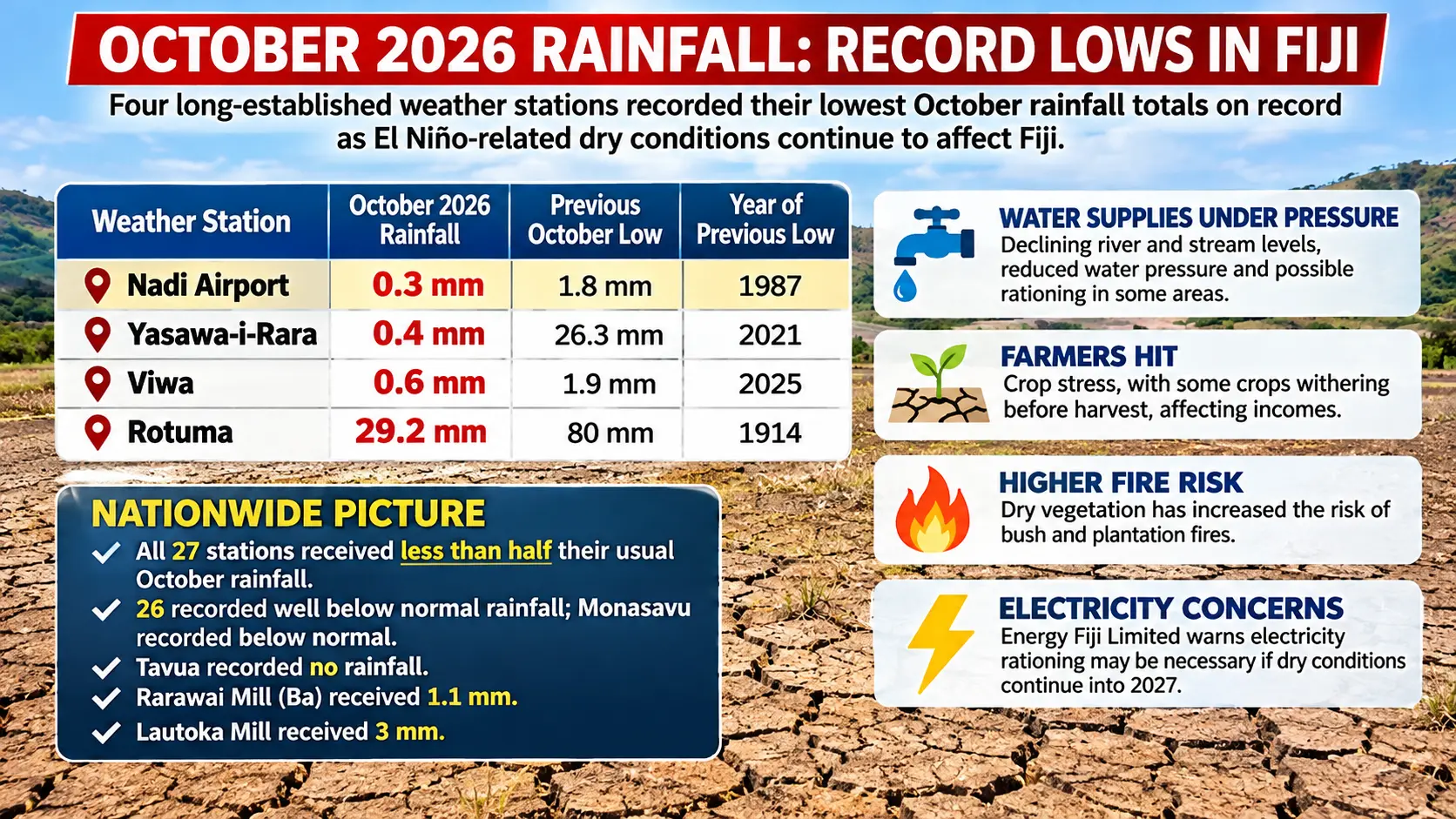
Fiji’s Record-Low October Rainfall.
Rainfall suppressed nationwide
The Fiji Meteorological Service reported that all 27 stations assessed received less than half their usual October rainfall.
Of these, 26 recorded well below normal rainfall, while Monasavu recorded below normal rainfall.
Tavua received no rainfall during October, while Rarawai Mill in Ba recorded 1.1mm and Lautoka Mill received just 3mm.
The report attributed the widespread suppression of rainfall to conditions typically associated with El Niño.
Water supplies under pressure
The prolonged dry spell has affected water availability across the Western and Northern divisions and maritime communities.
The report highlighted declining river and stream levels, reduced water pressure and increasing concerns about reservoir storage.
According to the report, Vaturu Dam was at 68 per cent of its maximum storage capacity on October 23.
The Water Authority of Fiji (WAF) had urged residents and businesses in Nadi and Lautoka to conserve water because of declining inflows and increased evaporation.
The authority also warned of possible supply disruptions and water rationing.
Emergency water deliveries were carried out in affected communities across the Western, Northern and Central divisions, including the Yasawa Group, Malolo, Cikobia and Yanuca Island.
Water supplies were also delivered to schools and healthcare facilities.
Farmers face crop losses
The dry conditions have also affected agricultural activities, particularly vegetable and sugarcane farming.
According to the report, declining soil moisture and water availability have caused crop stress and made land preparation difficult.
Some farmers reported crops withering before harvest, reducing their income.
Dry vegetation has also increased the risk of bush and plantation fires, with numerous incidents reported in the Western Division.
Electricity rationing concerns
The report also highlighted concerns about electricity generation if dry conditions continue.
Energy Fiji Limited has warned that continued dry weather could make electricity rationing necessary, with El Niño conditions likely to persist into 2027.
The Fiji Meteorological Service said prolonged dry conditions continued to affect communities and several sectors across the country.