As COP26 Draws To A Close: High Emitters Still Lack Commitment, Loss And Damage Text Vague
Fiji and other Pacific Island countries are concerned with the COP26 outcome draft text released yesterday.
Sunday 14 November 2021 | 09:55
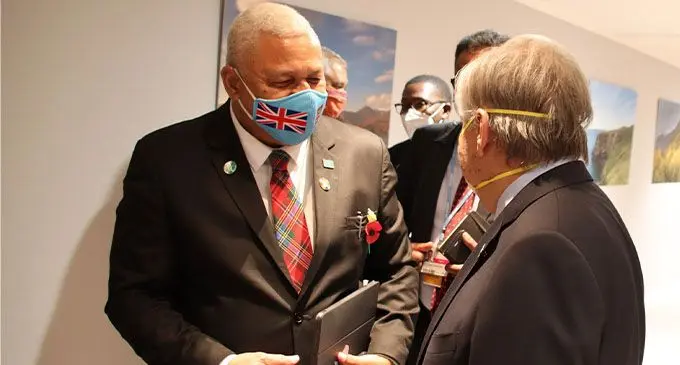
Prime Minister Voreqe Bainimarama with United Nations Secretary-General Antonio Guterres (right) at the COP26 in Glasgow, Scotland, on November 11, 2021. Photo: Office of the Prime Minister
Fiji and other Pacific Island countries are concerned with the COP26 outcome draft text released yesterday.
While the 1.5 degrees stand remains non-negotiable, a solid commitment from high emitters to reduce emissions is yet to be seen.
Fiji has in fact proposed an escalation in the decarbonisation process – 50 per cent by 2030 and net zero emissions by 2050.
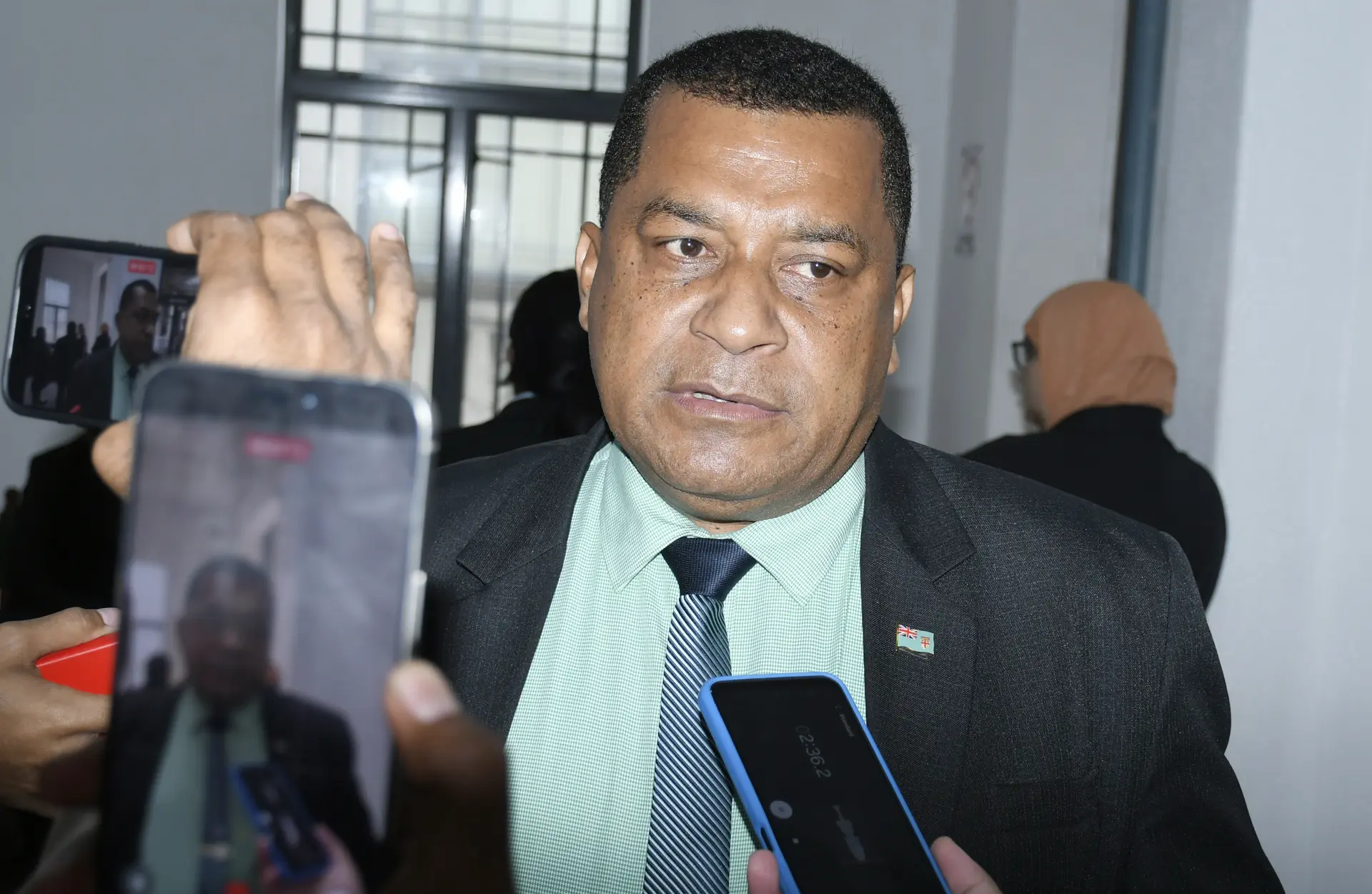
While most countries have said net zero by 2050, but how they plan to get there is another issue, Attorney-General and Minister Responsible for Climate Change, Aiyaz Sayed-Khaiyum told Bloomberg yesterday.
“We don’t want another, what we call ‘oops’ situation, where you have $100 billion and come 2020, we don’t have it, so let’s extend it.”
In terms of climate finance, Fiji has also proposed that the outcomes text show the timeframes before reaching 2023.
“They should be a yearly check, it’s a question of accountability. How are we tracking a tracking system? So, by 2023, we don’t have another situation where we’ve got another shortfall,” Mr Sayed-Khaiyum said.
Suggestions have also been made in regard to the draft text on loss and damage.
Mr Sayed-Khaiyum described it as ‘very vague’.
“We’ve suggested an alternative text - that alternative text has the agreements of the Alliance of Small Island States (AOSIS) and Pacific SIDS small island developing states. We also understand that the Least Developed Countries are also supporting that particular position.”
“What we want from the loss and damage is not just about insurance, it’s also about some financial commitments.”
Again the timeframe outlined in the draft text is not clear including the mechanics of assessing loss and damage.
“How do we assess loss and damage? Are we saying they should be finalised by the next COP?
“But we need to make the commitment now to have various committees, to be able to sit down and work out the roadmap, and then get that commitment, put in stone in COP27.”
On Wednesday, Prime Minister Voreqe Bainimarama had raised the same issues during his bilateral meeting with the UN Secretary-General Antonio Guteress and his UK counterpart, Boris Johnson.
Yesterday, Mr Guteress had echoed the same concerns.
The failure by big emitters to reach the US$100bn pledge by 2020 is a big concern.
“Pledging is one thing, making sure that actually gets down to the people who deserve them is another.”
Another shortfall in accessing finance from organisations like the Green Climate Fund points to bureaucracy.
“You will find talking to a lot of the Pacific Island countries that they will say to you that the bureaucracy is so bloated, we don’t even know how to navigate our way to the money or to actually fulfill the requirements. So that’s a real issue,” Mr Sayed-Khaiyum said.