Athletics Fiji Sets The Record Straight On Karan Case
Yeshnil Karan was not selected for 1500 metres because he did not meet the entry qualifying standard which is A: 3.58:00 mins or B: 4:05,0 mins.
Sunday 12 May 2019 | 15:18
We don’t bend rules for anyone: Jo Rodan Snr
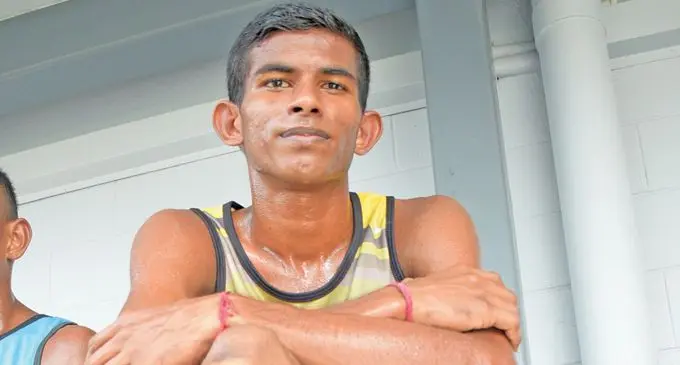
Athletics Fiji has set the record straight on why Tavua College long distance runner Yeshmil Karan was not selected for the 2019 Pacific Games.
Karan made headlines during the Coca-Cola Games winning the 1500 and 3000 metres comfortably beating Pacific Games squad member Petero Veitaqomaki.
Athletics Fiji president Joe Rodan Senior said anyone that wants to make the team needs to qualify and they don’t bend it for anyone including Karan.
Rodan Snr clarifies on how Athletics Fiji (AF) operates.
- Why wasn’t he selected?
Yeshnil Karan was not selected for 1500 metres because he did not meet the entry qualifying standard which is A: 3.58:00 mins or B: 4:05,0 mins.
- Why wasn’t he at the trials?
The trials date was widely advertised in all forms of media including AF website which all can access.
AF selection criteria standard set clearly stipulates that all local athletes vying for Pacific Games must attend the trials and actively participate in weekly organised competitions.
- When was the selection criteria set?
The qualification criteria was set basically back in 2003 and we have merely evolved it from there but that’s the base document as it was one that was focused on high standards.
It’s main focus also is to align to AF strategic plan and as per our plan we want to dominate athletics in the 2019 Pacific Games and we have given ourselves 4yrs to do so since 2015.
We have been successful because after a long time we have had 11 athletes meet the ‘A’ Standard Marks and even those that hit ‘B’ are ranked regionally and will contest the gold or silver in Samoa.
- Who set the selection criteria?
Our criteria is set by the Selection Justification Committee (SJC) of the sport made up of chief development officer, general secretary, clubs rep, and team managers or the Games at hand.
We consult the coaches but we don’t use them in the SJC because there are too many different events to consider and sometimes their input is biased towards their athletes as they have vested interest in the athlete making the team as it will boost their reputation,
The easiest way to achieve this is by having an easy qualification mark.
It’s like school external exams, teachers that teach their class don’t set the papers, it’s set by the Ministry to eliminate biased and favouritism.
Once criteria is set it’s presented to the AF executives for approval and execution in the build-up.
- How is the standards set out?
The A & B standards are set based on the results in the region ultimately the marks that will ensure we secure gold in an event.
And it’s not just based off the last Pacific Games but we look back in our case all the way to 2003 when we dominated athletics and standards were high before we experienced a backslide in the performances of athletes.
We are merely working in line with our AF strategy and are close.
And our criteria is an important benchmark to achieving high level of performance in every event that will give us a shot to have our athletes be competitive at regional and global meets.
- Is your criteria bias?
No, we are a transparent organisation that has come a long way and we stick with our processes and good governance practices that has served us well and got us back into Oceania Athletics Association (OAA) and International Association of Athletics Federation (IAAF) good books as the best run MF in the Pacific Region.
Anyone that wants to make the team needs to qualify and we don’t bend it for anyone, unless the athlete has not achieved A or B but is ranked No. 1 in the region at the time of selection and his results are legitimate and proves it.
We than make a case for it because ultimately the objective is to target gold.
We have done this for our javelin thrower so we are flexible only if the case is strong towards winning gold.
And this is compared via National and Regional ranking.
SCENARIO: In 2003, the 1500m was won by Isireli Naikelekelevesi at 3min 57sec.
At the 2007 Samoa Games winning 1500m time was by a Samoan athlete at 3min 56sec and Naikelekelevesi was 2nd at 3min 59sec.
In 2011 winning th Pacific Games time was 4min flat.
In 2015 PG time was 4min 19sec. Number 1 ranked regionally in 2019 is 4min flat, 2nd and 3rd are 4min 3sec, 4th ranked is 4min 4sec, 5th ranked is Stephen Sandy (Fiji) at 4min 7sec and Yeshnil Karan is 6th ranked at 4min 9sec.
This is as at end of April 2019 Oceania ranking from Ewen Mackenzie OAA statistician.
- Are the standards set by Athletics Fiji too high?
No. We are setting standards that will push our athletes and lift standards to be the best in the Pacific and on par with Australia and NZ.
All participating countries have their own entry standards which are lower than times clocked during the games.
The 2015 1500m gold medallist clocked 3:52 mins that season however ran 4:19 during the games because the race strategy was such that most of the main runners did not want to run from the front but sat, and waited to strike in the final lap.
Times on race day depends on the race plan and the field.
In the past four years we have sent six top coaches in the country to Korea for three months lecturesrs coaching programme.
The initiative was to further broaden these coaches’ skills, return and simulate the learning and experience sharing to the existing pool of coaches list which allow our coaches to coach at high level and push athletes so they are in shape to qualify on merit for world championship and ultimately the Olympics.
This is what our OAD (Olympic Athletes Dividend Programme) has been focusing on in its 4yrs phase programme that we are working online with IAAF on.
- Does Athletics Fiji have any plans for athletes that missed selection like Yeshnil and has Athletics Fiji contacted him?
Absolutely. We have contacted him via the team manager Joseph Rodan Junior and explained why he has missed out which is due to all reasons mentioned here and by Athletics Fiji in media.
He has been encouraged to use this experience to motivate him to strive harder to qualify for the next Melanesian Games next year.
Even earlier to work hard to make the Fiji Western Team for the Grand Prix Permit Meet on July 6 in Lautoka that will see Australian, NZ, and number of Pacific Islands athletes participating in an attempt to qualify for the world champs later this year in September.
Provided clarity around the strategic direction with develop programmes available to ensure we continue to offer a pleasant environment for all athletes in the sports we all love and enjoy, starting with the Oceania Grand Prix in July 2019 and Melanesian Games 2020.
We have our competition calendar out and we offer a very active season to help athletes get competition time both local and if they prove their worth they are sent for overseas meets.
But in saying this Athletics Fiji expects athletes to take ownership of their own careers because we can only facilitate athletes within our resources over the course of the season.
At the end of the day the athletes’ career ultimately is his own responsibility.
Only the athlete can decide how far he goes in this sport, and that’s by ensuring his well versed and connected to what’s happening in the sport, and surrounding himself with the right support structure both in and off the field.
Feedback: oseab@fijisun.com.fj