Girmitiya descendant preserves ancient diya tradition
A Labasa woman in her late 70s continues to preserve the traditional art of diya making, passing down a cultural practice rooted in girmitiya history.
Thursday 14 May 2026 | 13:00
Updated 14 May 2026 | 14:47 FJT

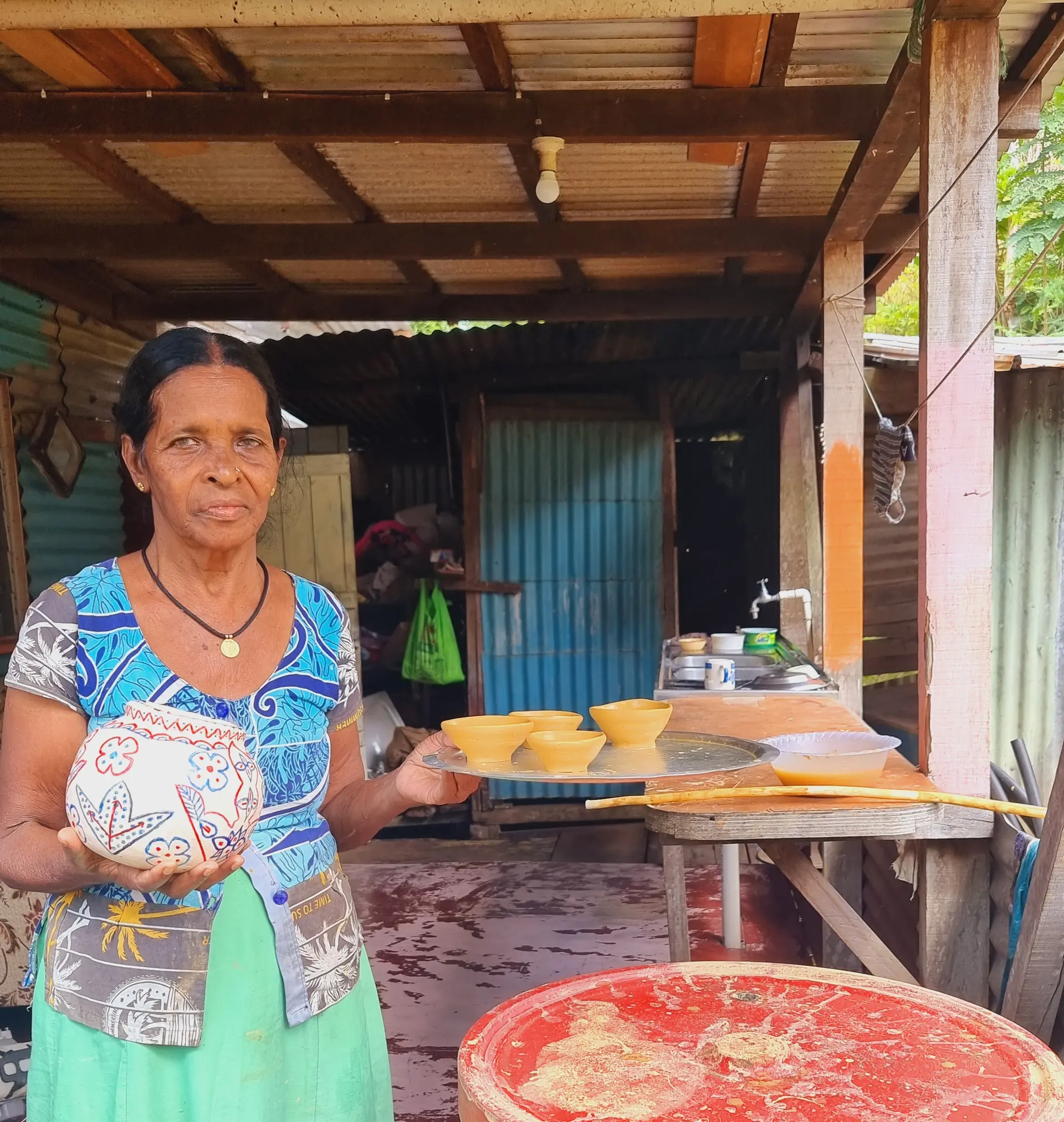
Diya and clay pot maker, Utra Wati, at her residence in Bulileka, Labasa.
Photo: Sampras Anand
An elderly descendant of girmitiyas, Utra Wati continues to preserve the traditional art of diya (traditional oil lamp) making in her Bulileka community in Labasa.
Ms Wati specialises in clay-moulded diyas, helping keep alive an ancient craft passed down through generations since the arrival of girmitiyas in Fiji.
Now in her late 70s, she has been crafting diyas from clay soil for more than a decade, producing around 13,000 pieces every Diwali season and during other Hindu festivities.
Related stories
The process is time-consuming, but deeply rewarding.
“I have been making diyas every year, and it brings me great joy to see them light up people’s homes during this festivity,” Ms Wati said.
The tradition of lighting diyas dates back to the return of Lord Rama to Ayodhya after defeating Ravana, when people celebrated by lighting thousands of lamps.
Since then, diyas have symbolised the victory of light over darkness and the return of positivity and hope.
Ms Wati said the skills involved in diya making were slowly disappearing as younger generations showed less interest in the traditional craft.
Apart from diyas, she also makes clay pots, or matka, preserving both cultural craftsmanship and traditional values within the vanua.
To source the right raw materials, Ms Wati often travels to Daku to collect suitable clay for her work.
“The process of making a diya starts with assembling the clay and using a potter’s wheel to shape it,” she said.
“After shaping, it’s removed from the wheel and left to dry in the sun. Once it hardens, I bake it in a kiln to make it strong.”
The diyas are then painted or decorated before being sold or used during festivals.
Ms Wati encouraged younger generations to learn the art of diya making to ensure the tradition survives the test of time.
“This is not just about making diyas, it’s about keeping our culture alive,” she said.
With few traditional diya makers remaining in Fiji, Ms Wati believes the craft should be taught in schools as part of art and craft classes.
She said it would be a meaningful addition to both primary and secondary school programmes.