Vanua o Vaturova revives 'Manua ni Ranadi' performed for Queen Elizabeth II in 1953
The Meke ni Ranadi, composed for Queen Elizabeth II's first visit to Fiji in 1953, is being preserved through community efforts to pass cultural knowledge to younger generations.
Sunday 07 June 2026 | 08:30

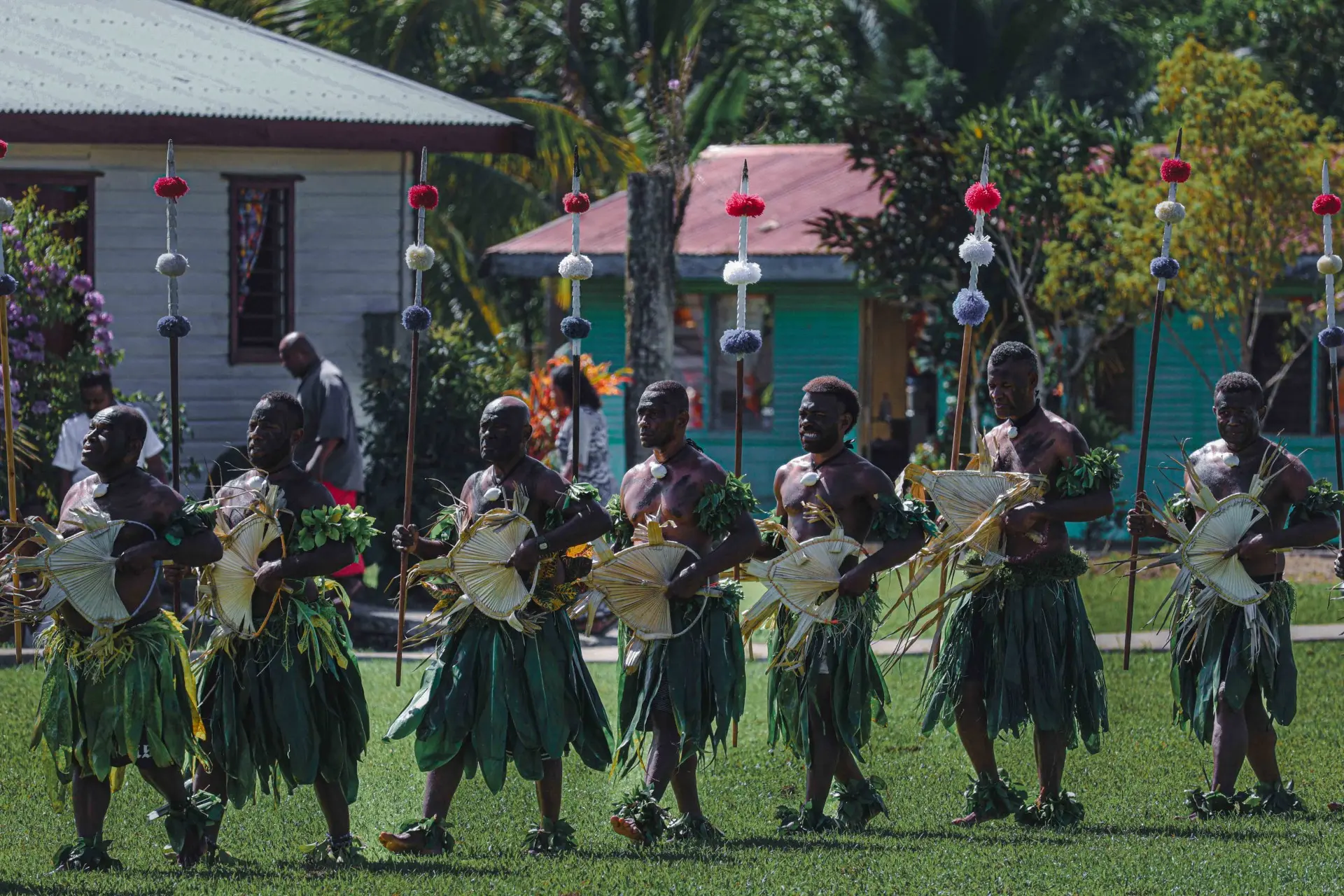
Vanua o Vaturova revives historic meke performed for Queen Elizabeth II during her first visit to Fiji.
Talei Roko
A traditional spear dance composed to honour Queen Elizabeth II during her first visit to Fiji in 1953 is being revived by the Vanua o Vaturova in Cakaudrove.
Known as the Manua ni Ranadi, the performance tells the story of the Queen's journey from England to Fiji and was first presented at Albert Park in Suva.
Last week, the men of the Vaturova district performed the meke again during the Cakaudrove Provincial Council meeting opening by Prime Minister Sitiveni Rabuka.
Related stories
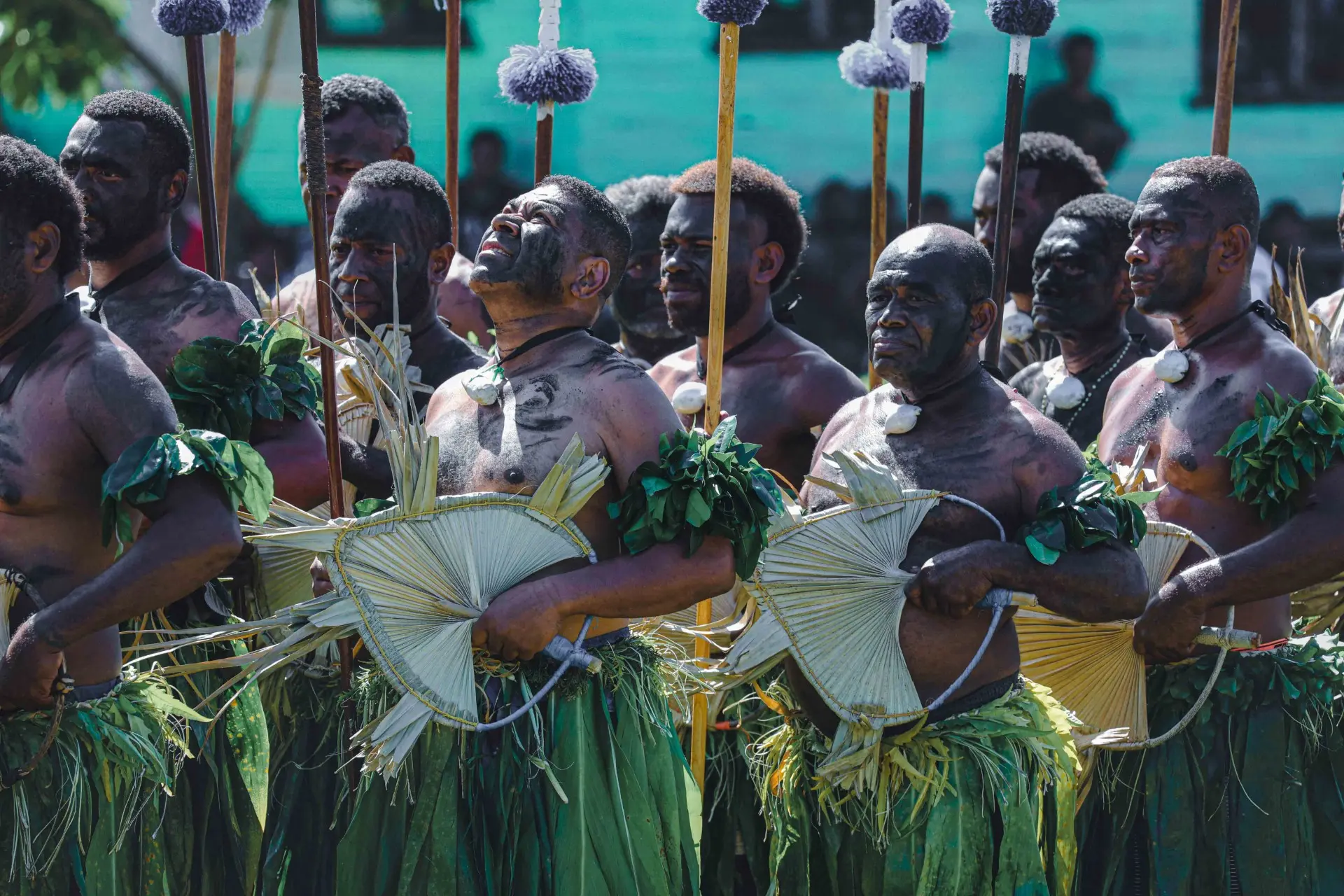
Mata ni Tikina of Vanua Vaturova, Lote Turaga, said the spear dance was created specifically for the Queen's visit and remains one of the district's most treasured cultural performances.
"This meke was composed back in 1953 especially for the Queen when she came to visit Fiji," Mr Turaga said.
According to Mr Turaga, the late Ratu Sir Lala Sukuna selected Cakaudrove from Fiji's 14 provinces to compose and perform a special meke for the royal visit.
"From the 14 provinces in Fiji, Ratu Sukuna chose Cakaudrove," he said.
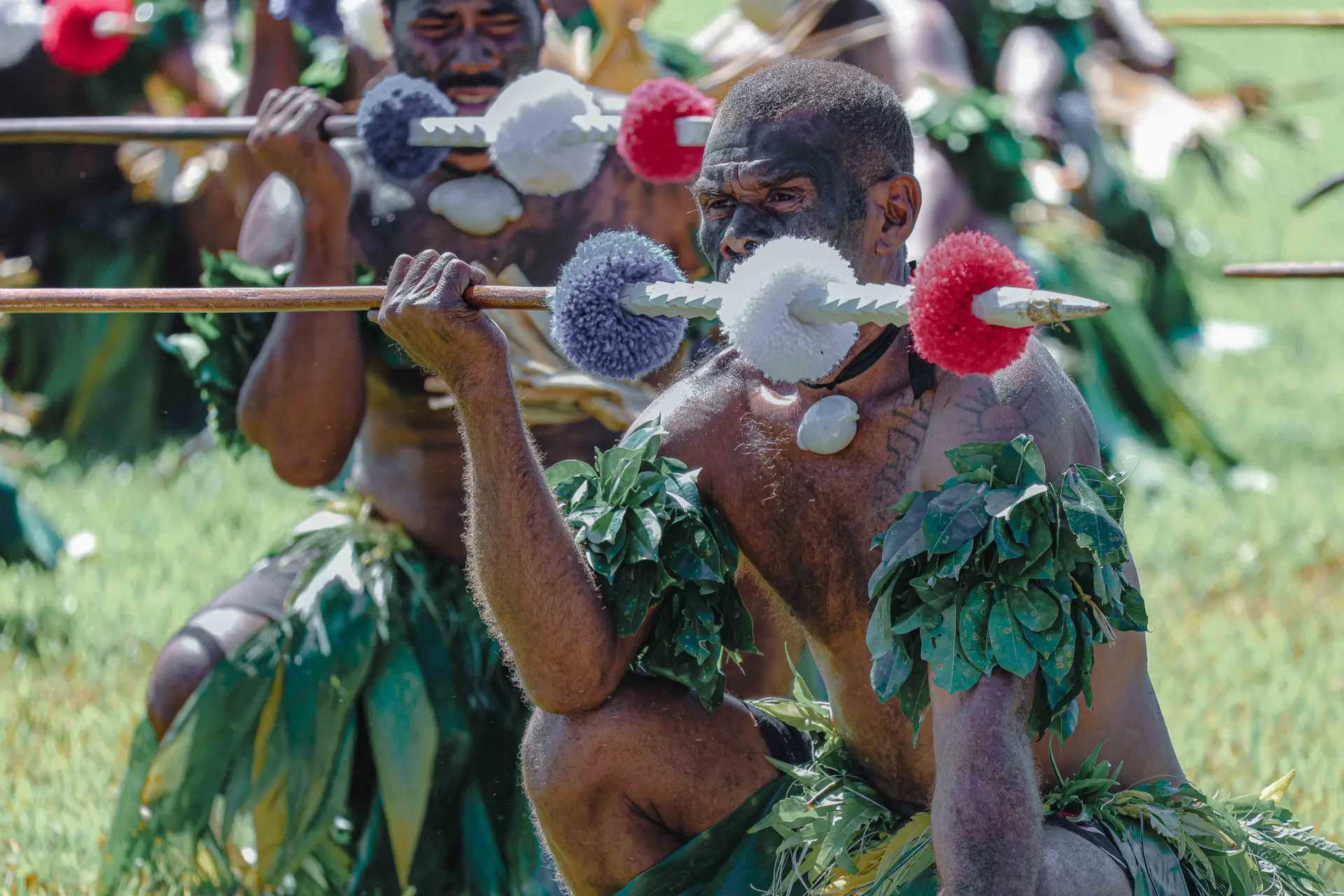
Men of Vaturova perform the traditional Meke ni Ranadi at Korotasere Village in Vaturova during the Cakaudrove Provincial Council meeting on June 4, 2026.
Photo: Talei Roko
Following consultations with the Tui Cakau at the time, it was decided that Vaturova would be the district responsible for performing the meke.
Mr Turaga said the performance tells the story of the Queen's journey by sea from England to Fiji and the anticipation surrounding her arrival.
The meke was performed for Queen Elizabeth II at Albert Park in Suva on December 17, 1953, during her first official visit to Fiji.
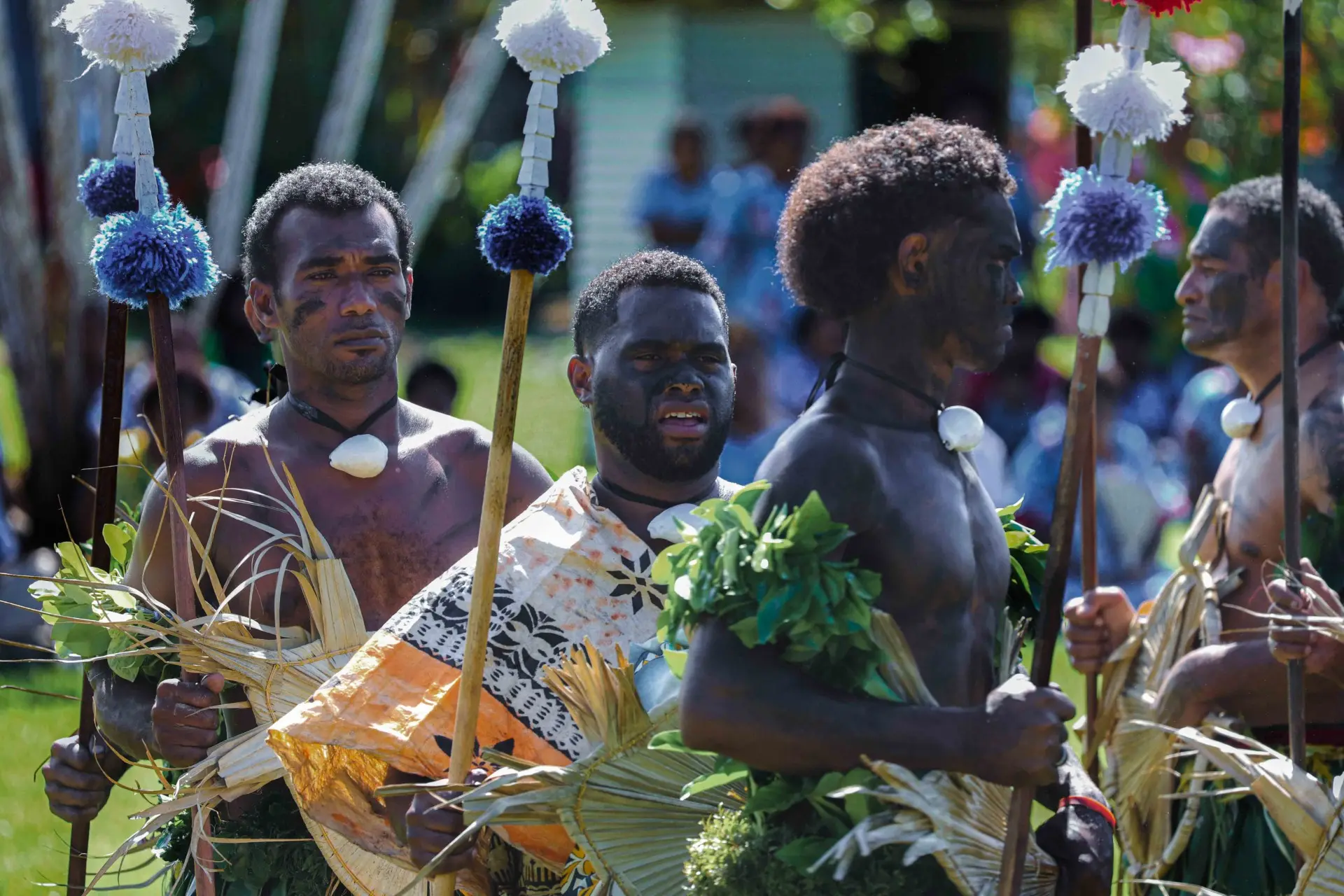
Mr Turaga said he grew up hearing stories about the historic occasion from his father, who was among the young men selected to perform.
"My father was one of the men who performed that day and he was 19 years old at the time," he said.
More than seven decades later, members of the Vanua o Vaturova are working to revive the meke despite challenges in preserving traditional knowledge.
Mr Turaga said there is currently no dedicated instructor who knows the complete performance, forcing the group to rely on archived video recordings available online.
"We ended up watching YouTube videos from previous performances so we could learn," he said.
However, the recordings were incomplete, requiring performers to recreate and improvise certain movements.
"It wasn't easy for us to try to recreate what our forefathers did and improvise," Mr Turaga said.
He stressed the importance of passing traditional knowledge from one generation to the next, saying cultural practices such as the Meke ni Ranadi risk being lost if elders do not share their knowledge with younger members of the community.
"The knowledge of our elders must be passed on so that these traditions continue to live on for future generations," he said.