Health Bill proposes tougher outbreak powers
New offences targeting misinformation and non-compliance could attract penalties of up to $10,000.
Thursday 18 June 2026 | 09:30
Updated 18 June 2026 | 10:31 FJT

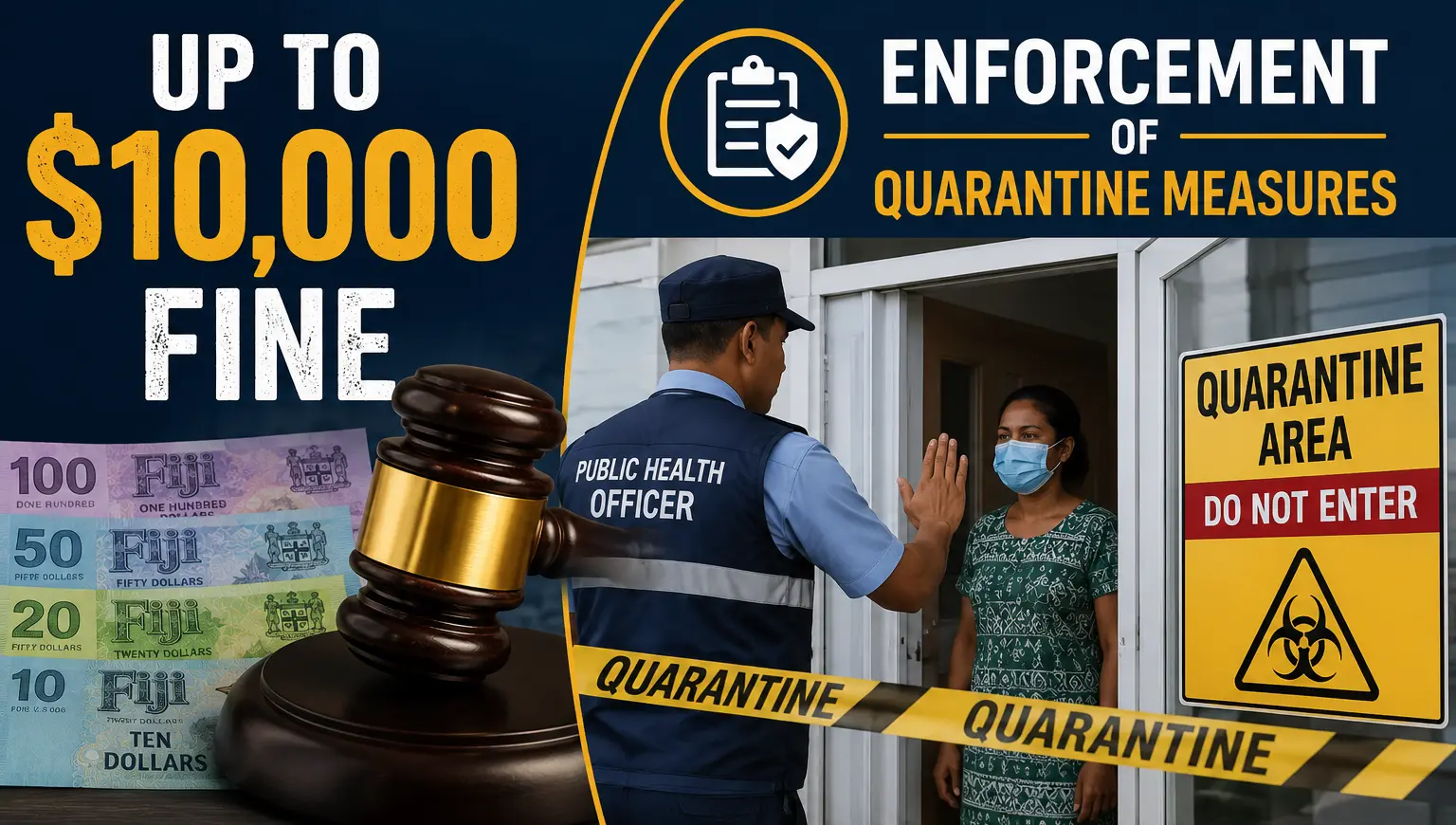
Fiji's proposed Public Health (Amendment) Bill 2026 would strengthen outbreak response powers, increase penalties and introduce new measures aimed at improving preparedness for future health emergencies.
Photo: AI Generated
The Government is proposing sweeping new powers aimed at strengthening Fiji's ability to respond to infectious disease outbreaks.
This includes fines of up to $10,000, enforcement of quarantine measures and action against individuals accused of deliberately spreading false information during public health emergencies.
The proposed changes are contained in the Public Health (Amendment) Bill 2026, which seeks to strengthen enforcement powers and improve Fiji's response to future infectious disease outbreaks.
Related stories
Under the Bill, environmental health officers would be granted expanded authority to enter and inspect premises, collect samples, enforce isolation orders and direct the disinfection of homes, buildings and items deemed to pose a public health risk.
In one of the Bill's more significant provisions, the Head of Environmental Health could direct individuals to undergo vaccination, immunisation or other preventative medical treatment during an epidemic or a threat of an epidemic, based on ministerial advice.
The Bill, which was tabled in Parliament in May, aims to strengthen Fiji's outbreak response framework and modernise public health legislation in preparation for future health emergencies.
It also introduces new offences for deliberately disobeying public health orders, obstructing authorised officers or knowingly spreading misinformation intended to encourage non-compliance with public health measures.
Penalties under existing provisions would also increase significantly, with some fines rising from as little as $40 and $50 to as much as $1,000. New offences could attract penalties of up to $10,000.
The legislation also provides for the establishment of Divisional and Sub-Divisional Outbreak Response Teams to coordinate emergency responses during public health crises.
Responsibility for several functions currently carried out by medical officers of health would shift to registered medical practitioners and environmental health practitioners under the proposed reforms.
The Bill also tightens regulations governing lodging houses, requiring operators to provide proof of tax compliance and business registration before receiving approval from local authorities.
The proposed changes form part of the Government's broader efforts to strengthen preparedness and response capabilities ahead of future health emergencies.