WHO warns climate change increasing health risks in Fiji
Rising temperatures and extreme weather are creating favourable conditions for disease outbreaks, injuries and heat-related illnesses, says WHO official.
Thursday 26 November 2026 | 14:30


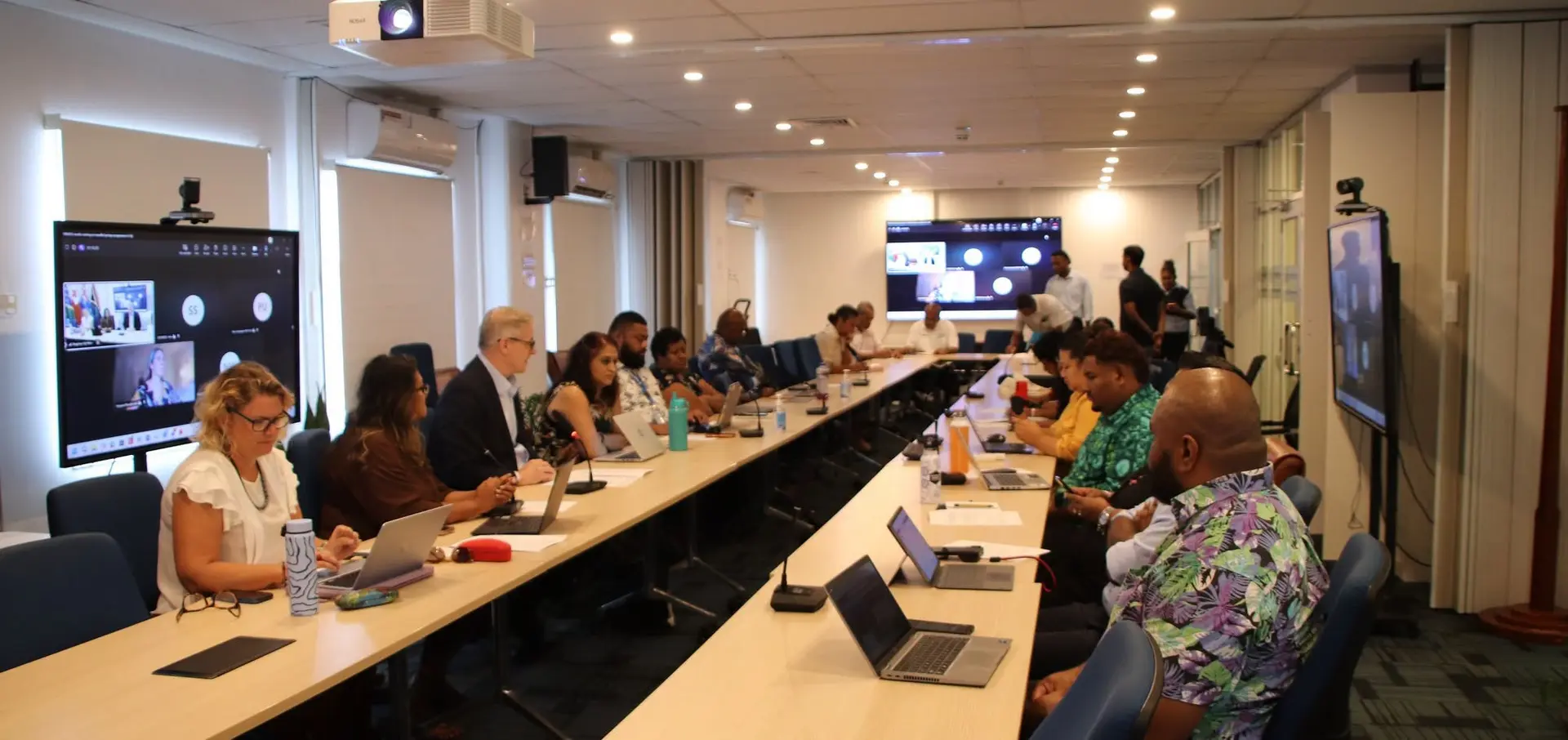
(Sitting fourth from left) WHO Pacific Climate Change and Environment Unit coordinator Robin Ward and Acting Deputy Secretary for Public Health Dr Tevita Qoriniasi with participants at the Fiji Environmental Health 2026 Symposium at Nalagi Hotel in Nadi.
Photo: Katherine Naidu
Climate change is already influencing the conditions in which public health threats emerge and spread in Fiji, increasing the risk of disease outbreaks, injuries and heat-related illnesses.
World Health Organization (WHO) Pacific Climate Change and Environment Unit coordinator Robin Ward has warned that these growing threats require stronger environmental health systems and science-based action.
Officiating at the Fiji Environmental Health 2026 Symposium at Nalagi Hotel in Nadi yesterday, Mr Ward said climate change, environmental health, and water, sanitation and hygiene (WASH) were interconnected challenges.
Related stories
“Climate change is already influencing the conditions in which health risks emerge and spread. These hazards can increase the risk of diarrhoeal diseases, leptospirosis, vector-borne diseases, injury, heat-related illnesses and other climate-sensitive health outcomes,” he said.
He stressed that environmental health officers played a critical role in protecting communities through disease prevention, food safety, water monitoring and emergency preparedness.
“Your work is often most visible when a problem occurs, but its greatest value is in the problems you prevent in the first place,” Mr Ward said.
He said WHO remained committed to supporting the Ministry of Health and Medical Services through technical assistance in climate change and health, WASH, healthcare waste management, surveillance and emergency preparedness.
“This to me highlights an important principle that resilience is really a kind of holistic, comprehensive thing that is built only when policy, infrastructure, laboratories, information systems, and people are also working and strengthened together.”
Mr Ward congratulated the Ministry on the passage of the Public Health Amendment Bill 2026, describing it as an important milestone in modernising legislation established in 1935.
The three-day symposium, themed “Resilient Environments, Healthy Communities: Standing with Science to Protect Communities”, brings together environmental health professionals and partners to strengthen Fiji’s public health response.