Fiji urged to prepare workforce for AI-driven jobs
Deputy Prime Minister Manoa Kamikamica says Fiji must develop specialised skills to compete in a global services industry increasingly shaped by artificial intelligence.
Tuesday 24 November 2026 | 16:00

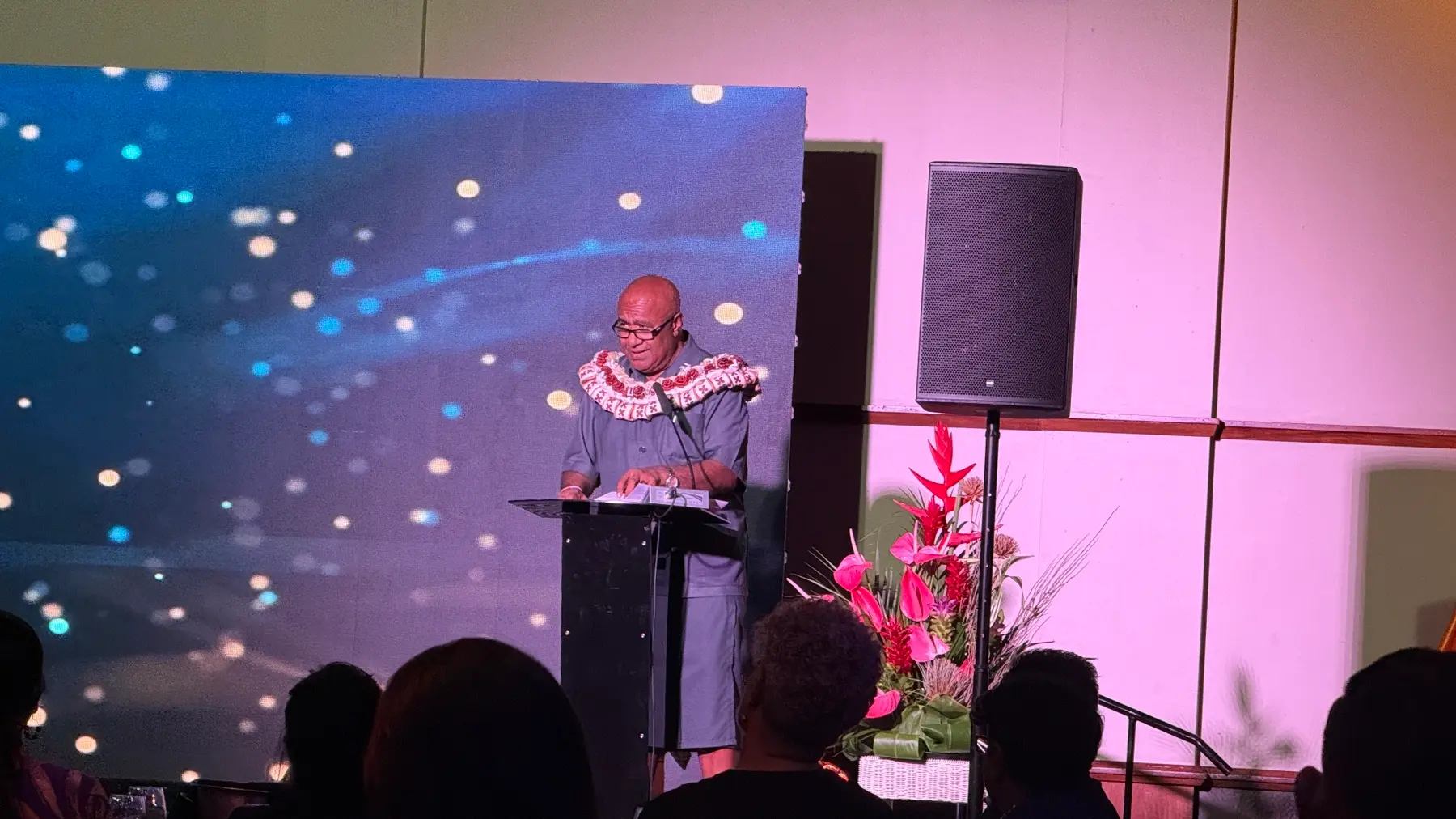
Deputy Prime Minister and Minister for Trade, Co-operatives, Micro, Small and Medium Enterprises and Communications Manoa Kamikamica at the launch of the Outsource Fiji Strategic Plan 2026-2030 in Suva on November 23, 2026.
Photo: Talei Roko
Fiji must equip its workforce with advanced digital skills to remain competitive in the global outsourcing industry, says Deputy Prime Minister and Minister for Trade, Co-operatives, Micro, Small and Medium Enterprises and Communications Manoa Kamikamica.
Speaking at the launch of the Outsource Fiji Strategic Plan 2026-2030 in Suva last night, Mr Kamikamica said artificial intelligence (AI) was reshaping the global services sector, changing how businesses operated and the skills they required.
“Some existing functions will become automated. Other roles will evolve, and new professional opportunities will emerge,” he said.
Related stories
He said Fiji must move beyond traditional entry-level call centre and customer service jobs and develop workers for higher-value roles in business analysis, financial services, cybersecurity and digital operations.
“Our ambition must be to move beyond providing entry-level employment and towards developing specialised skills, professional capabilities and sustainable careers,” he said.

Participants during the launch of Outsource Fiji Strategic Plan 2026-2030 in Suva on November 24, 2026.
Photo: Talei Roko
Mr Kamikamica said young workers needed clear career pathways, supported by stronger links between employers, universities, technical and vocational institutions and Government agencies. Employers also had a responsibility to invest in workforce development to ensure training kept pace with changing industry needs.
“We must not simply prepare our people for the jobs that exist today. We must prepare them for the jobs that will exist tomorrow,” he said.
He said Fiji’s success would depend on combining technology with human skills such as creativity, professional judgement and specialised expertise.
“The future of this industry will not be determined by technology alone. It will depend on how effectively we combine technology with human capability, creativity and professional judgement,” he said.
Mr Kamikamica said local workers must be active participants in the opportunities created by new technologies, helping Fiji secure a greater share of the global services market.
Outsource Fiji executive director Josefa Wivou acknowledged the discussion, saying it reflected broader global trends as businesses sought outsourcing partners capable of providing higher-value professional services rather than basic support functions.
The strategic plan identifies workforce development as one of its six key pillars, recognising that Fiji’s long-term competitiveness will depend on its ability to supply skilled professionals for emerging industries.
“We have to prepare our people for the jobs ahead,” the speaker said.
“If we are promoting Fiji as a destination for investment, we must ensure we have the workforce to support that growth. The challenge is finding the right balance between supply and demand.”
The industry believes developing expertise in fields such as information technology, finance and accounting, human resources, cybersecurity and specialised digital operations will be crucial if Fiji is to secure a larger share of the global outsourcing market.