Why self‑managing teams are testing modern leadership
Experts say the rise of autonomous teams reveals a growing gap between leadership intent and behaviour
Wednesday 07 January 2026 | 13:00
Updated 07 January 2026 | 14:26 FJT

Experts say the rise of autonomous teams reveals a growing gap between leadership intent and behaviour
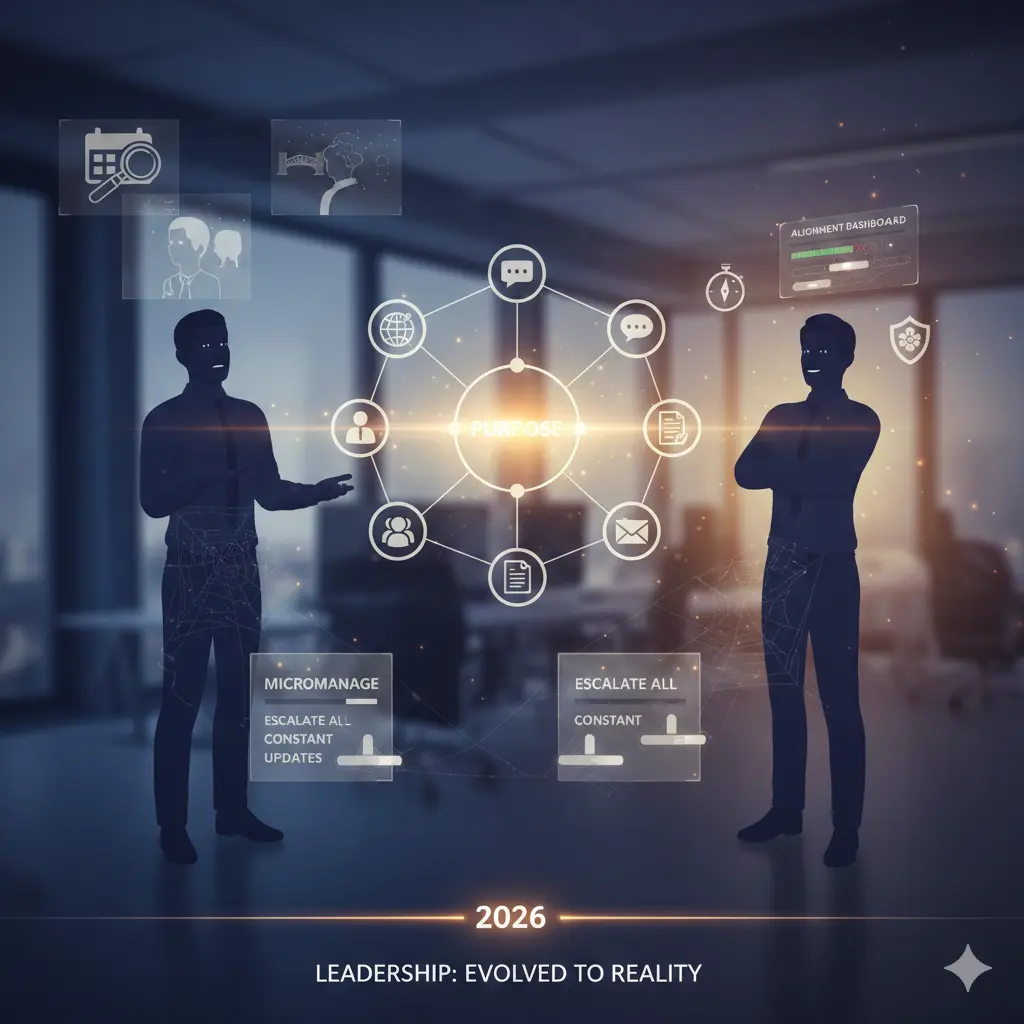
Photo: AI Generated
There is a quiet shift happening in leadership, and in 2026 it will become impossible to ignore. Teams are becoming more self-managing, more autonomous, and more resistant to unnecessary control.
This is not because people have suddenly become rebellious or entitled. It is because the conditions of work have changed — psychologically, structurally, and technologically — faster than many leaders have adapted.
What we are seeing now is not a crisis of capability within teams, but a crisis of identity within leadership.
Related stories
Many leaders say they want empowered, accountable, self-directed teams. Fewer are emotionally prepared for what that actually requires of them. Self-management sounds attractive in theory.
In practice, it removes many of the behaviours leaders once relied on to feel useful, secure, and in control.
Self-management didn’t start as a leadership trend — It started as a reality
The rise of self-managing teams was not driven by a new management philosophy. It was driven by necessity.
Distributed workforces, hybrid schedules, remote teams across time zones, and increased cognitive work have made traditional supervision impractical and, in many cases, counterproductive.
When people are working from home, logging in from different locations, or structuring their work around outcomes rather than hours, leadership by observation collapses.
You cannot “manage by presence” when presence no longer exists in the same way. You cannot rely on hallway conversations, visual cues, or the quiet reassurance of seeing people busy at their desks.
This has forced teams to organise themselves. Decisions happen without permission. Problems are solved without escalation. Work moves forward without constant input from a manager.
And in many cases, productivity has improved rather than declined. But this evolution has exposed something uncomfortable: some leaders are struggling not because teams are failing, but because teams are succeeding without them.
Why self-managing teams trigger anxiety in leaders
The resistance to self-management is rarely framed honestly. It is usually dressed up as concern about accountability, consistency, culture, or standards. But underneath those rational explanations is something more psychological.
Self-managing teams remove the leader from the centre of activity. They reduce visibility. They reduce dependency. They challenge the belief that leadership must always be directive to be valuable.
For leaders who unconsciously equate control with competence, this feels destabilising. If the team does not need constant direction, what exactly is my role? If decisions are being made without me, am I still leading? If people perform well remotely, what does that say about my influence?
In 2026, these questions are no longer theoretical. They are playing out daily in organisations where leaders oscillate between saying they trust their teams and behaving in ways that clearly signal they do not.
The hidden cost of over-managing remote teams
Nowhere is this tension more visible than in remote and hybrid environments. Leaders who struggle with self-management often respond to distance by tightening control rather than redesigning leadership.
This shows up as excessive check-ins, unnecessary meetings, constant requests for updates, rigid availability expectations, and subtle monitoring behaviours disguised as “support”.
Technology becomes a surrogate for presence — calendars, dashboards, messaging platforms — all used not to enable work, but to reduce the leader’s anxiety.
Ironically, this behaviour undermines the very outcomes leaders say they want. Trust erodes. Initiative declines. People become performative rather than purposeful. The team looks busy, but ownership weakens.
In 2026, high-performing professionals have little tolerance for this. They do not expect leaders to disappear, but they do expect leaders to add value rather than friction. When leadership becomes an obstacle rather than an enabler, disengagement follows quickly — and often quietly.
What self-managing teams actually need from leaders
Self-management does not mean leaderless. It means leadership shifts from control to context. Teams still need clarity. They still need boundaries. They still need direction. What they no longer need is constant intervention. The leader’s role becomes less about deciding and more about framing. Less about instructing and more about enabling.
In self-managing teams, leaders provide purpose rather than pressure. They define what success looks like, not how every task should be completed. They hold standards without micromanaging behaviour.
They intervene when alignment breaks down, not when discomfort arises. This requires a different kind of leadership maturity. One that is comfortable with ambiguity, patient with silence, and confident enough to allow others to step forward.
For leaders used to being the problem-solver, this can feel like doing less. In reality, it is doing something far more difficult.
The emotional skill most leaders haven’t developed
The hardest part of leading self-managing teams is not technical. It is emotional. Leaders must regulate their own discomfort when they are not in control.
They must resist the urge to step in simply to reassure themselves. They must learn to tolerate not knowing exactly what everyone is doing at every moment.
In remote environments, this emotional regulation becomes even more critical. Without physical cues, leaders often fill the gaps with assumptions. Silence becomes interpreted as disengagement.
Autonomy becomes misread as avoidance. Efficiency becomes mistaken for detachment. Strong leaders in 2026 recognise this pattern in themselves and actively work against it.
They ask better questions rather than issuing instructions. They check assumptions before reacting. They build trust through consistency rather than surveillance.
This is where many leaders falter — not because they lack intelligence, but because they have never been required to develop this level of self-awareness before.
Why some leaders sabotage empowerment without realising it
One of the great ironies of modern leadership is that many leaders genuinely want empowered teams — but unconsciously sabotage them. They delegate tasks but retain decision authority. They invite input but override outcomes. They talk about ownership but step in at the first sign of imperfection. They praise initiative publicly but punish it privately when it creates uncertainty.
In remote teams, this contradiction becomes amplified. Without informal repair conversations, mixed signals linger. People adapt by doing what feels safest, not what is most effective.
Over time, self-management erodes not because teams cannot handle it, but because leaders cannot let go. In 2026, employees are acutely aware of this dynamic.
They recognise when empowerment is conditional. And when trust is withdrawn the moment things get uncomfortable, it is rarely restored.
The leaders who thrive in self-managing environments
Leaders who succeed with self-managing, remote, and hybrid teams share a few consistent traits. They are clear rather than controlling. Calm rather than reactive. Curious rather than defensive. They see leadership as a system-shaping role, not a constant intervention role.
They invest heavily in alignment upfront — shared expectations, decision principles, behavioural norms — so they do not need to manage every outcome later. They hold people accountable, but not anxiously.
They understand that mistakes are data, not threats. Most importantly, they are secure enough to measure their success by the team’s capability, not their own visibility. In 2026, this is what modern leadership looks like. Less dramatic. Less performative. Far more effective.
The real question leaders must ask themselves
The rise of self-managing teams is not a passing trend. It is a structural response to how work now happens. Remote work, hybrid models, and outcome-based performance are not going away.
The question for leaders is not whether this model will continue. It is whether they are willing to adapt their identity along with it.
Can you lead without being central? Can you trust without hovering? Can you remain accountable without controlling? Can you add value without always being visible?
For some leaders, the honest answer is uncomfortable. And that discomfort is precisely where growth must begin.
By 2026, the organisations that thrive will not be the ones with the most charismatic leaders or the tightest control systems.
They will be the ones where leadership has evolved to match reality — distributed, autonomous, and psychologically mature.
Self-managing teams are not a threat to leadership. They are a test of it. And not every leader is passing.