‘Hit the network, not just the street’: University proposes major drug law overhaul
As custodian of mainly young people aged 17 to 24, she said it was vital that the University give the issue thoughtful, intelligent, practical and justice-based consideration.
Saturday 28 February 2026 | 08:30

The submission emphasises that decriminalisation of small-quantity possession is not legalisation. Drugs would remain illegal, but low-level possession would attract civil infringement rather than criminal conviction.
Supplied
'Hit the network, not just the street.'
That is the central principle behind the University of Fiji’s formal submission on the proposed Counter-Narcotics Bill, calling for a smarter, proportionate and constitutionally grounded overhaul of the country’s drug laws.
Through the Office of the Vice Chancellor’s Legal Unit, the University has urged Government to adopt a modern framework that targets trafficking networks while improving public health responses and rehabilitation services.
Related stories
Vice Chancellor Professor Shaista Shameem said the review of the outdated Illicit Drugs Control Act presents a critical opportunity for Fiji to adopt a smarter, fairer and more effective counter-narcotics system, one that targets trafficking networks while ensuring vulnerable users are not unnecessarily criminalised.
As custodian of mainly young people aged 17 to 24, she said it was vital that the University give the issue thoughtful, intelligent, practical and justice-based consideration.
While acknowledging the seriousness of the narcotics crisis, she said a common-sense discretionary approach was needed — one already exercised by the judiciary since the landmark 2001 decision in State v Audie Pickering.
The University’s submission proposed a three-tier classification model, similar to systems used in Australia and New Zealand, separating consumers, mid-level suppliers and traffickers.
Under the model:
- Small-quantity possession would be treated as a civil infringement rather than a criminal offence.
- Dealers would face proportionate criminal penalties.
- Traffickers and financiers of drug networks would face the strongest sanctions, including long-term imprisonment.
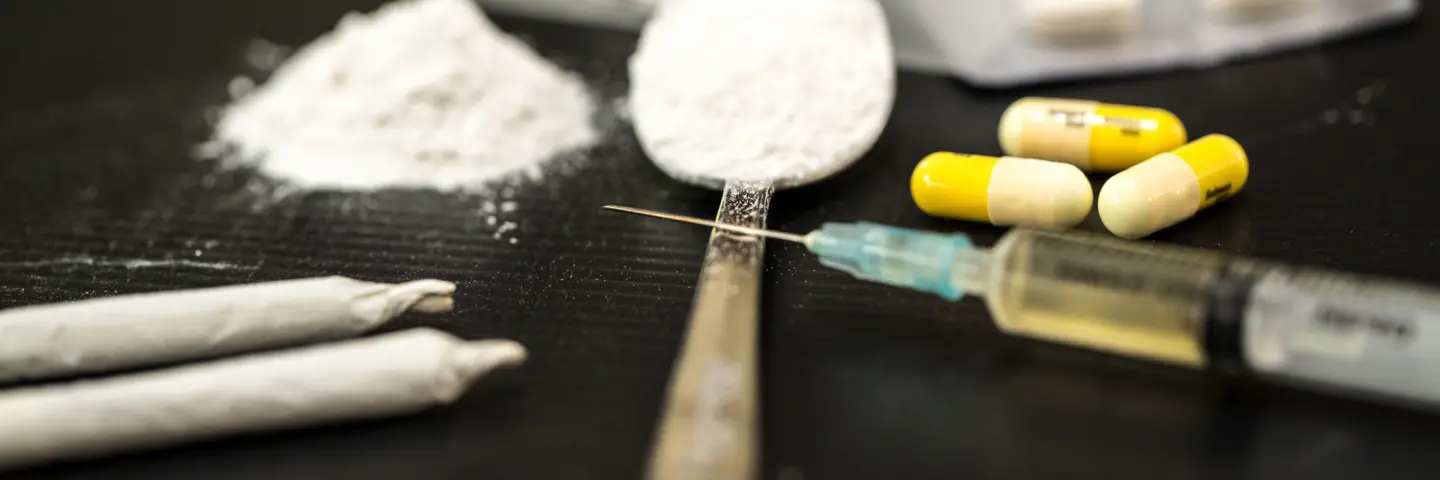
The submission emphasises that decriminalisation of small-quantity possession is not legalisation. Drugs would remain illegal, but low-level possession would attract civil infringement rather than criminal conviction — a public health protective measure supported by international jurisdictions and organisations including the World Health Organization and the United Nations Office on Drugs and Crime.
The University also recommended extending offences to cover those who knowingly allow their premises to be used for drug manufacture, storage or distribution, and supports legislated aggravating factors such as involvement of minors, weapons, violence, corruption and organised criminal participation.
A major feature of the submission is the urgent expansion of rehabilitation capacity. It proposes legally recognised Drug Dependency Assessments, Community Treatment Orders and Residential Treatment Orders, supported by licensed rehabilitation facilities approved by the Ministry of Health.
Professor Shameem noted that without rehabilitation infrastructure, Fiji cannot meaningfully reduce demand or support families affected by addiction.
She said the proposal strikes a balance between enforcement and fairness.
“Our submission provides a balanced, evidence-based path forward for Fiji, one that is tough on traffickers, fair to vulnerable users, aligned with international standards, and underpinned by the Constitution. Effective reform must combine strong enforcement with real access to treatment, rehabilitation and justice.”
The University said it hopes its recommendations will assist in shaping legislation that effectively combats organised drug activity while strengthening rehabilitation, public health and the justice system in Fiji.