From Nadroga cane fields to South Korea’s top thesis honour
That decision would eventually take him thousands of kilometres away and earn him top academic recognition.
Saturday 14 February 2026 | 12:00

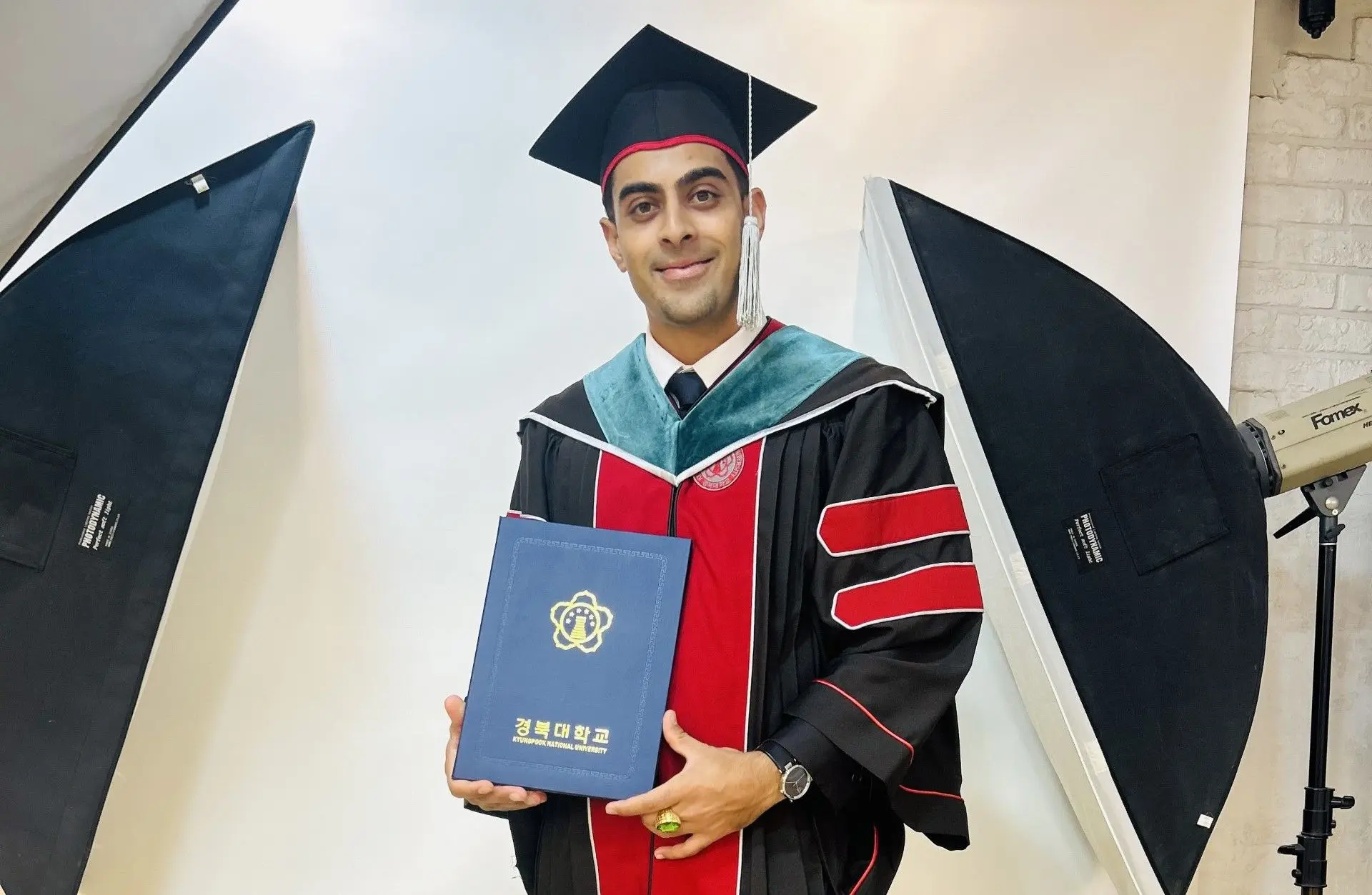
For Shifadjzic Khan, the road to South Korea’s Best Thesis Award began far from the lecture halls of Kyungpook National University — it began in the rural sugarcane community of Maro, Nadroga.
As a secondary school student, he once dreamed of studying medicine. But struggles with physics and mathematics forced him to rethink his future. Instead of giving up, he chose a path closer to home — agriculture.
That decision would eventually take him thousands of kilometres away and earn him top academic recognition.
Related stories
“Early exposure to agriculture, rural livelihoods and community-based resilience shaped my long-term academic and professional interests,” he said.
Mr Khan attended Tuva Primary School before moving on to Nadroga Arya College. From 2014 to 2017, he completed a Bachelor of Education (Secondary) in Agriculture at Fiji National University, supported by a Tertiary Education Loans Scheme scholarship.
Teaching became his profession. Over the next eight years, he taught at Gau Secondary School, Kamil Muslim College in Ba, and now Christian Mission Fellowship College.
But his academic ambition continued to grow.
In 2018, he was selected for postgraduate studies under the Korea International Cooperation Agency (KOICA) Scholarship Programme, supported by the Government through the Ministry of Education and the Ministry of Civil Service, and facilitated by the Ministry of Foreign Affairs.
At Kyungpook National University in Daegu, Republic of Korea, he pursued a Master’s degree under the College of Agriculture and Life Sciences.
His research focused on the economic impacts of climate change on Fiji’s sugarcane industry — a subject deeply connected to his upbringing. His thesis, titled Rooted in Crisis, Growing Solutions: Economic Impacts and Adaptive Pathways of the Climate-Threatened Sugarcane Industry in Fiji, integrated artificial intelligence-based predictive modelling with policy-relevant adaptation strategies.
“Alongside my postgraduate studies, I published more than 15 research articles in reputable peer-reviewed journals,” he said.
Last year, his work earned him the Best Thesis Award at graduate school level and recognition as an Outstanding Research Student — a moment that marked the culmination of years of persistence and purpose.
Born to a former police officer father and a mother who worked as a domestic worker, Mr Khan credits his family, mentors and the Government for supporting his journey.
Looking ahead, he hopes to pursue a PhD in South Korea within the next 10 years.
From a village classroom to an international stage, Mr Khan’s journey reflects how determination — and staying rooted in one’s identity — can lead to global recognition.